Is Lofoten Worth Visiting? An Honest Review
Are you in the midst of trip planning and starting to wonder: is Lofoten worth visiting? I know I was back when I planned my trip to Lofoten. In fact, I nearly gave up and didn’t visit! These Norwegian islands are notoriously difficult-to-reach, expensive, and subject to unpredictable weather.
Ultimately, it took me three flights (and two days!) to reach Lofoten, and I had my fair share of anxiety whilst driving through Lofoten’s narrow and twisty roads.
But all of the drawbacks of visiting Lofoten were worth it, for me personally! I loved my trip to Lofoten… but I don’t think it’s a suitable destination for everyone. You’re also going to get a very different experience in summer vs. winter.
That’s why I’ve put together this guide, so you can decide for yourself whether Lofoten is worth visiting.
Is Lofoten Worth Visiting? My Quick Answer
Yes, Lofoten is absolutely worth visiting if you:
- Love nature, scenery, and cute towns
- Like to hike and see viewpoints
- Are pretty fit and up for some steep climbs
- Have a moderate to high budget
- Are comfortable driving on somewhat narrow roads
- Can go with the flow and adjust your itinerary if weather changes
My summer road trip through the Lofoten Islands was one of my FAVORITE trips of all time (and I’ve traveled through 50+ countries, so that’s really saying something).
Visiting Lofoten in the winter is a very different experience than the summer, but if you’re hunting for northern lights and cozy hotels, then you’ll love it then, too.

8 Reasons to Visit Lofoten in Norway
1. The Nature, Hiking, and Views are Epic
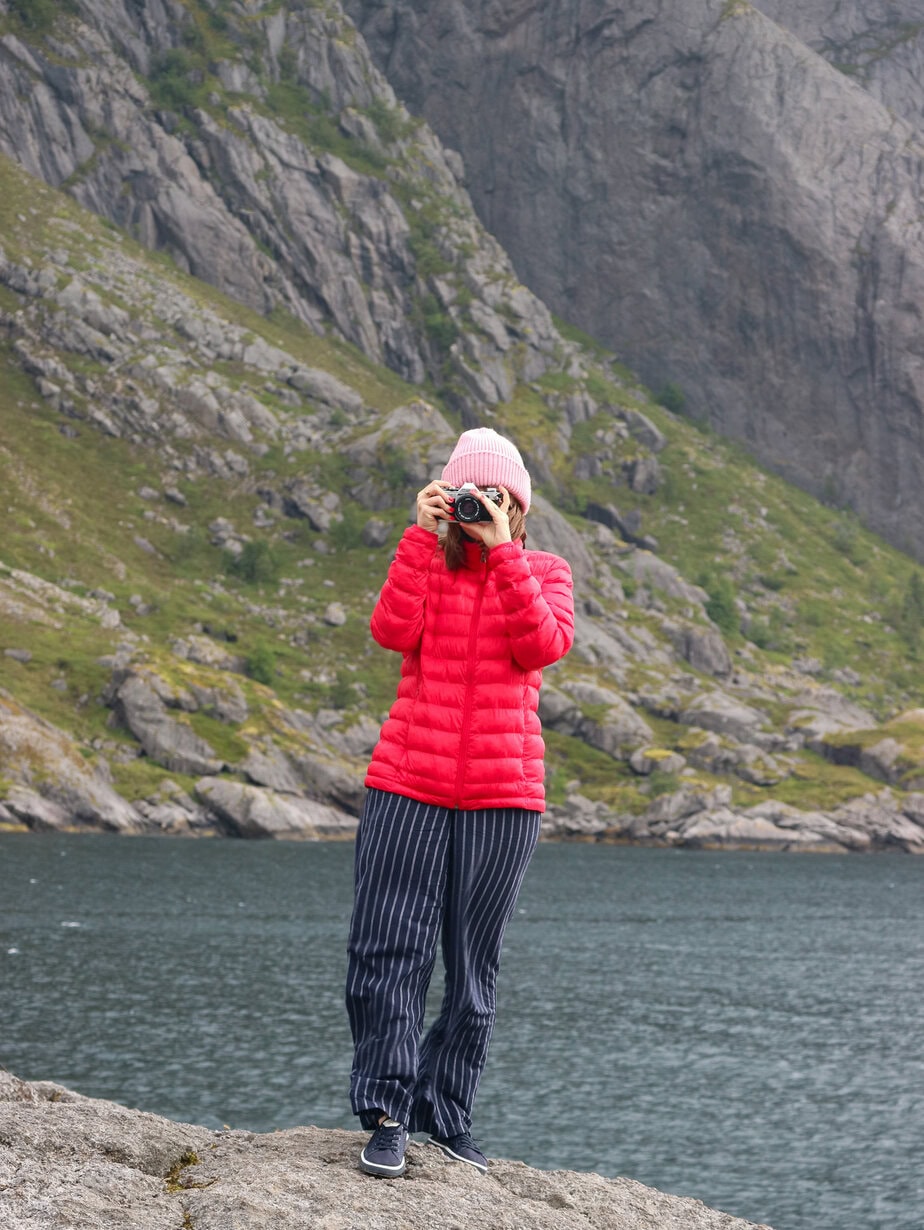
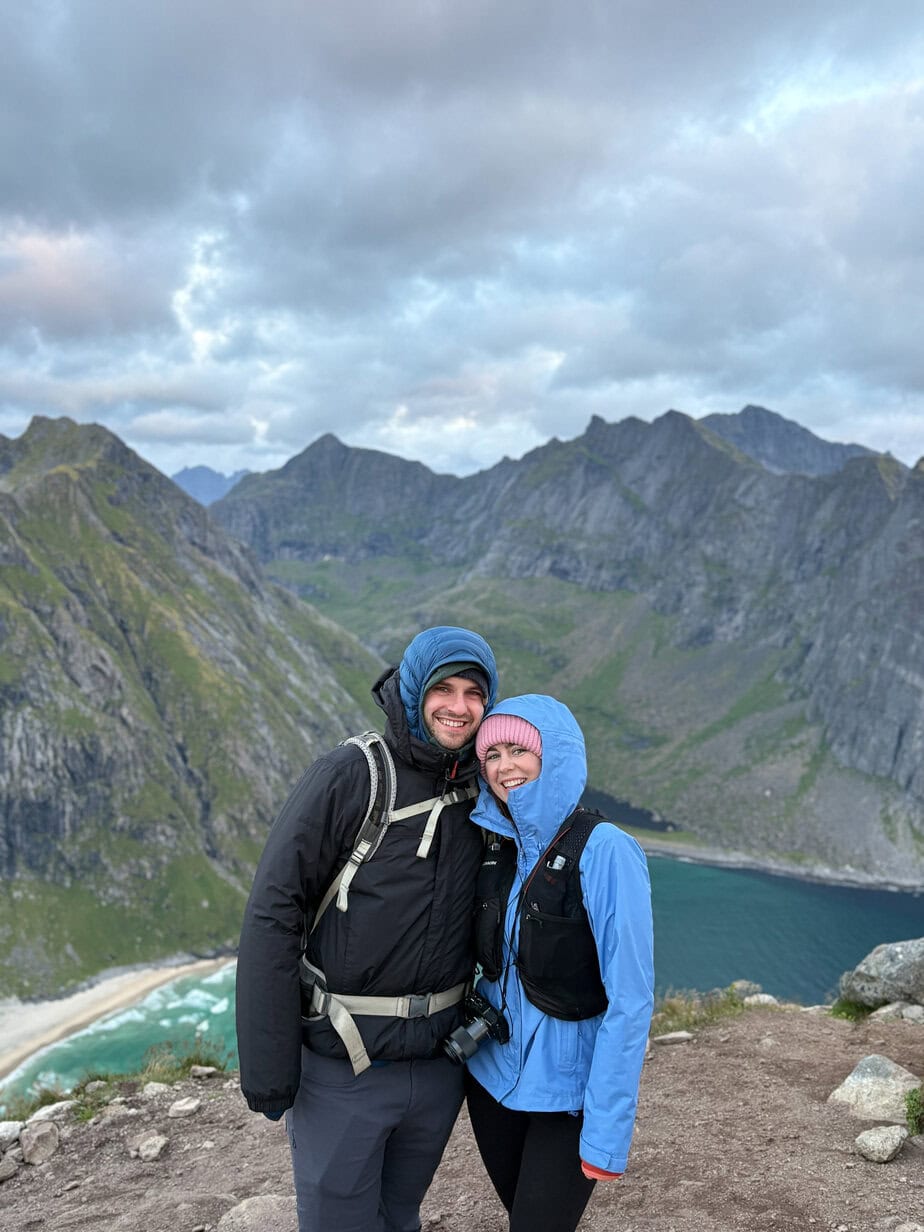
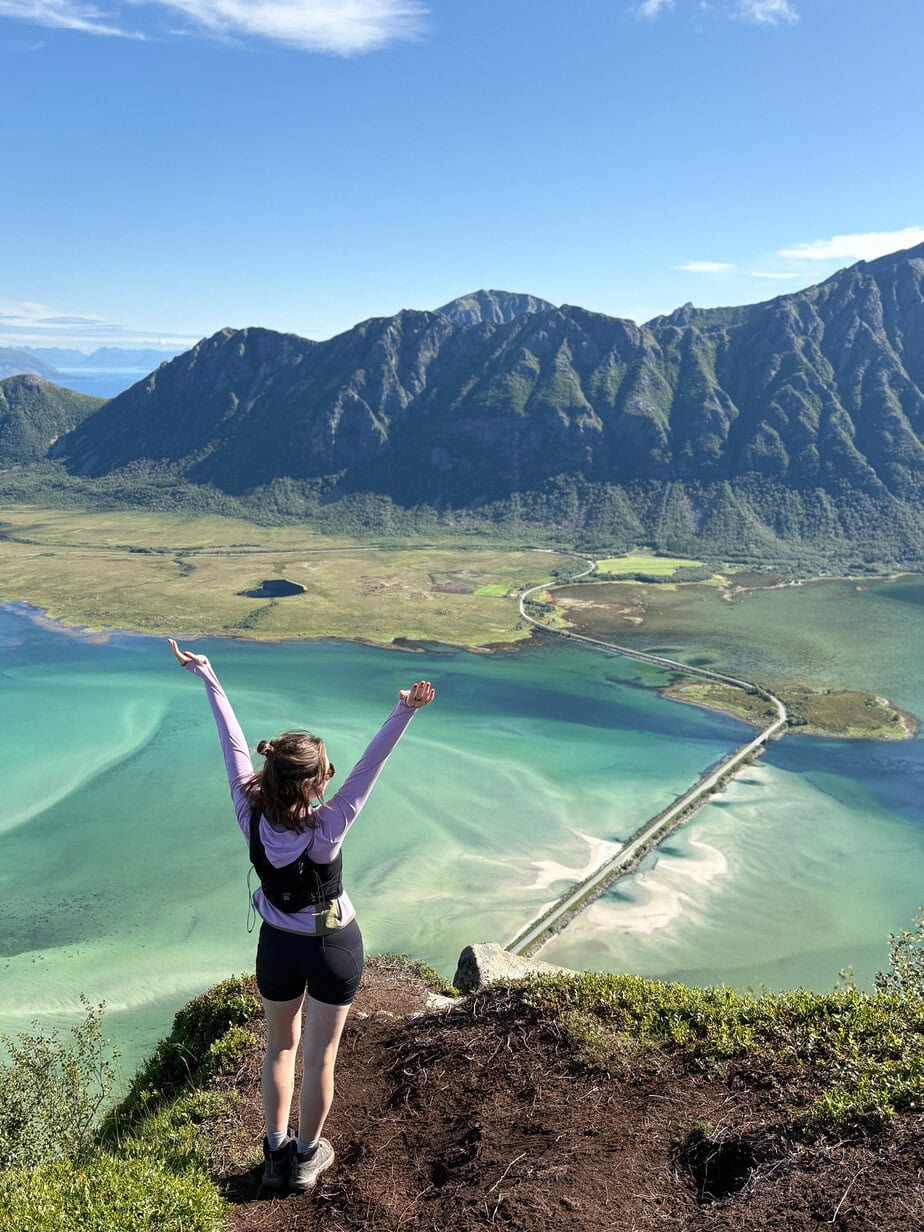
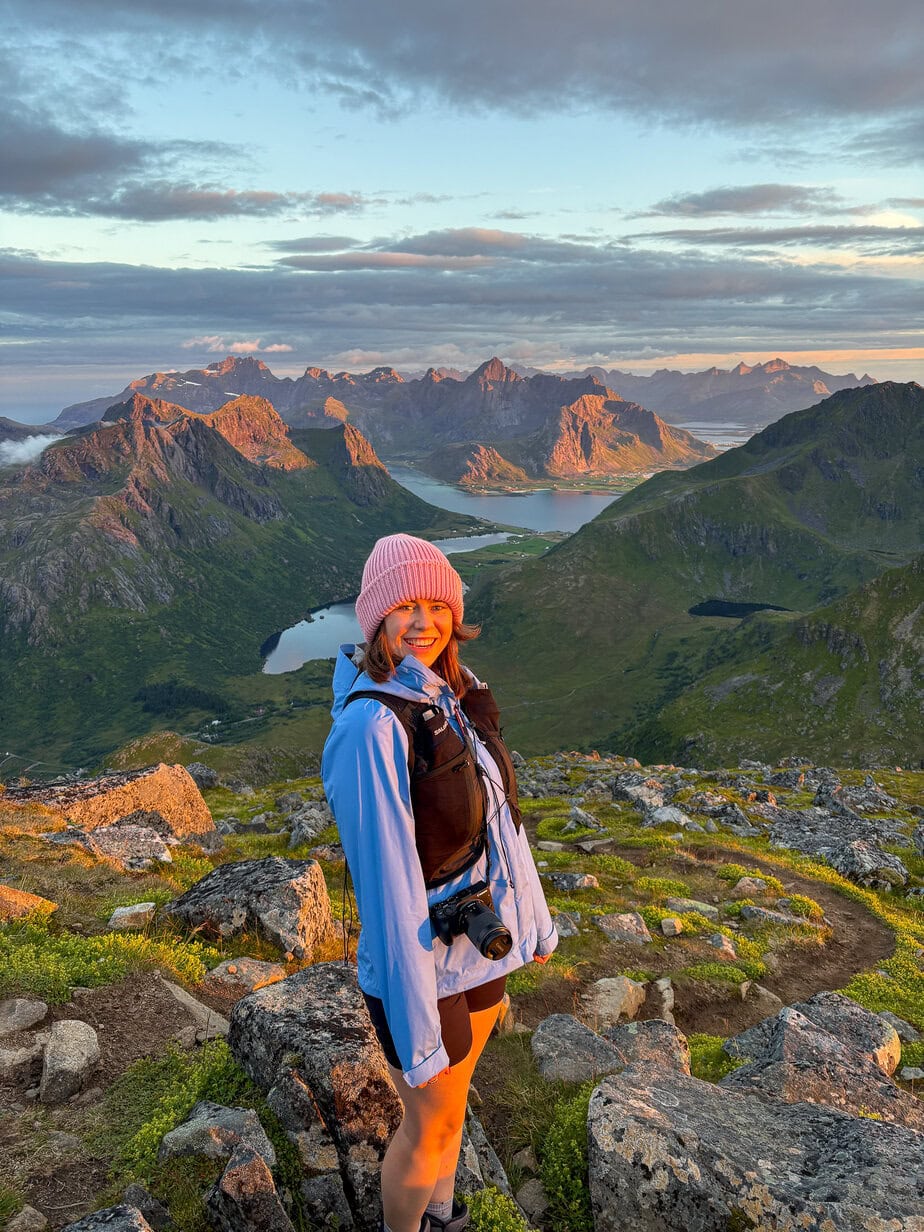
For me, the #1 reason to visit Lofoten was for the incredible hikes and views. These islands are otherworldly in their beauty, and everywhere you go there is a world-class hike just waiting to be witnessed during a never-ending golden hour.
Something I loved about the hikes in Lofoten is that they mostly started from accessible trailheads (no driving up winding cliffs!) and the hikes themselves were often pretty short. I think the longest one we did was only 5.5 miles roundtrip!
However, the hikes in Lofoten are quite steep. Most Lofoten hikes are graded as “moderate” or “difficult,” even though they’re short. If you’re up for the challenge, though, you’ll enjoy this because it means you don’t actually have to hike that far to end up with stunning views.
Also, the short distances meant that Dan and I occasionally did two hikes in one day, on different areas of the islands.
TIP: A couple months before our trip, Dan and I started hitting the gym more regularly and using the stair climber. This helped make the hikes in Lofoten much more enjoyable!
2. Experience the Midnight Sun
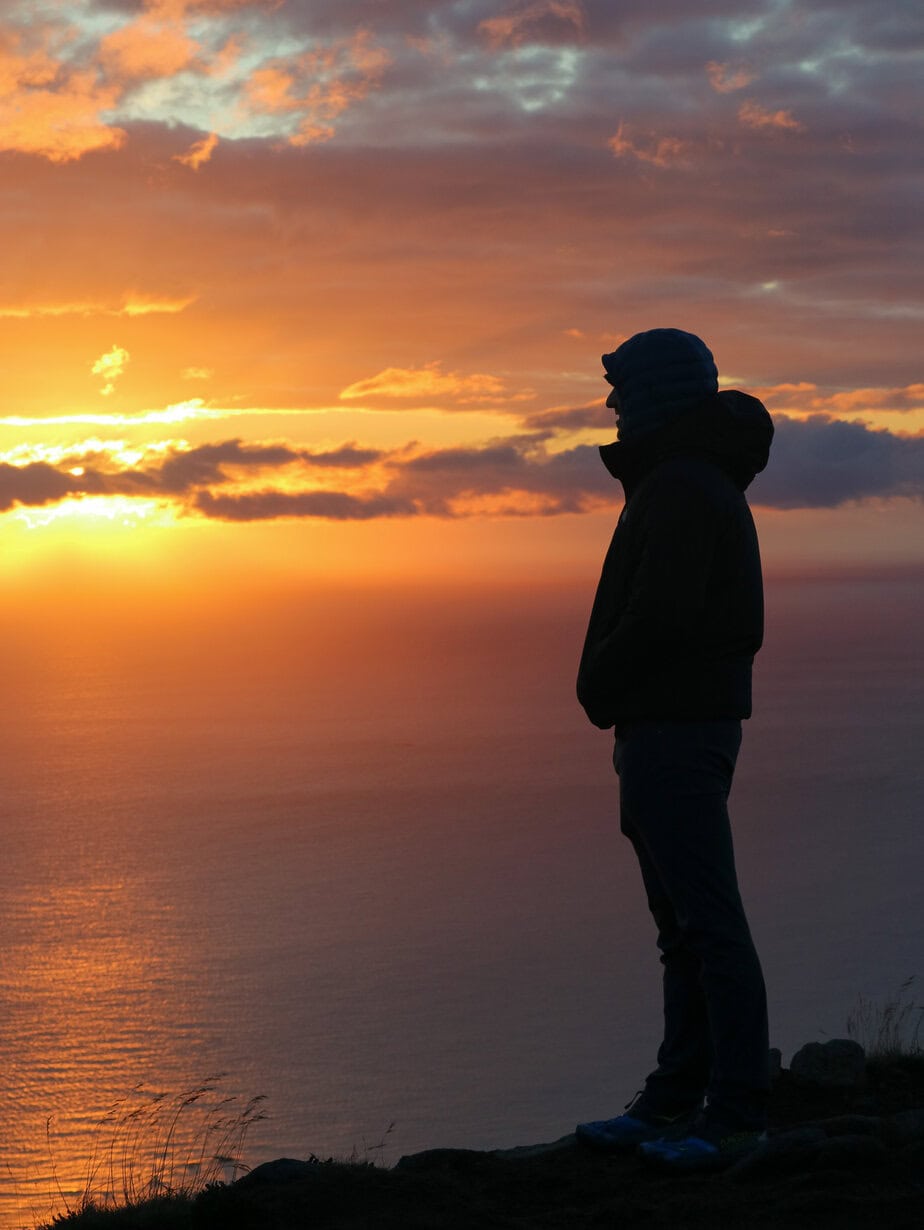
The Lofoten Islands are located within the arctic circle. In the summertime, the sun never sets! This phenomenon is called the midnight sun, and happens from roughly late May to mid July every year in Lofoten.
We visited in late July, so the sun set around 11:30pm and rose again at 3am! However, it never got completely dark between those hours—just a low, pinkish-blue blush across the horizon like a post-sunset twilight.
The midnight sun means that you can do many of Lofoten’s hikes very late at night (or early in the morning) without the crowds, under the most gorgeous light you can imagine.
Hiking down a Norwegian mountain to our campervan at 1am, giddy and tired and surrounded by pink light and grazing horses, was such an unforgettable experience.
3. See the Northern Lights
Thanks to its location in the arctic circle, Lofoten is also a prime destination for northern lights viewing. If seeing or photographing the northern lights is your goal, then Lofoten is a great choice.
However, northern lights are never guaranteed, even in Lofoten. (More on Lofoten’s weather below!).
3. Explore Cozy Towns and Cafes
Norwegians have a concept called kos, which translates to coziness or enjoying simple pleasures. (Think of it like an answer to the Danish hygge).
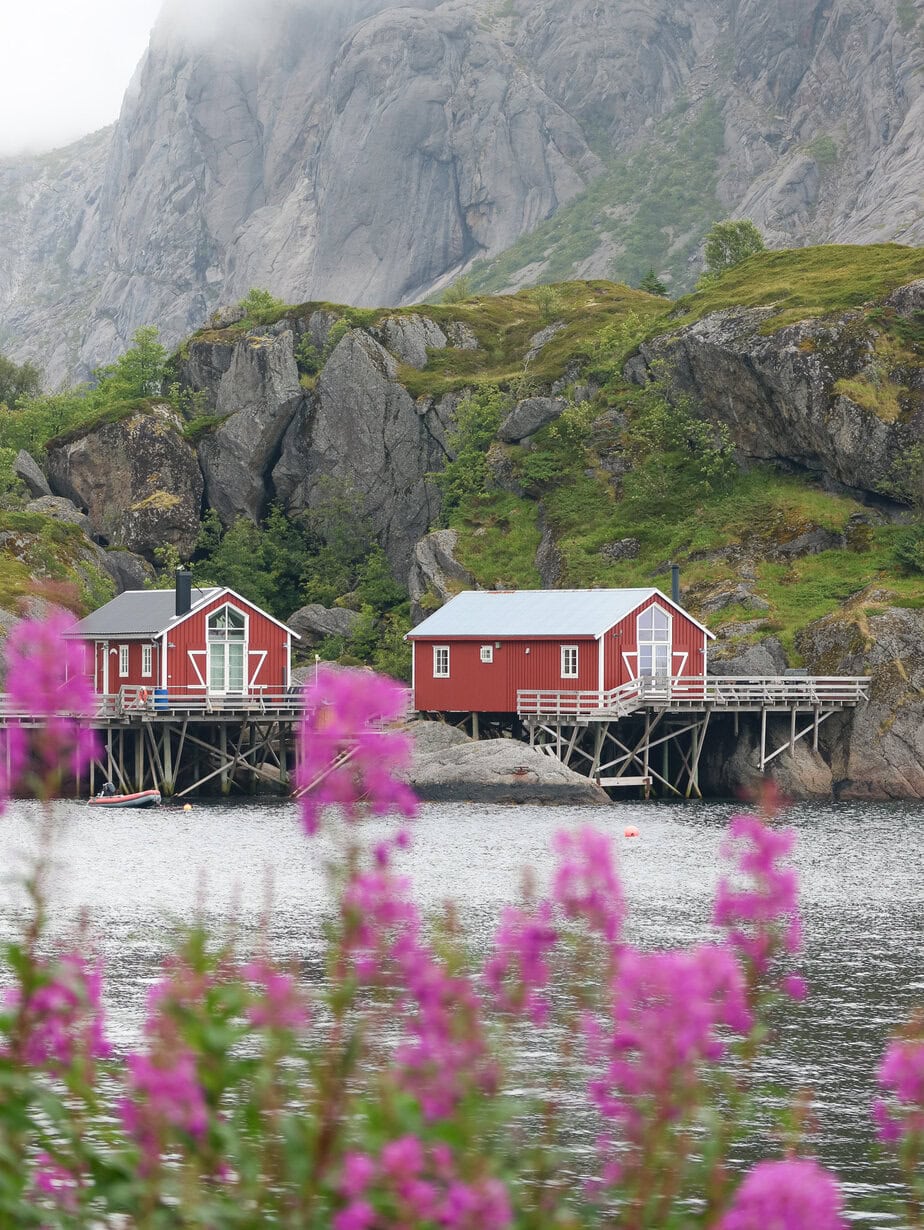
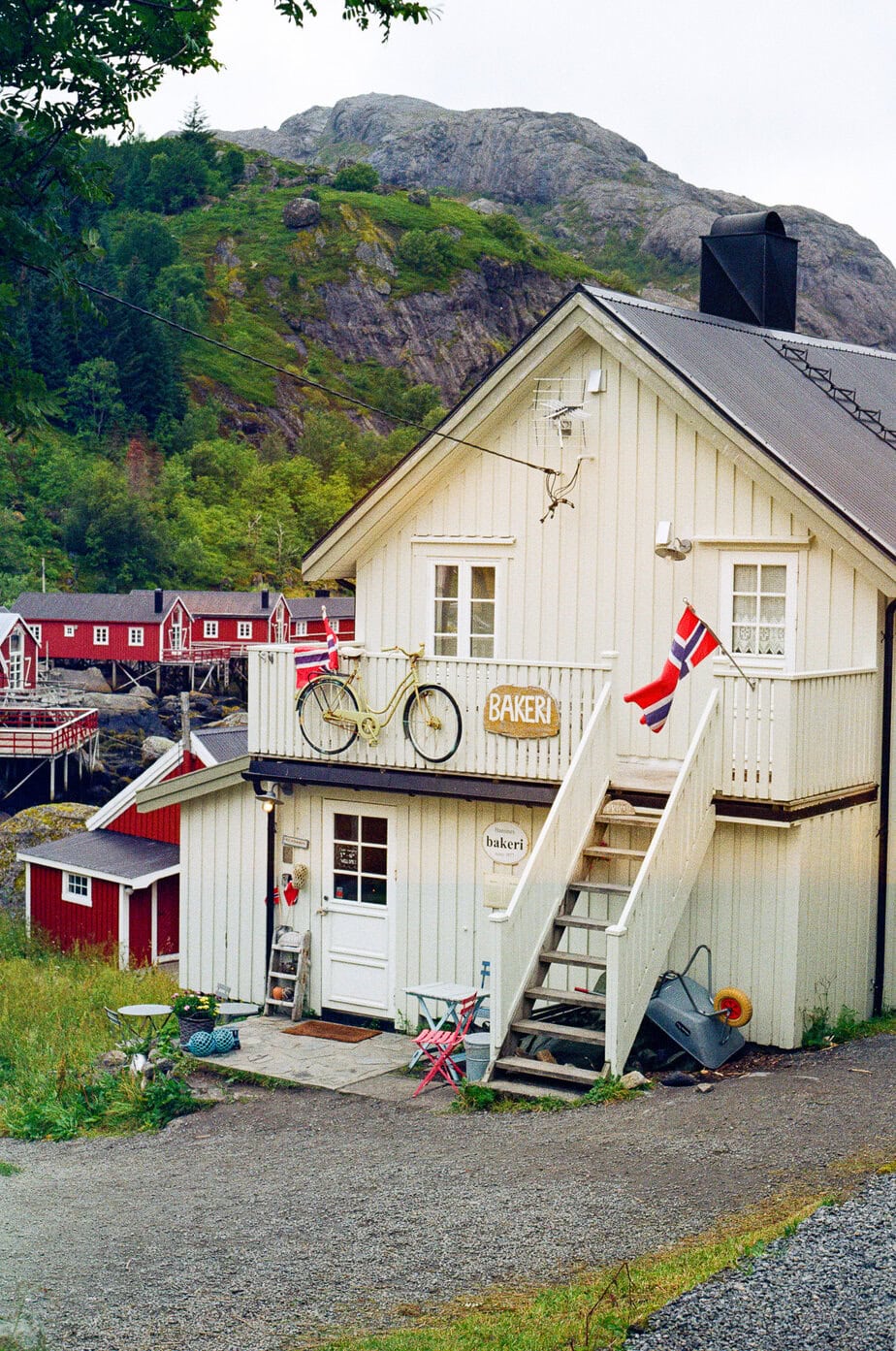
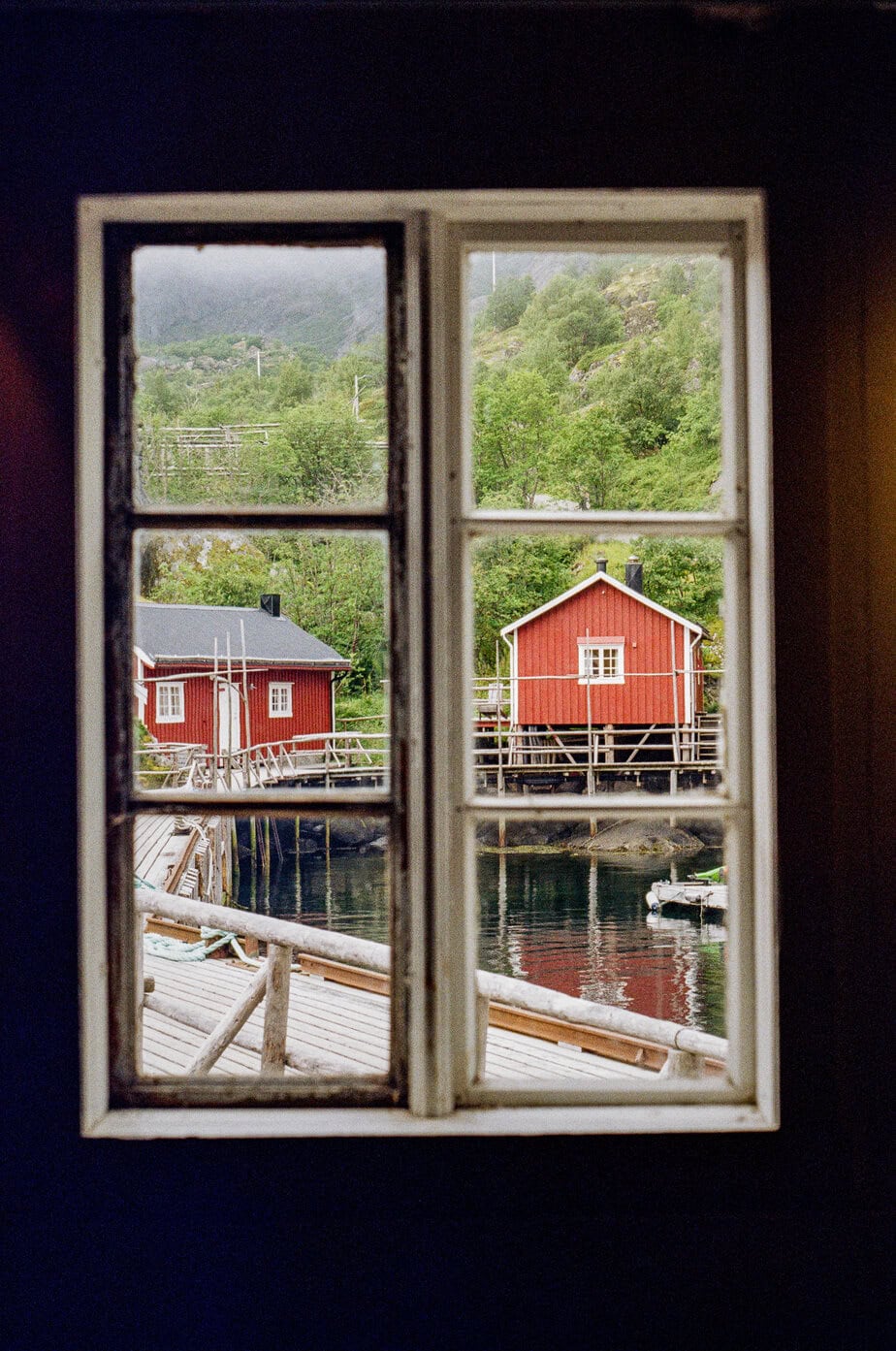
In Lofoten, you can experience kos in quaint fishing villages and snug cafes. Lofoten’s most scenic towns are located in the south, and include:
- Reine
- Sakisrøy
- Hamnøy
- Å
- Nusfjord
These were perfect to explore on rainy mornings, or when our legs needed a break from hiking. Some of my favorite cafes were Landhandleriet Cafe and Hansines Bakeri in Nusfjord, Klatrekaféen in Henningsvaer, Unstad Arctic Surf in Bøstad, and The Bakeri at Å in Å.
4. It’s the Perfect Road Trip Destination
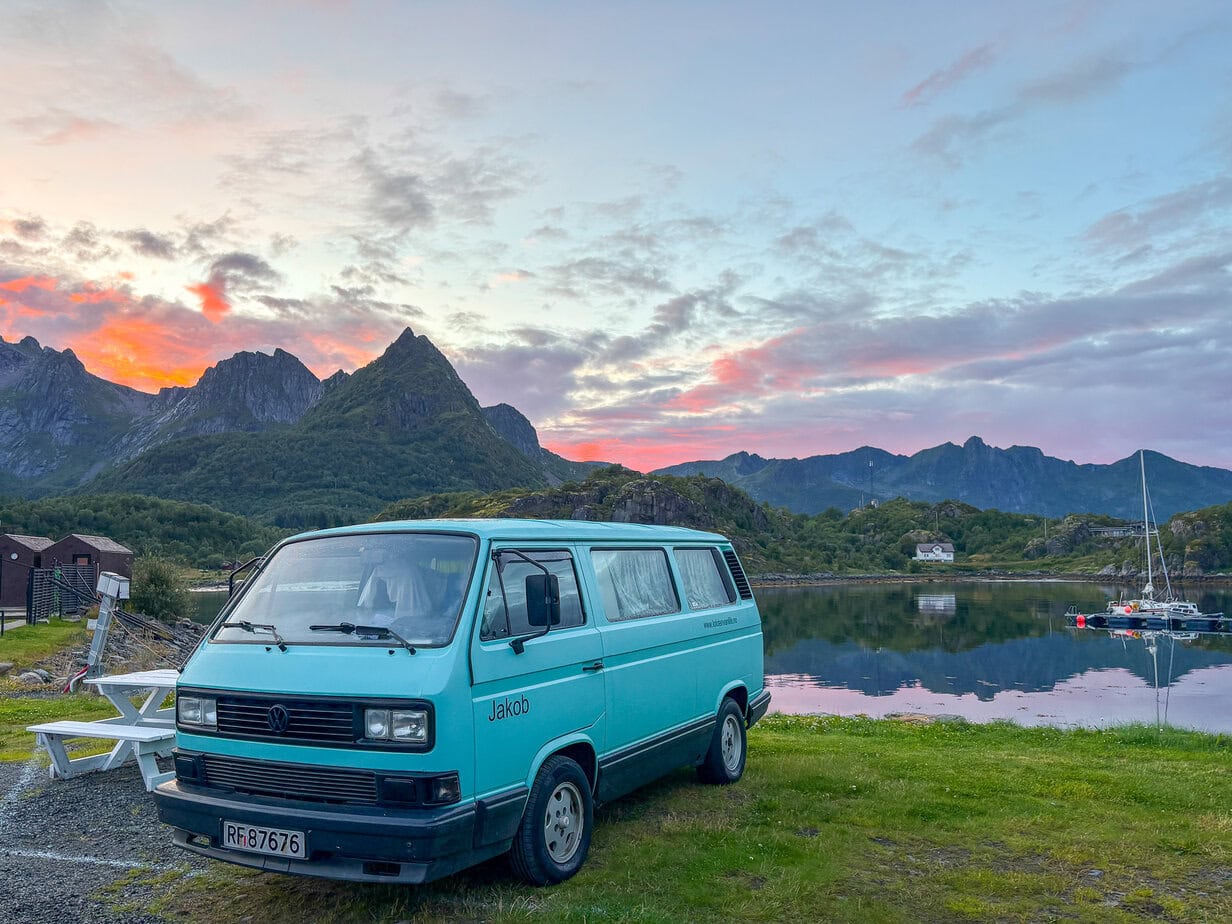
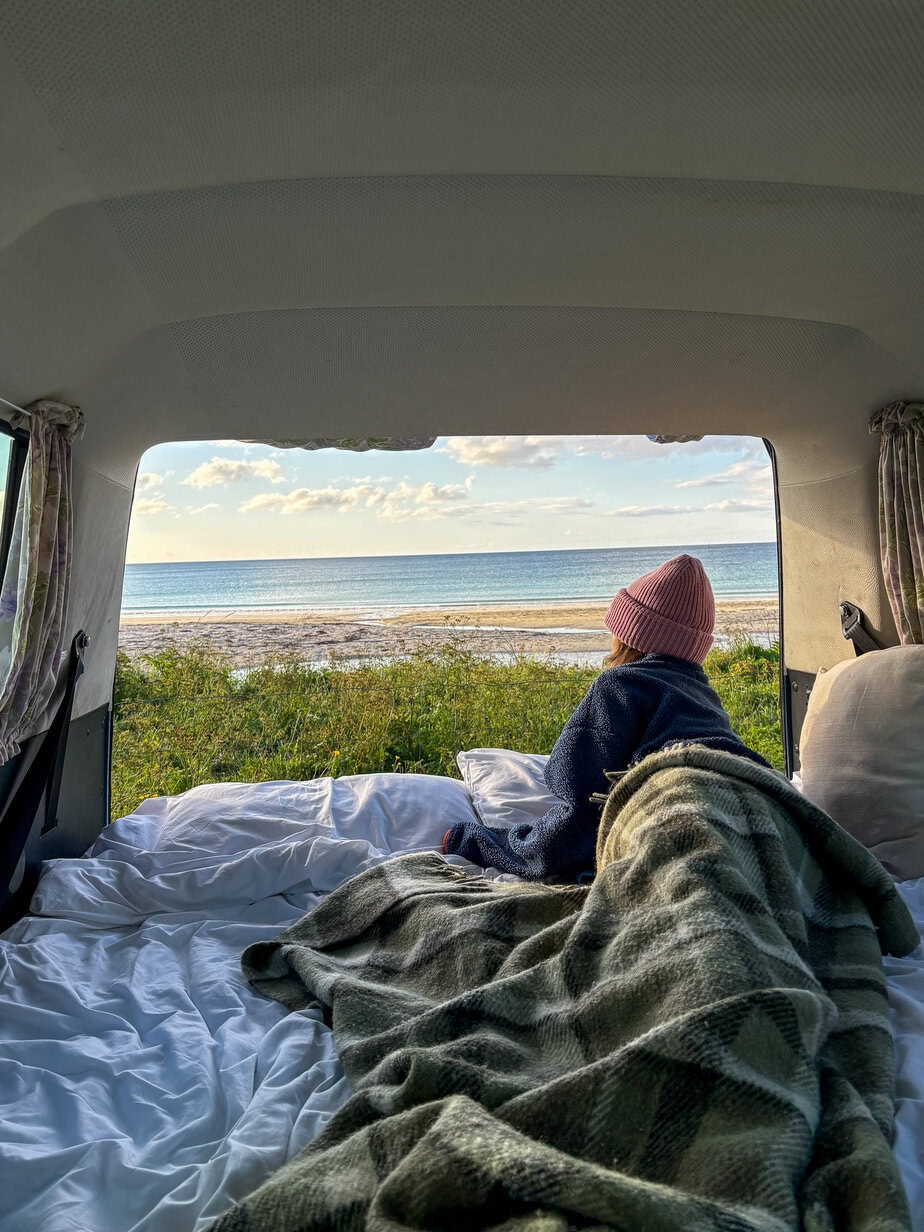
Lofoten is the ideal road trip destination (in summer, that is). We rented a vintage VW campervan and explored the islands from tip to tip.
The E10 is the main highway along Lofoten, and it’s incredibly scenic and well-kept. It’s narrow in some spots, but nothing too harrowing.
Between islands, you’ll pass over bridges or through long tunnels carved from rock. There aren’t any ferries to navigate—unless you want to day trip off Lofoten, that is.
There are also many campsites with motorhome spots and electricity hookups, and you often can just show up without a reservation. We fell asleep looking out over the ocean multiple times!
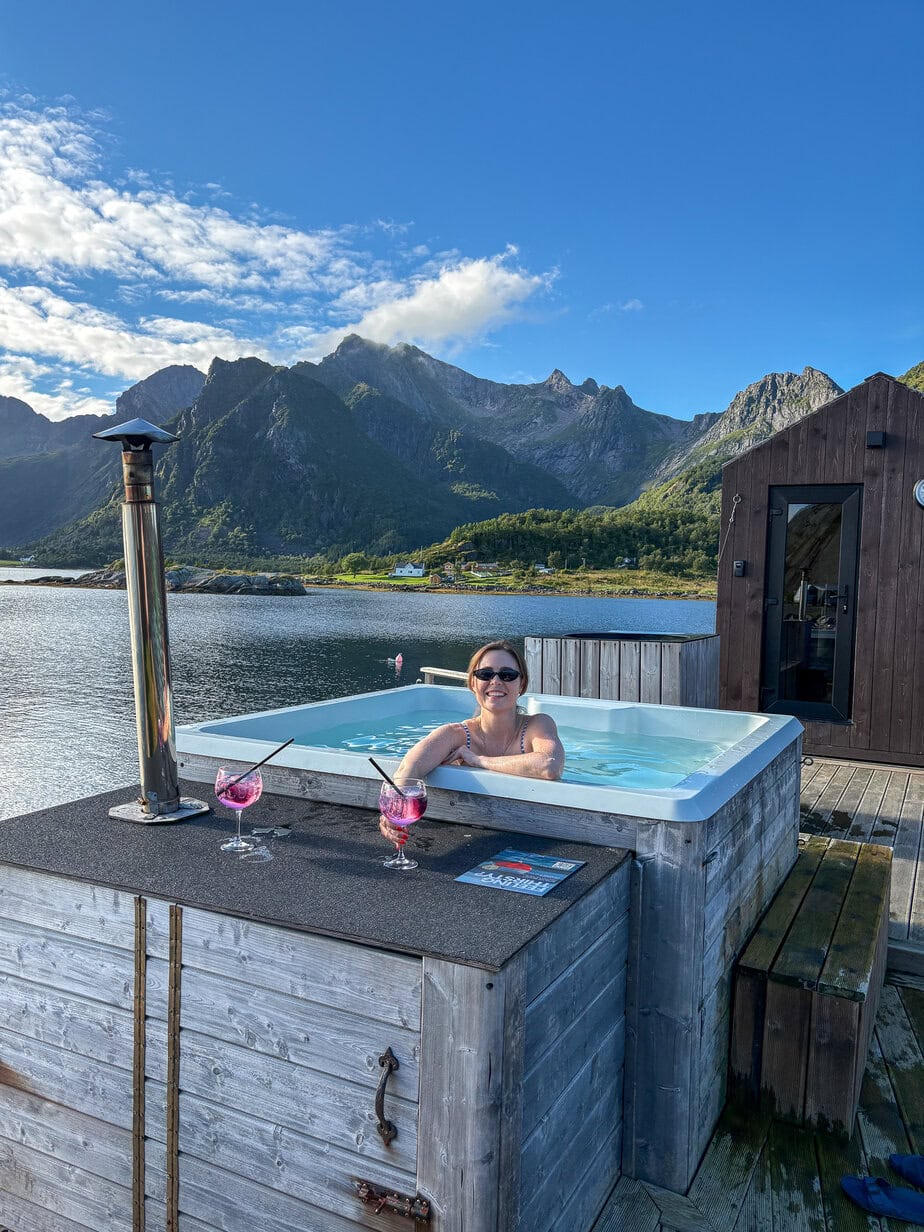
5. Try Saunas and Arctic Swimming
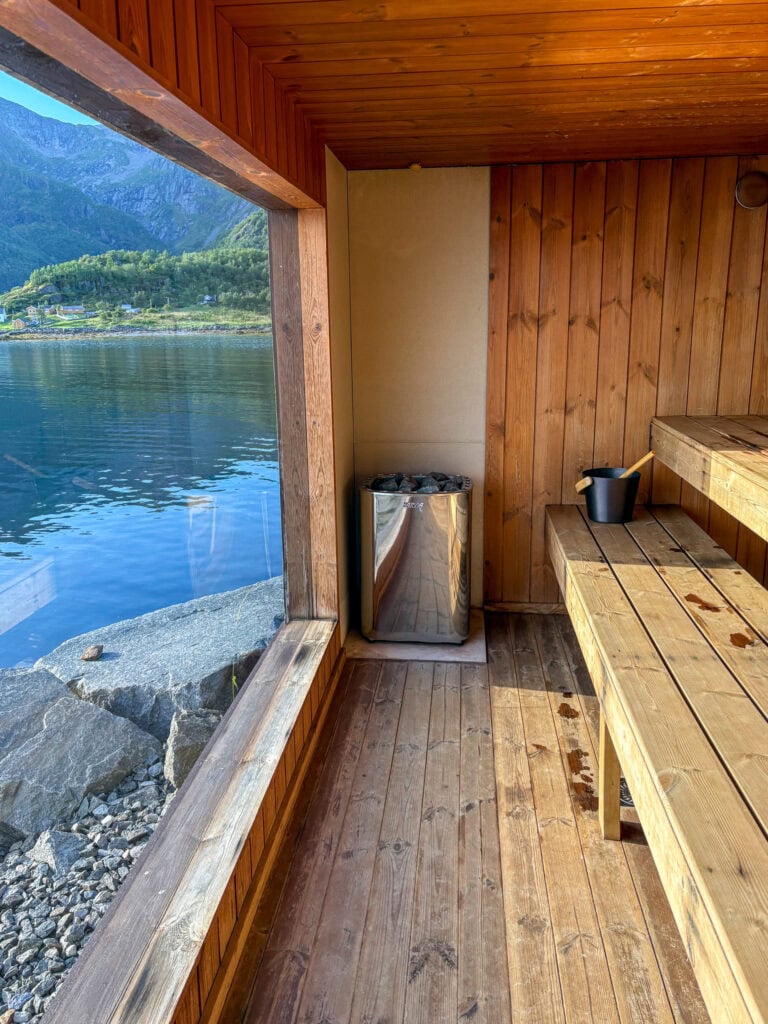
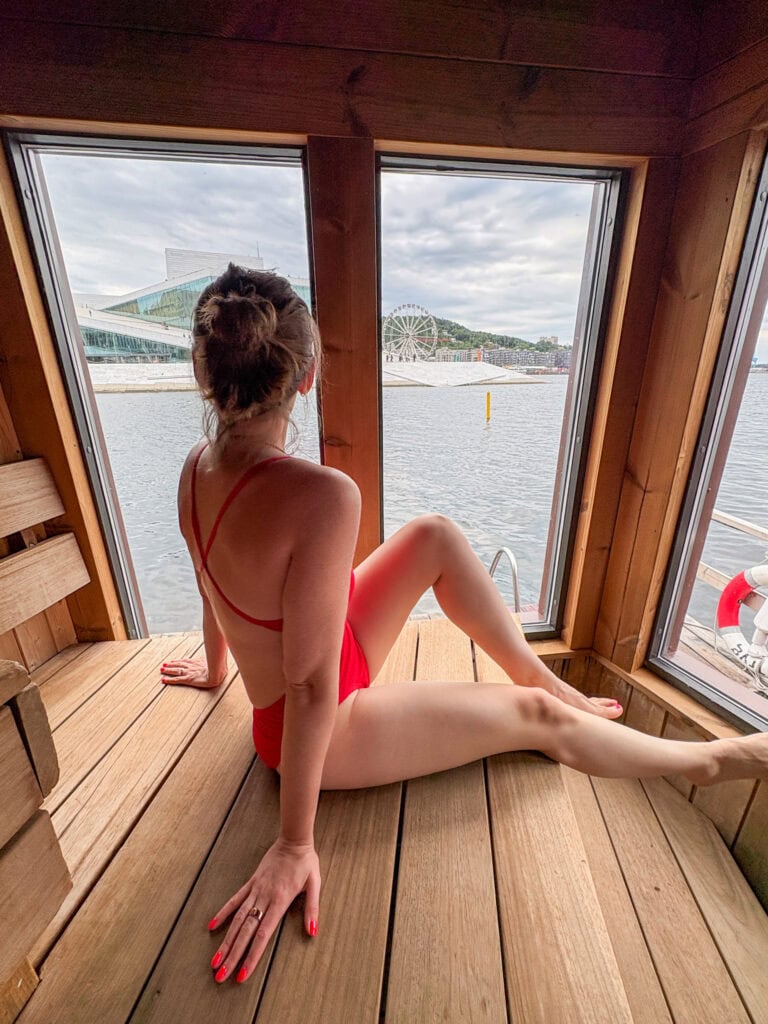
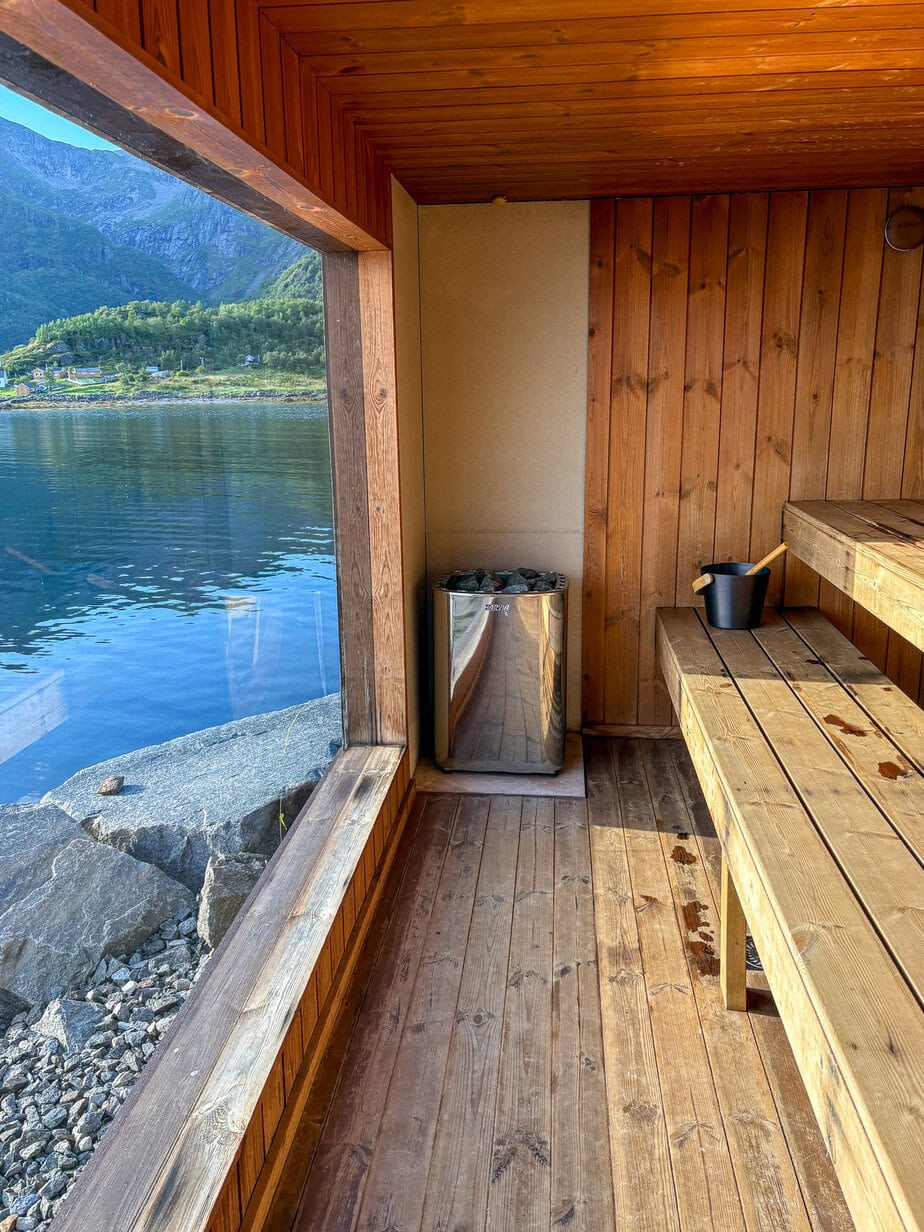
One of my favorite things about visiting Lofoten was the Nordic sauna and arctic swimming culture. This is something you can do in both summer and winter!
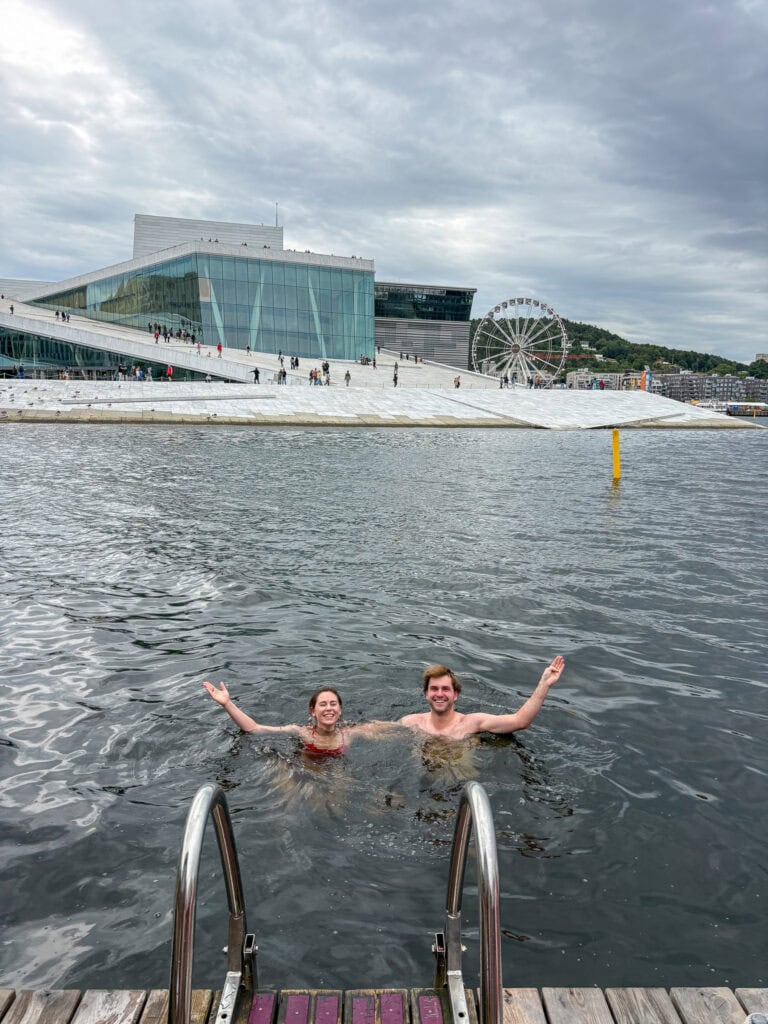
I can be a bit of a scaredy cat when it comes to cold water, so I’m not gonna lie… I really didn’t arrive in Lofoten thinking that this would be for me. But when we tried our first sauna, we challenged ourselves to run straight into the ocean, and it was thrilling.
Some of the best saunas in Lofoten include:
- Lofoten Beach Camp
- Skårungen — reserve in advance for a private 1.5 hour sauna and hottub!
- Hov Gård
- Reinefjord Sjøhus
You can also read my full guide to the 15 best saunas in Lofoten.
6. There are Tons of Unique Places to Stay
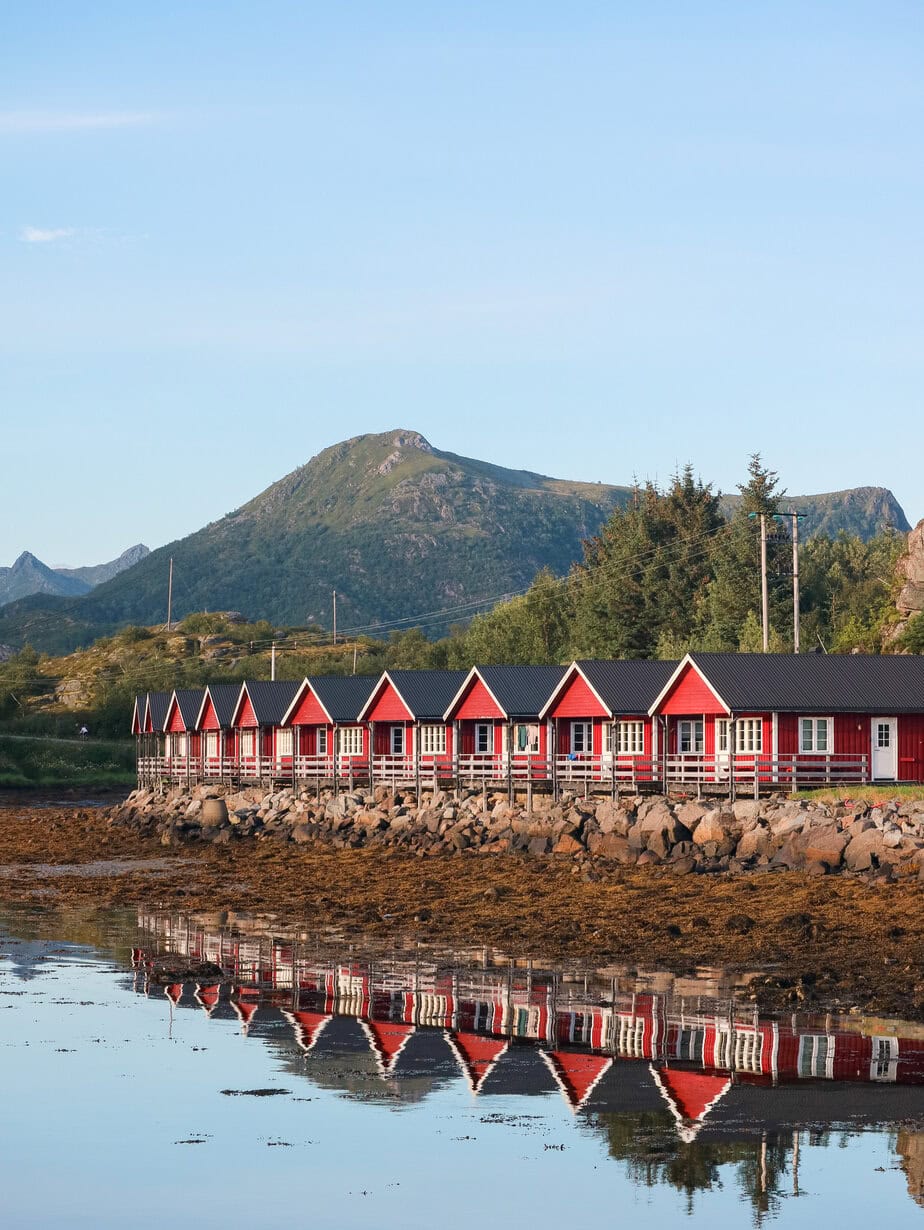
If you’re into boutique hotel culture, then get yourself to Lofoten. There are so many unique places to stay in the Lofoten Islands, ranging from wellness hotels to converted fisherman’s cabins (rorbuer).
Some of the best Lofoten hotels and rorbuer include:
- Reinefjorden Sjøhus ($$-$$$)
- Skårungen ($$)
- Nusfjord Village & Resort ($$-$$$)
- Lofoten Links Lodges ($$-$$$)
- Lofoten Basecamp ($$)
- Unstad Arctic Resort ($$$)
- Eliassen Rorbuer ($$-$$$)
These hotels may be more of a bonus if you’re visiting Lofoten in winter, and are looking for somewhere to warm up by the fire or duck into an on-site sauna.
If you visit in summer, like I did, then I recommend traveling in a campervan and staying at campsites (many of which can be pretty luxurious, with beachfront views, cozy cafes, yoga lessons, and more).
My favorite Lofoten campsites were:
- Lofoten Beach Camp
- Hov Camping
- Moskenes Camping
- Sandsletta Camping
- Skårungen
7. The Weather Makes a Nice Contrast
The weather in Lofoten is usually talked about as a downside (I do have a section complaining about it below!). However, to play devil’s advocate, Lofoten’s weather actually has some benefits.
Summer in Lofoten is mild and cool, and for me this was such a nice reprieve from the endless European heatwaves further south. As climate change unfortunately continues, I predict more and more people will be looking for cooler summer getaways, and Lofoten is perfect for that.
In the winter, Lofoten is covered in snow, however the gulf stream keeps the temperatures from getting too brutally cold. It’s therefore the perfect intro winter destination for people who don’t live in snowy places but want to experience a magical trip of snowfall and northern lights!
8. Eat the Best Cinnamon Buns in the World
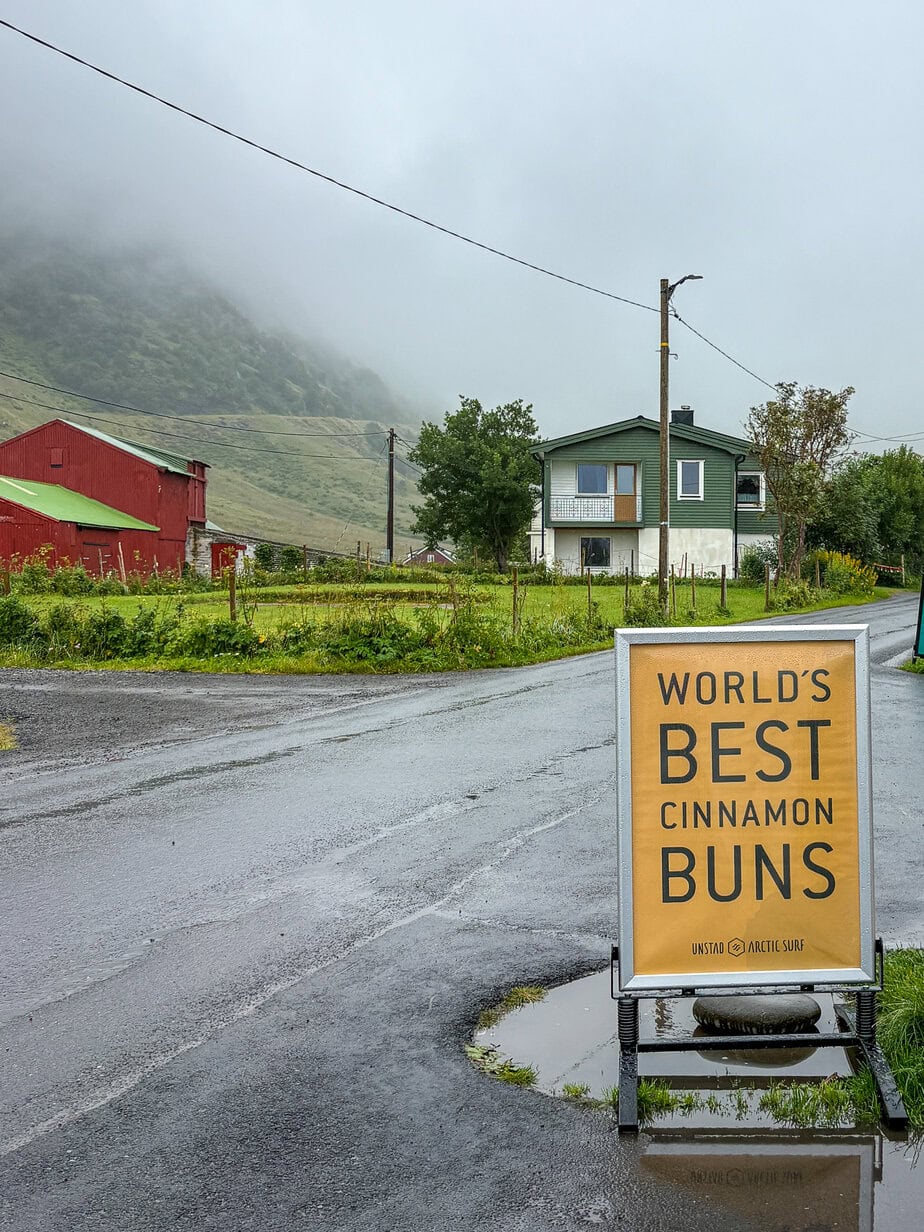
Finally, head to Lofoten to eat what’s arguably the best cinnamon bun(s) in the world. I know this is a bold claim, but my husband hasn’t been proven wrong yet (at least, when it comes to cinnamon buns).
There’s some controversy about who makes the best cinnamon buns in Lofoten. Dan’s personal favorite was the cinnamon bun at Unstad Arctic Surf. The Bakery at Å and Hansines Bakeri in Nusfjord also get rave reviews… but why not do your own research? 😉
If you’re gluten free like me, cinnamon buns aren’t quite the same incentive, but you can check out my gluten free Lofoten guide for everything you need to know!

4 Drawbacks of Visiting Lofoten
1. It’s Difficult to Get to Lofoten
Probably the biggest drawback to visiting Lofoten is that it’s difficult to reach. The islands’ beautiful, remote location is one of its major benefits, but the cost (both money and time) to get there can be significant.
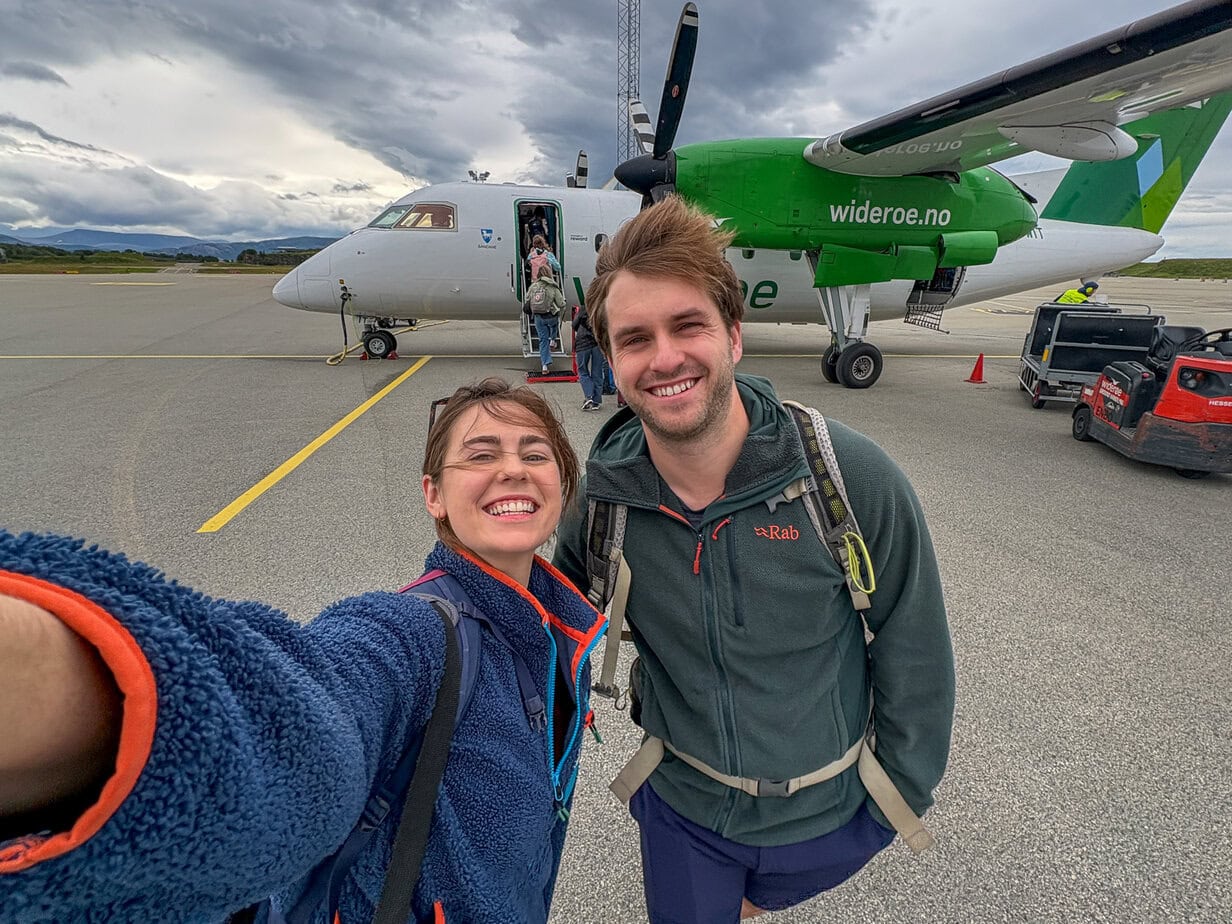
To reach Lofoten, we flew to Oslo, then to Bodø, then to Svolvaer, where we picked up our rental campervan. That was three flights over two days! We did make the journey a bit easier on ourselves by breaking it up with a 24-hour layover exploring Oslo.
Personally, I found the sheer amount of options for how to reach Lofoten quite overwhelming! It took us a lot of research on Skyscanner and Google Flights to find the best option for us.
You can read my guide on how to get to Lofoten, which breaks down all your options and hopefully will make your trip planning easier.
2. Norway is Very Expensive
Norway is a notoriously expensive country to visit. In addition to our expensive flights, we were also shocked at how expensive food at restaurants was.
I paid nearly $30 USD for a simple fried chicken dish at Oslo Airport! And Dan was regularly paying $6-13 USD for cinnamon buns in Lofoten.
You can save some money by picking up groceries, although you should still expect these to be pricy, too. Since we were traveling by campervan, we brought some dehydrated camping meals from home for convenience, and these ended up saving us quite a bit of money.
Staying in your campervan instead of hotels can also save money, but be warned that most campsites charge a fee, often around $40-50 USD per night, which isn’t insignificant (considering you’re likely already paying $250 USD+ per night of van rental!).
In Norway, there’s a law called Right to Roam, that lets you park and camp overnight anywhere, as long as you’re 150 meters or more away from the nearest home. This could also help save some cash, but be warned it won’t come with any toilets or facilities.
In short, expect a trip to Lofoten to be expensive, and budget accordingly.
3. Lofoten Has Unpredictable Weather
The weather in Lofoten can be unpredictable, so it’s best to visit with a loose itinerary if possible.
In the summer, Lofoten can be very gray and rainy. So, lower your expectations if you’re hoping for Lofoten to look like the sunny days or saturated sunsets of Instagram.
The same is true in winter. Some days can be very cloudy, and this may mean no northern lights.
We were told that our visit was the rainiest summer Lofoten’s had in decades, but we did get lucky quite a few times. For instance, we never got stuck in major rain during our hikes. And whilst some of our hikes led to disappointingly cloudy views, others were gloriously sunny!
I know it’s a bit corny, but the rain and clouds just made the sun that much sweeter when we finally got it.
I think that as long as you’re willing to plan around the weather and keep a positive attitude, the weather shouldn’t hold you back from visiting Lofoten. Just don’t go in with the wrong expectations.
4. Some Areas Can Get Crowded
Overall, I didn’t think Lofoten was a mega over-touristed destination (like many European destinations are in summer).
However, there were definitely a few times I got annoyed by crowds, so this is something to watch out for:
- Parking around the southern towns of Reine, Hamnøy, Sakisrøy, and Å was difficult, especially in the afternoons.
- Parking around Reine, and for the Reinebringen hike, was particularly difficult to find a spot.
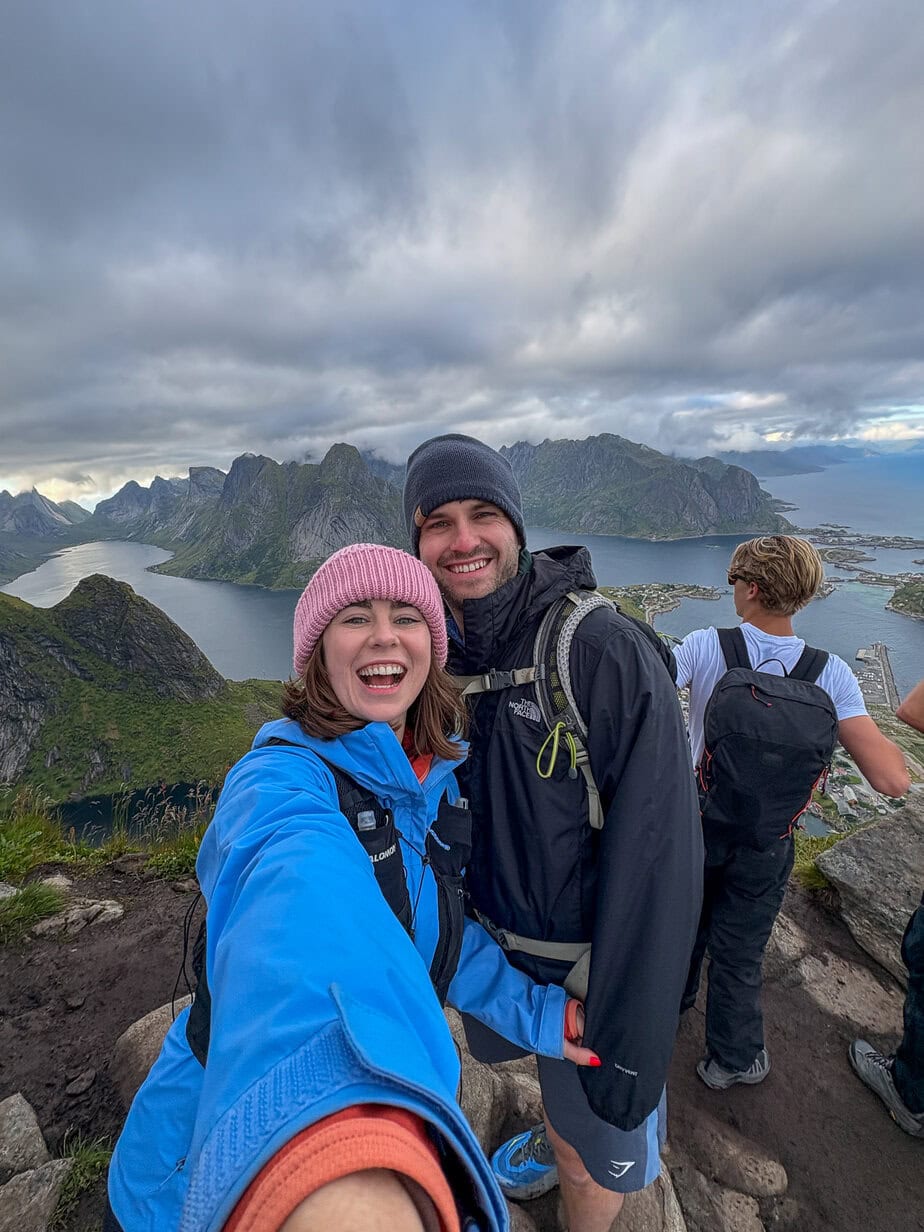
- The Reinebringen hike (the most popular hike in Lofoten) was very crowded and basically a queue of people climbing up and down steps.
- Nusfjord parking was extremely full by 12pm. We arrived around 9:30am so it wasn’t a problem for us, but it was packed by the time we left.
I don’t say any of that to scare you, but just to set expectations. We had plenty of hikes where we were the only ones on the trail for ages, and apart from the southern towns I didn’t find parking to be an issue.
Is Lofoten Worth Visiting in Summer vs. Winter? (Two Types of Travelers)
Lofoten is a very different destination in the summer vs winter, and it’s going to attract different types of travelers.
Summer in Lofoten is best for active and adventurous travelers who want to do steep hikes, experience the midnight sun, try arctic swimming, explore cute towns, and road trip through the islands in a campervan.
Winter in Lofoten is best for cozy travelers who want to photograph the northern lights, see epic snowy mountain views, and stay in boutique hotels or resorts.
Final Thoughts: Should You Visit Lofoten?
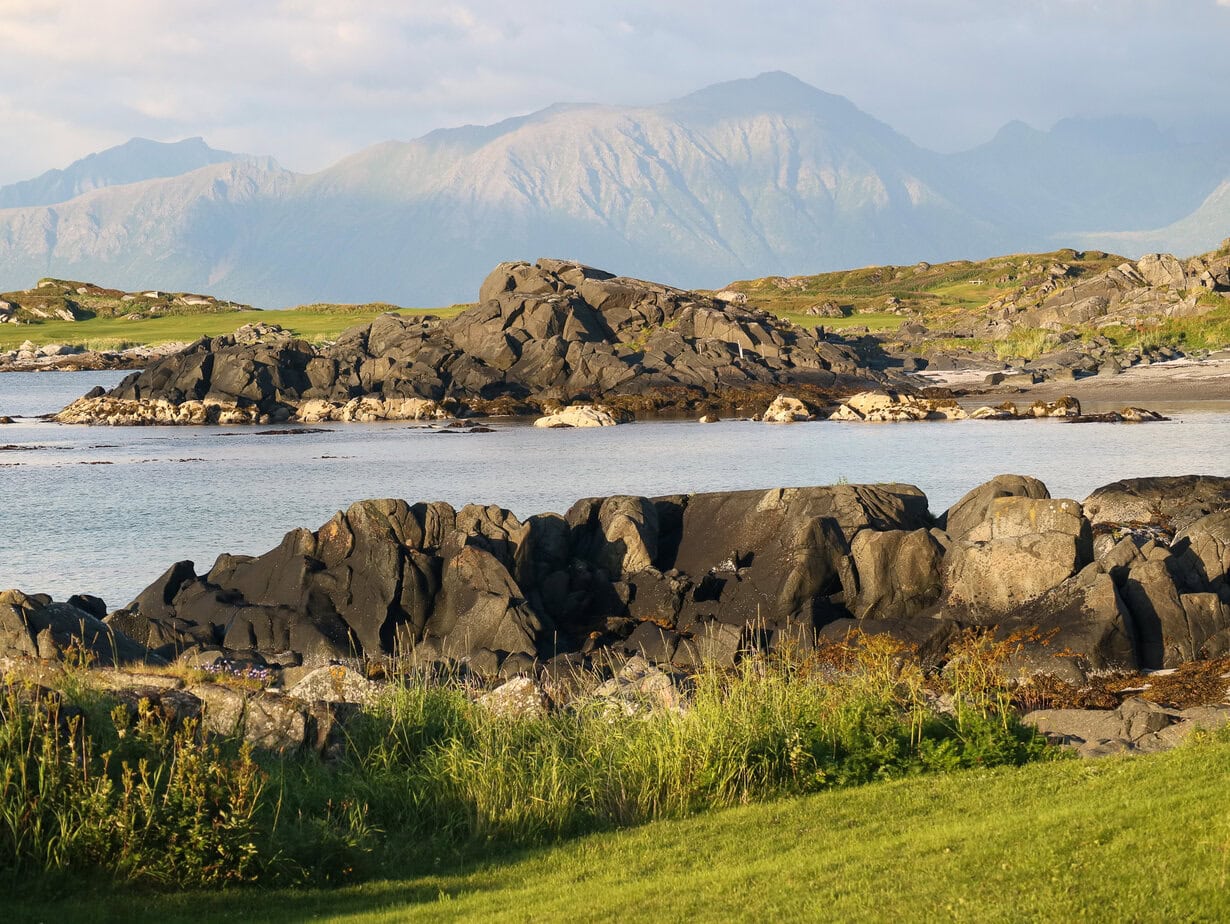
There you have it… all of my reflections on whether Lofoten is worth visiting. For me, it definitely was. Road tripping through Lofoten was one of my favorite trips to date, and I’m going to carry these memories with me forever.
What do you think? Is Lofoten worth visiting for YOU? Let me know in the comments below if you have any thoughts or questions!
You might also like these posts…

Pin it for later…