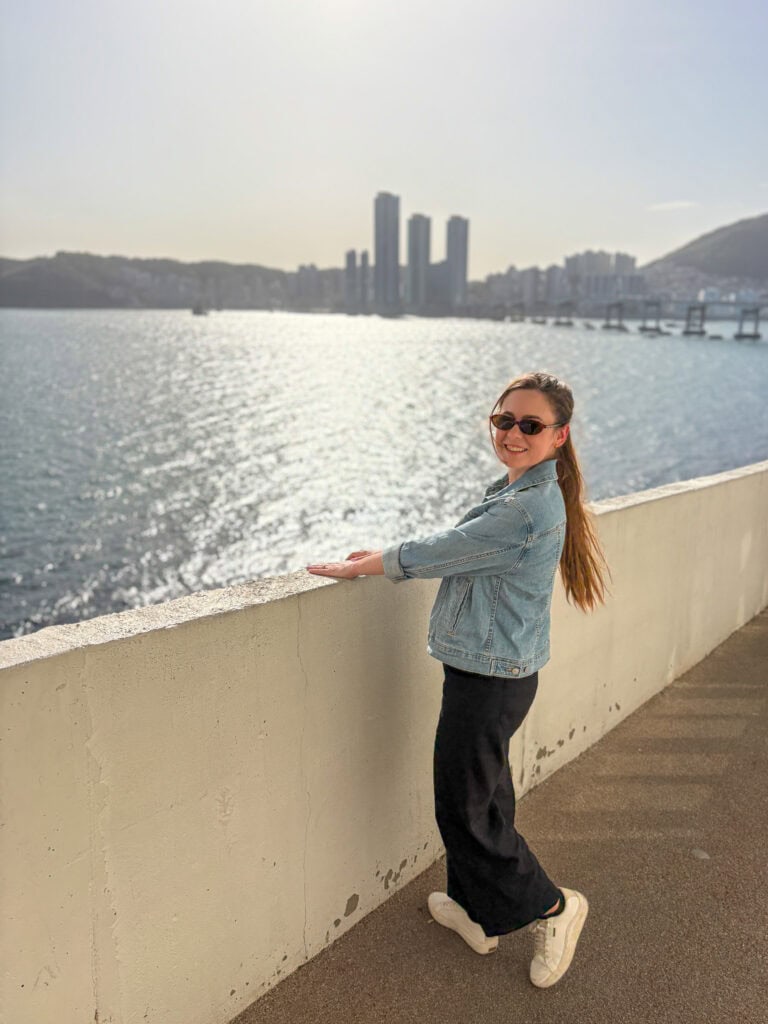
Gluten Free South Korea: What You Need to Know
This gluten free South Korea guide collects everything I learned from countless hours of research, planning, and of course my own travels in South Korea as a celiac. Is gluten free travel in South Korea easy? No. Is it worth it? I think so!
For decades, South Korea’s reputation was a celiac’s worst nightmare: tons of gluten (hi, soy sauce) and low awareness. So, I was shocked when I met a reader who told me she’d had a wonderful trip to South Korea, and even ate gluten free fried chicken during her travels!
I ended up planning my trip to South Korea thanks to her influence, and having the time of my life.
With planning, I believe that you can have an amazing trip to South Korea as a celiac. However, I really cannot understate the emphasis on planning! So, let’s dive in!
Note | This article covers important advice for navigating South Korea as a celiac. If you’re looking for a list of gluten free restaurants, then check out my gluten free Seoul and gluten free Busan guides.
Gluten Free South Korea: Understanding the Challenges
South Korea offers a particularly tricky combination of challenges when it comes to being gluten free:
- High gluten cuisine
- Hidden gluten (sometimes even in rice and water 😩—more on this below)
- Low awareness of gluten free
- Low diagnosis rate of celiac disease and wheat allergy
- Language barrier
There’s some (kinda) good news, though:
Awareness of celiac disease and gluten free diets is on the rise in South Korea. This is very much thanks to an increased interest in keto diets. However, this represents its own issues regarding cross contact, since gluten free may be seen as a trend rather than a medical necessity.
Allergen labeling is also improving in South Korea. However, of the 25 required allergens to label, only wheat is included. Barley, rye, and oats won’t show up.
Like anywhere (even at home!), you’re taking a risk when you eat out. Saying that, I am a sensitive celiac and I did not get sick a single time during my trip thanks to precautions I took. Hopefully, with the help of this guide, you won’t either!
My Top Tips for Eating Gluten Free in South Korea
Okay, enough with the doom and gloom. Yes, it’s tough to be gluten free in South Korea, but it’s definitely possible. These are my top six tips to make your own trip easier.
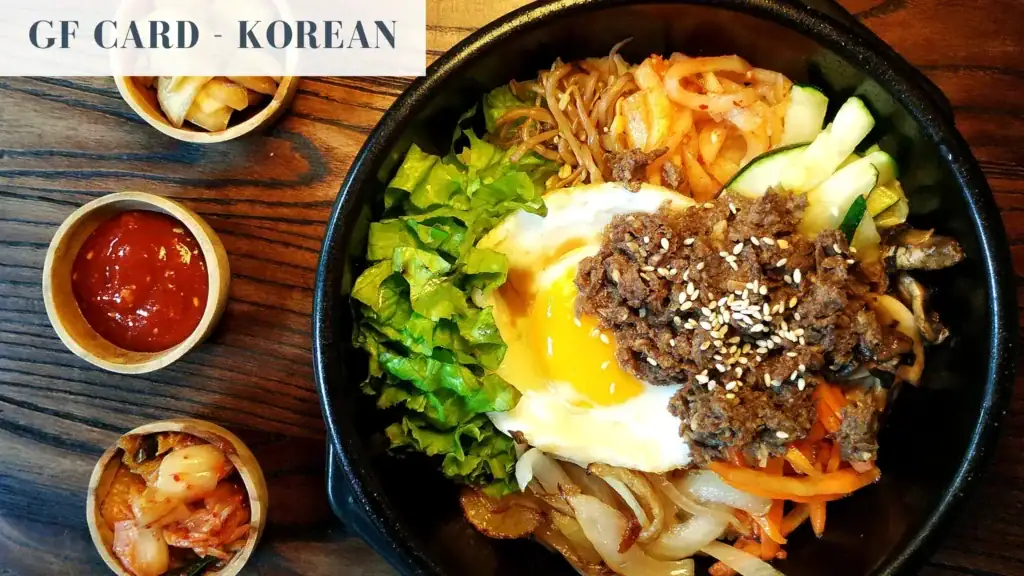
1. Use This Exact Gluten Free Korean Translation Card
My #1 travel tip? Use this gluten free Korean translation card during your travels.
That card was my lifeline in South Korea, and it’s unlike any other translation card on the market. Not only is it translated twice (by human Korean speakers familiar with celiac!) but it’s also the only translation card available that is specific to Korean cuisine.
That means it calls out hidden gluten sources, like gojuchang and barley tea, that other cards don’t. In my experience, it was really well received by staff and saved me quite a few times.
2. Build Your Itinerary Around Restaurants
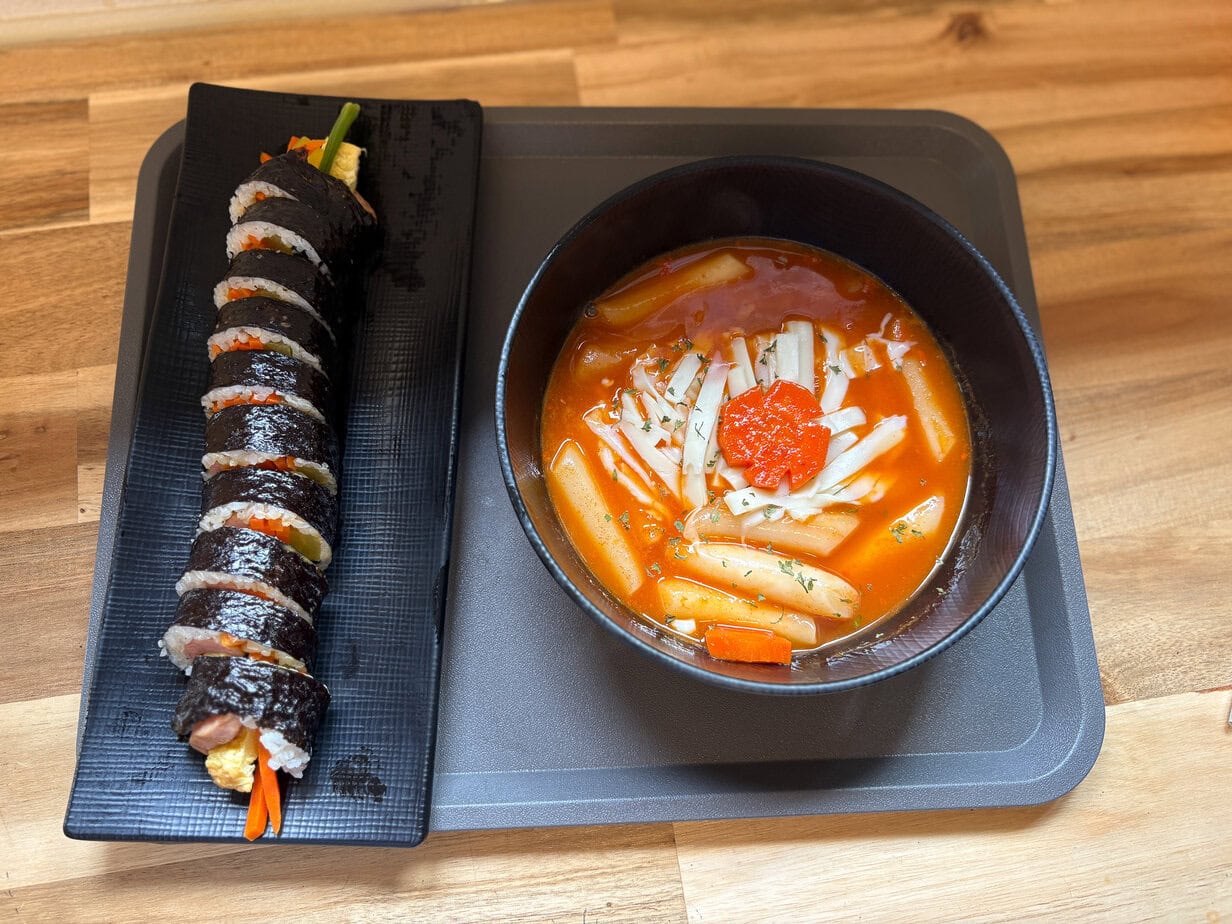
My strong opinion is that to have a good time in South Korea as a celiac, you need to put in the effort to build an itinerary around gluten free restaurants. (Similar to my experience being gluten free in Japan!).
Unfortunately, in South Korea you can’t pop into just any restaurant, because the majority of restaurants have so much gluten they can’t safely serve you. Instead, you’re going to need to focus on restaurants experienced in serving gluten free customers.
My gluten free South Korea map, and the restaurant lists in my Seoul and Busan guides should help!
3. Double Check Opening Hours and Days
Another similarity to Japan is that in South Korea restaurants have limited opening hours, with even “breakfast” spots opening at 10am, 11am, or later!
Opening days are also limited. Restaurants frequently close for extended vacations.
You can double check opening hours and days before your visit using the following resources:
- Google Maps shows regular opening hours and days and is great for itinerary planning before your trip, but it may not be updated for sudden closures.
- Naver Maps works best on-the-ground in South Korea, and restaurants post notices in the app for closures.
- Instagram is another good tool. Many restaurants post about closures, or you can message them. My Seoul and Busan guides include Instagram links for each restaurant!
4. Take a Gluten Free Cooking Class
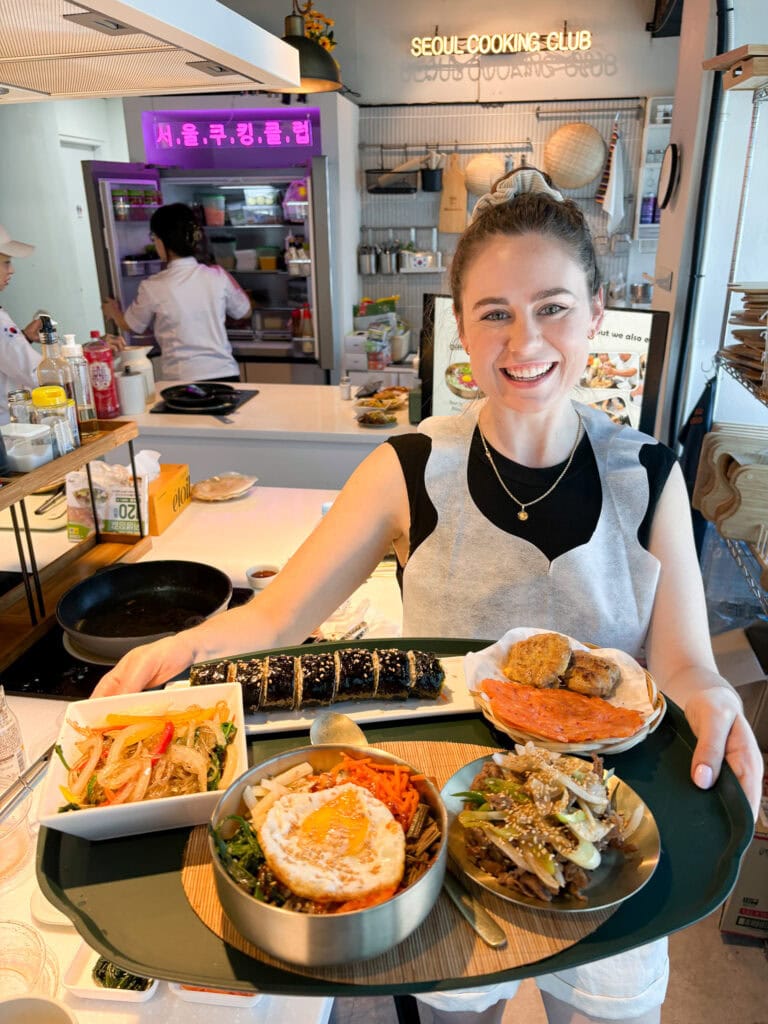
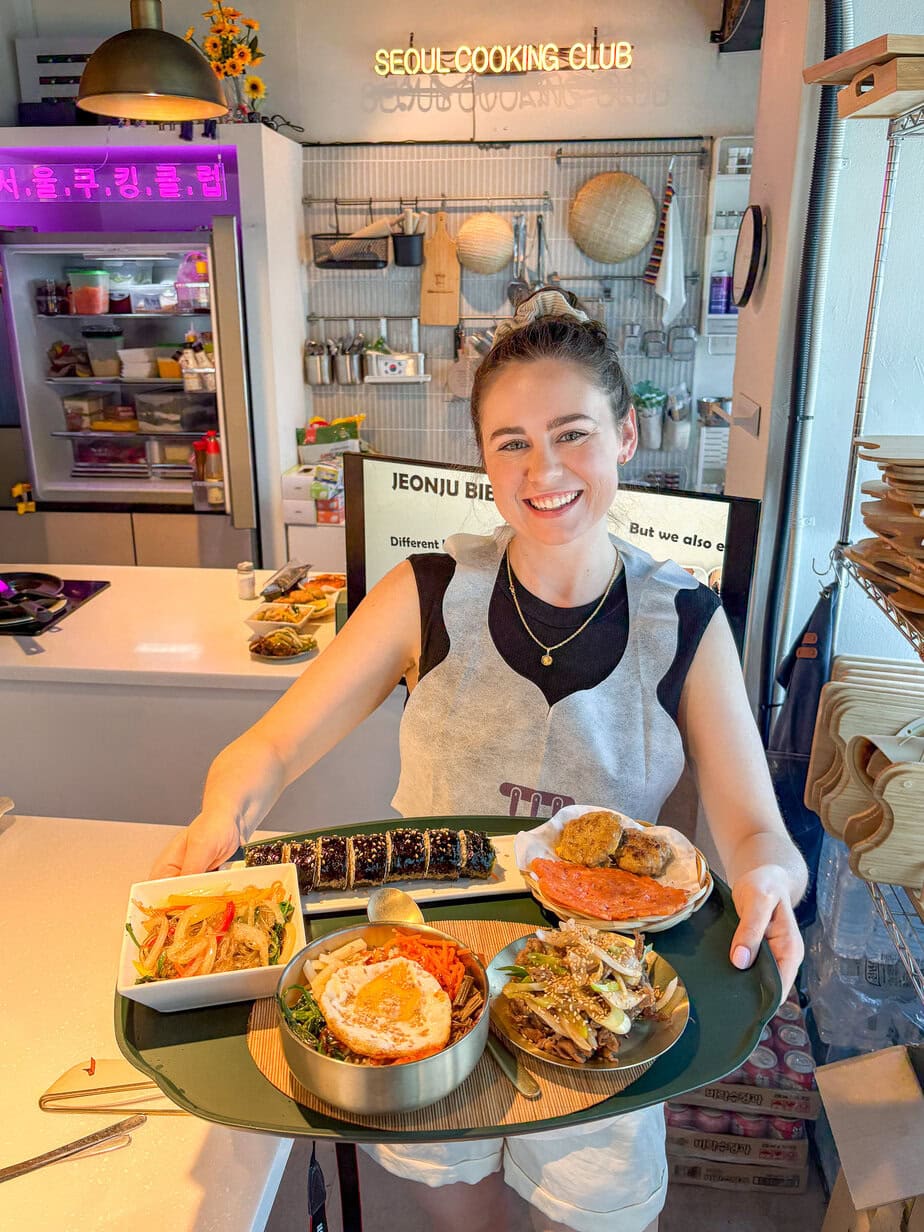
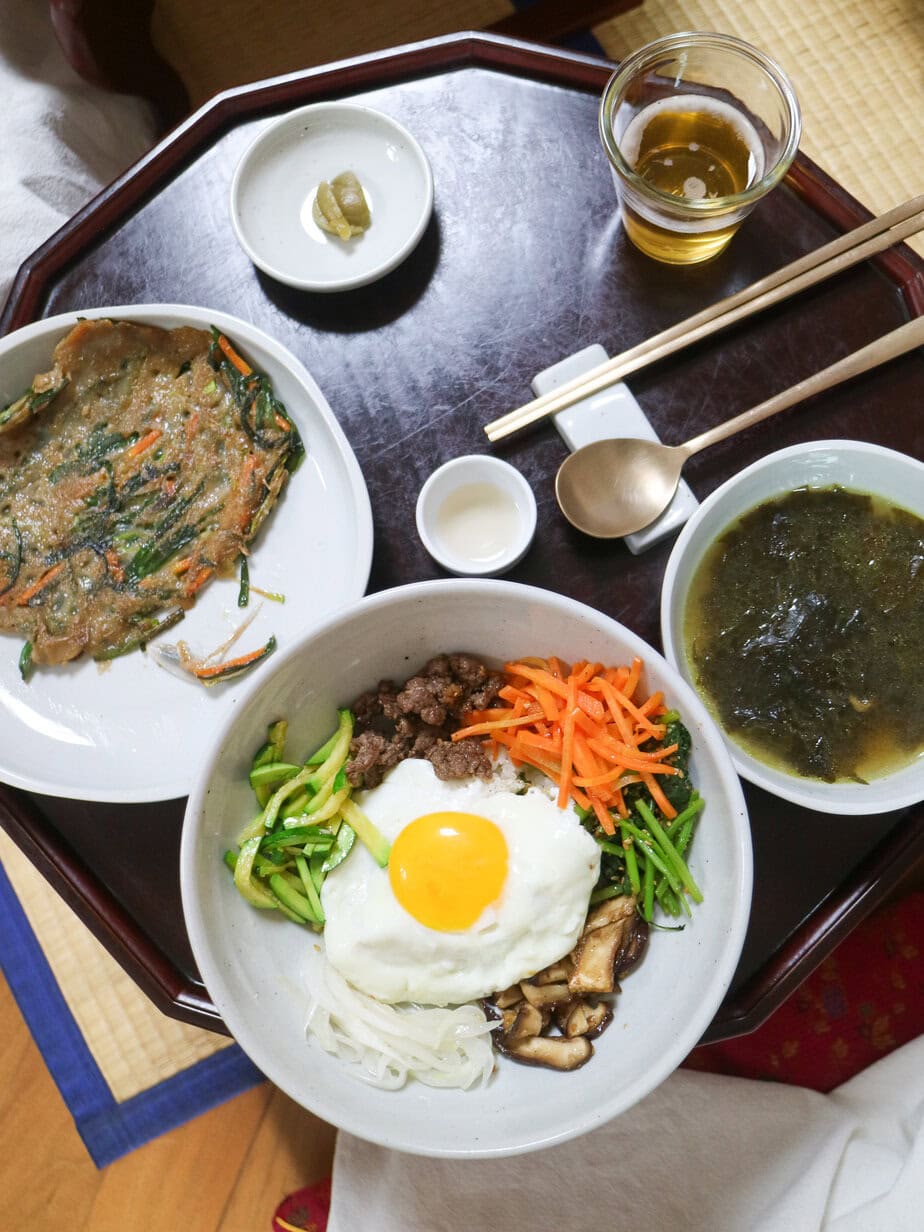
My favorite gluten free travel hack in South Korea was to take a cooking class in both Seoul and Busan! These are the classes I personally took as a celiac, and recommend:
Why is this such a hack, you ask? Well, gluten free restaurants can be hard to come by in South Korea, and these classes guarantee a delicious meal of traditional Korean cuisine.
Also, because you are cooking the food yourself at your own station (with gluten free sauces and flour provided!) you can set your mind at ease that your meal will truly be free of cross contact.
Just be sure to notify them ahead of time that you’re gluten free, so they can prepare!
If you want more in-depth information on those classes, check out my reviews of our Seoul cooking class and Busan cooking class.
5. Book Your Accommodation Near Gluten Free Restaurants
Building your itinerary around gluten free restaurants extends to where you stay. Your trip will feel MUCH easier if you can easily come home to your hotel after a gluten free meal.
Gluten free restaurants tend to exist in clusters in Seoul and Busan. I recommend staying in the following neighborhoods.
Seoul gluten free-friendly neighborhoods:
Hongdae, specifically near Hongik University Station. You’ll be walking distance to 100% gluten free Monil 2 House Bakery, a great breakfast option. Sunny House (a gluten free cafe) and several dinner options are also nearby. Hongdae is ideal for transport and other activities.
Where to stay in Hongdae, Seoul:
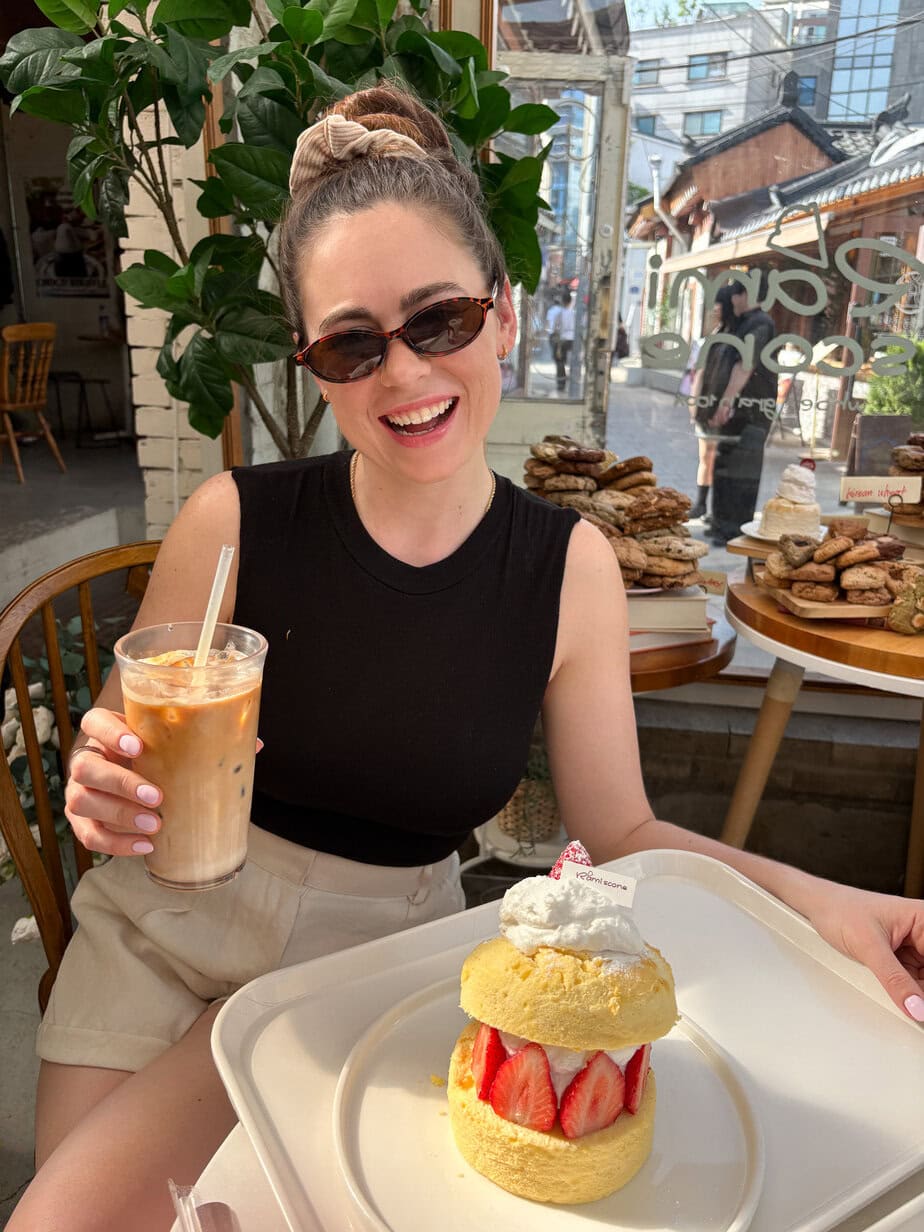
Anguk. A lovely historic neighborhood near the palaces, perfect for a hanok stay. You’ll be walking distance to gluten free spots like Sky Gimbap, 853 BBQ, Rami Scone, and more.
Where to stay in Anguk, Seoul:
- Analog Hanok—Airbnb where we stayed, and the host made me a GF breakfast!
- AWIK Hanok Stay
- Nostalgia Hanok Hotel
- Hanok Got
Busan gluten free-friendly neighborhoods:
Seomyeon Station. The best are for transport links in Busan, and has a high concentration of restaurants that can serve a gluten free dinner!
Where to stay in Busan:
- Gem Stay Seomyeon—we loved this affordable hotel with kitchenette!
- H-Avenue Hotel
- Queens Hotel
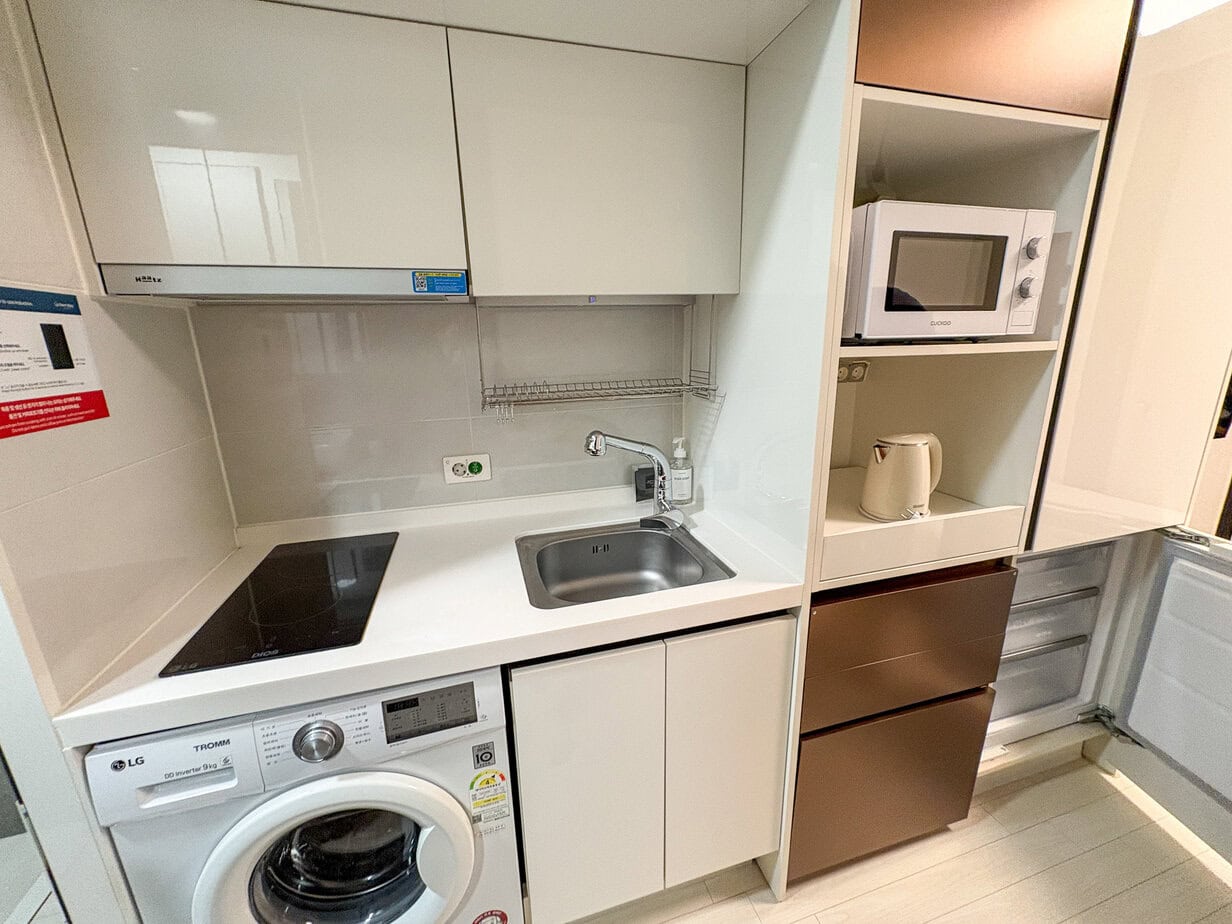
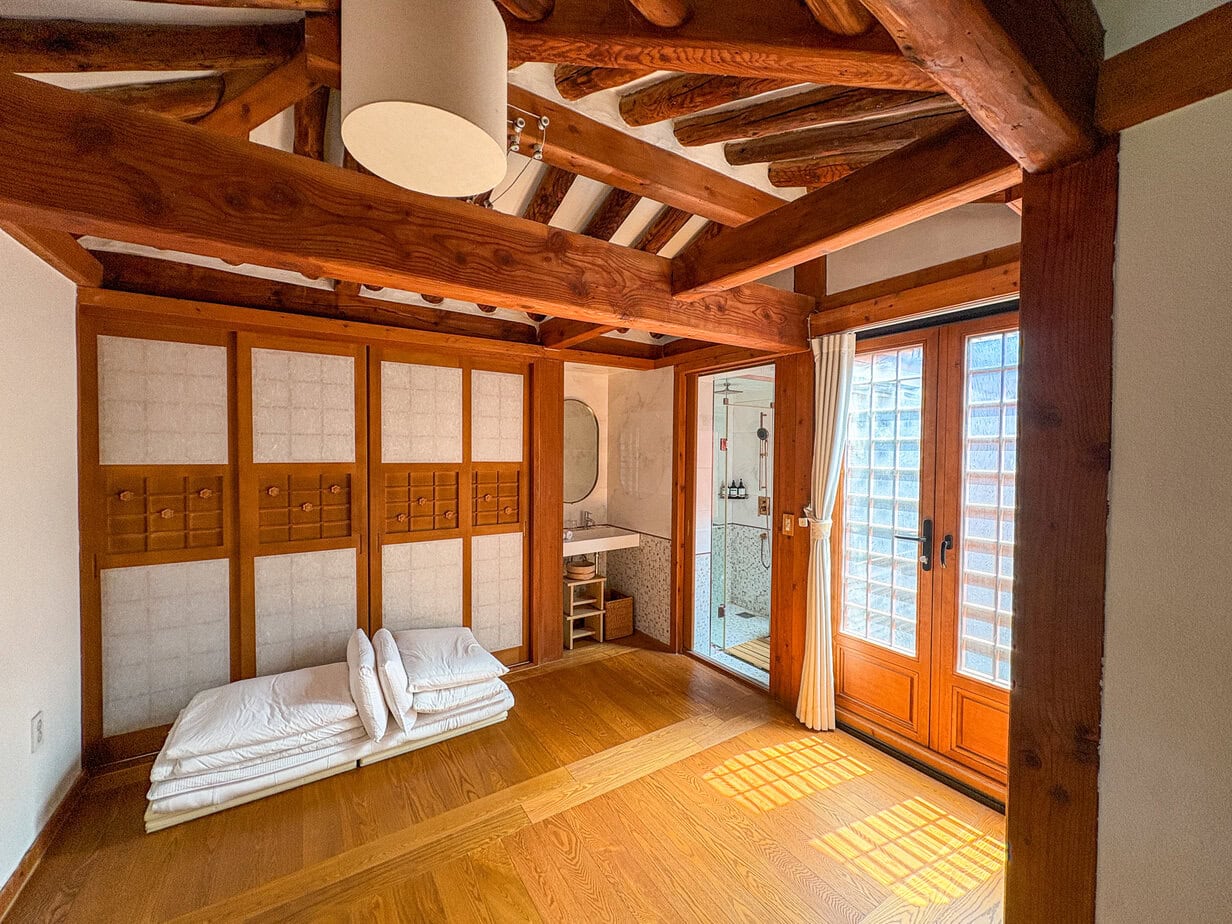
6. Pack Gluten Free Sauces
Finally, South Korea is a BYOS situation—bring your own sauce! To make your trip a bit more flavorful and fun, I recommend you pre-pack the following gluten free sauces:
My next-level gluten free travel hack is to also pack some squeezy toiletry tubes, to decant a small amount of the sauce into. That way, you can store the big bottles in your hotel’s mini fridge, and only carry a small amount with you each day.
I also recommend bringing a dry bag to pack the sauces within your suitcase. This ensures no accidental sauce explosion ruins your clothes!
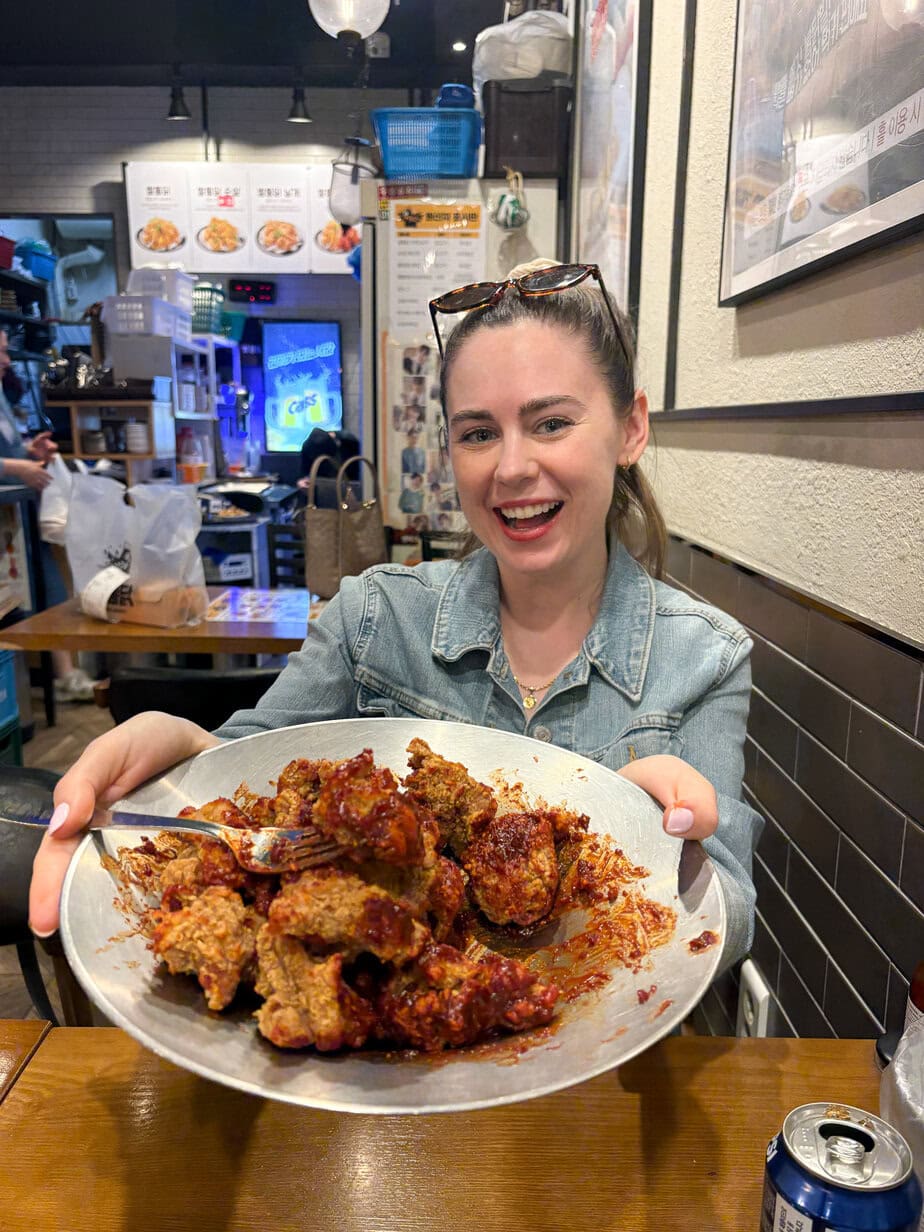
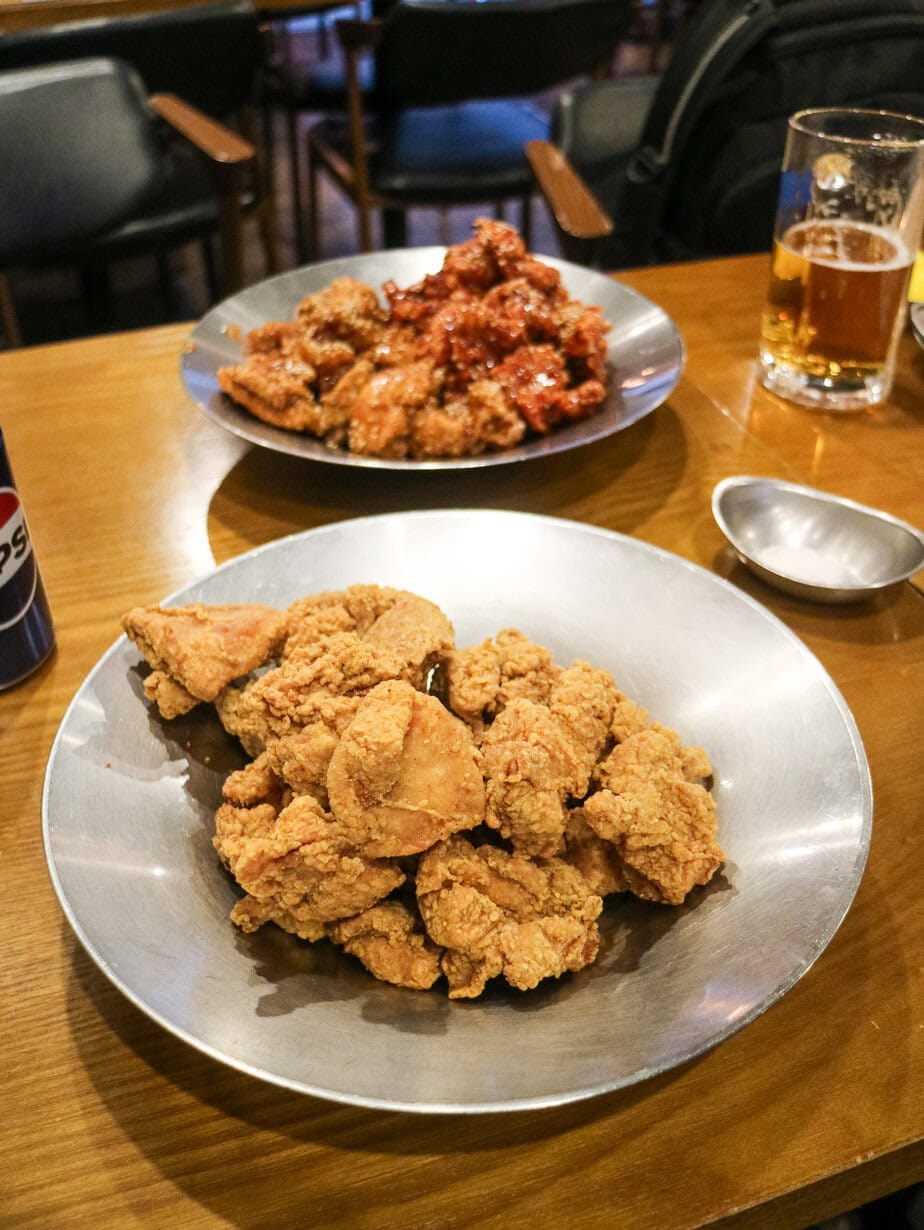
Don’t be afraid to use these sauces at restaurants, like Korean BBQ, or the fried chicken restaurant in Seoul where everything is gluten free except the sauce!
It’s much tougher to find gluten free sauces within South Korea, but still possible. I recommend these spots:
- Monil 2 House: A gluten free bakery in Seoul, sells homemade gluten free soy sauce.
- Lotte Mart: Some people report that the grocery department within Lotte Department Stores carry gluten free soy sauce, gojuchang, and other products. I looked in Busan and didn’t find any, though!
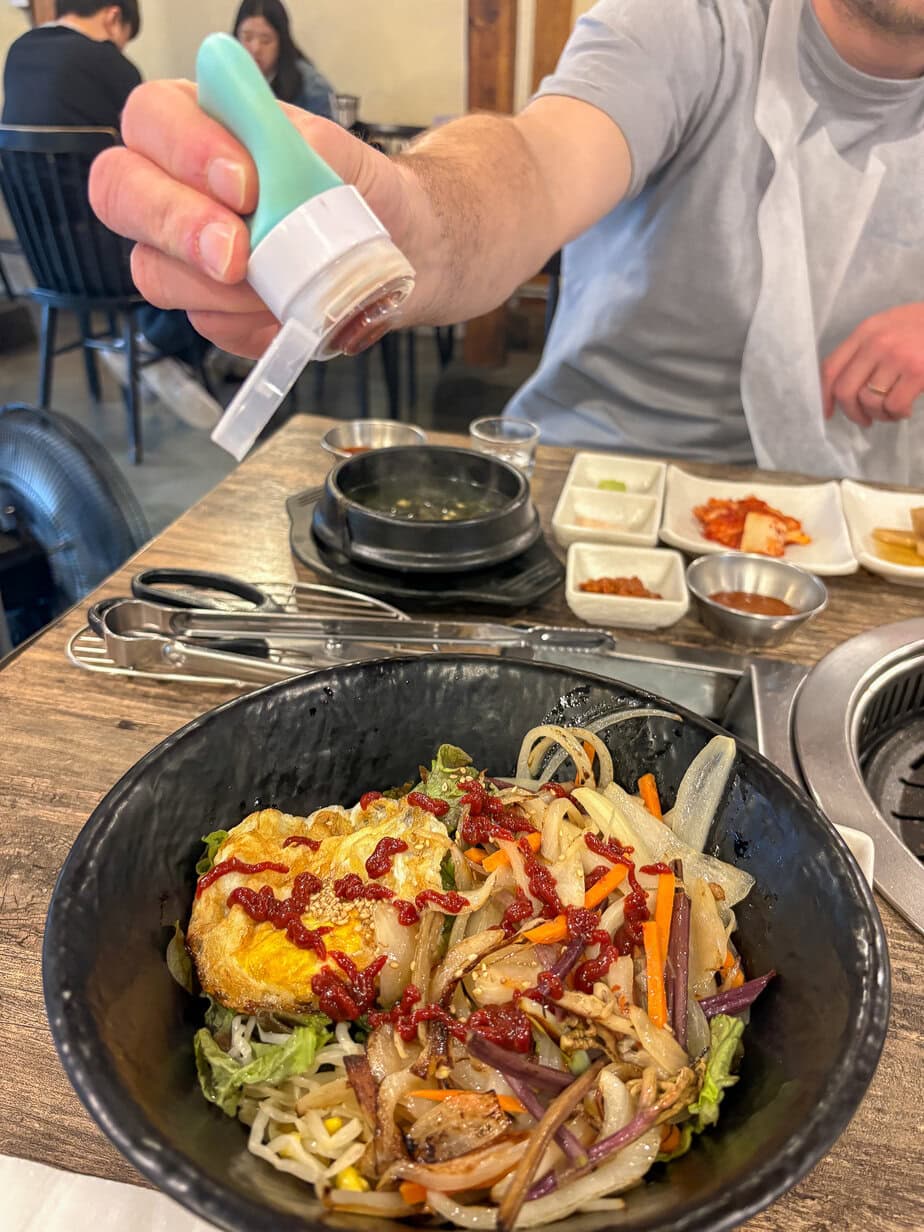
Hidden Sources of Gluten in Korean Dishes
It is so important to know where gluten hides in Korean cuisine before you visit. I was definitely surprised by a few of these.
Watch out for these hidden gluten sources in South Korea:
- Soy sauce: I’m sure you already know that soy sauce contains gluten. And in South Korea, it’s added to most dishes.
- Gojuchang: This spicy Korean chili paste is delicious but almost always contains added wheat. Some restaurants (like those in my Seoul and Busan guides) offer gluten free gojuchang, but that’s the exception not the rule.
- Doenjang: A fermented soybean paste, similar to miso, which usually contains wheat.
- Kimchi: This one shocked me, because kimchi (spicy fermented cabbage) is usually gluten free in the west. However, in Korea, kimchi often contains added wheat if it’s produced in a large factory. You may be able to find gluten free kimchi if it’s homemade or cooked in a small batch, but always double check.
- Banchan: The assortment of pickled side dishes that’s often served alongside Korean barbecue almost always contains gluten due to soy sauce, gojuchang, and wheat.
- Barley tea/water: Yes, even water could be unsafe for celiacs in South Korea! Pause before sipping on the complimentary bottle of water or tea that many restaurants offer. Often, this is brewed with barley so definitely not gluten free. Always check before you drink!
- Sushi rice: Sadly, sushi isn’t an easy “safe” meal in South Korea. Similar to Japan, many restaurants add grain vinegar (containing barley or wheat) to their sushi rice, because it’s cheaper than traditional rice vinegar. Always check about this before you dine!
- Shared grills and fryers: Similarly to cross contact at home, you’ll need to avoid any meat/food cooked on shared grills or fryers.
There are also more obvious sources of gluten in South Korea: most noodles, jeon (pancakes), marinated meats, dumplings, the list goes on.
I don’t want to bore you with a long list of Korean dishes that will make your eyes glaze over and that you’ll immediately forget, so my advice is to assume a food is unsafe until proven otherwise, and use your translation card.
A Note on Gluten-Containing “Strong Rice” in South Korea
Speaking of hidden gluten in South Korea, I have to dedicate a whole section to the mind-mess that is “strong rice.” I’ve never seen another article warn about this, and it’s so important to know!
Yes, unfortunately in South Korea sometimes gluten is added to rice flour.
In Korean, it is called 강력 쌀가루, which translates to strong rice or high-protein rice flour, and contains added gluten protein.
Because strong rice flour is labeled as wheat-free or “100% Korean rice,” some people mistake this as gluten free.
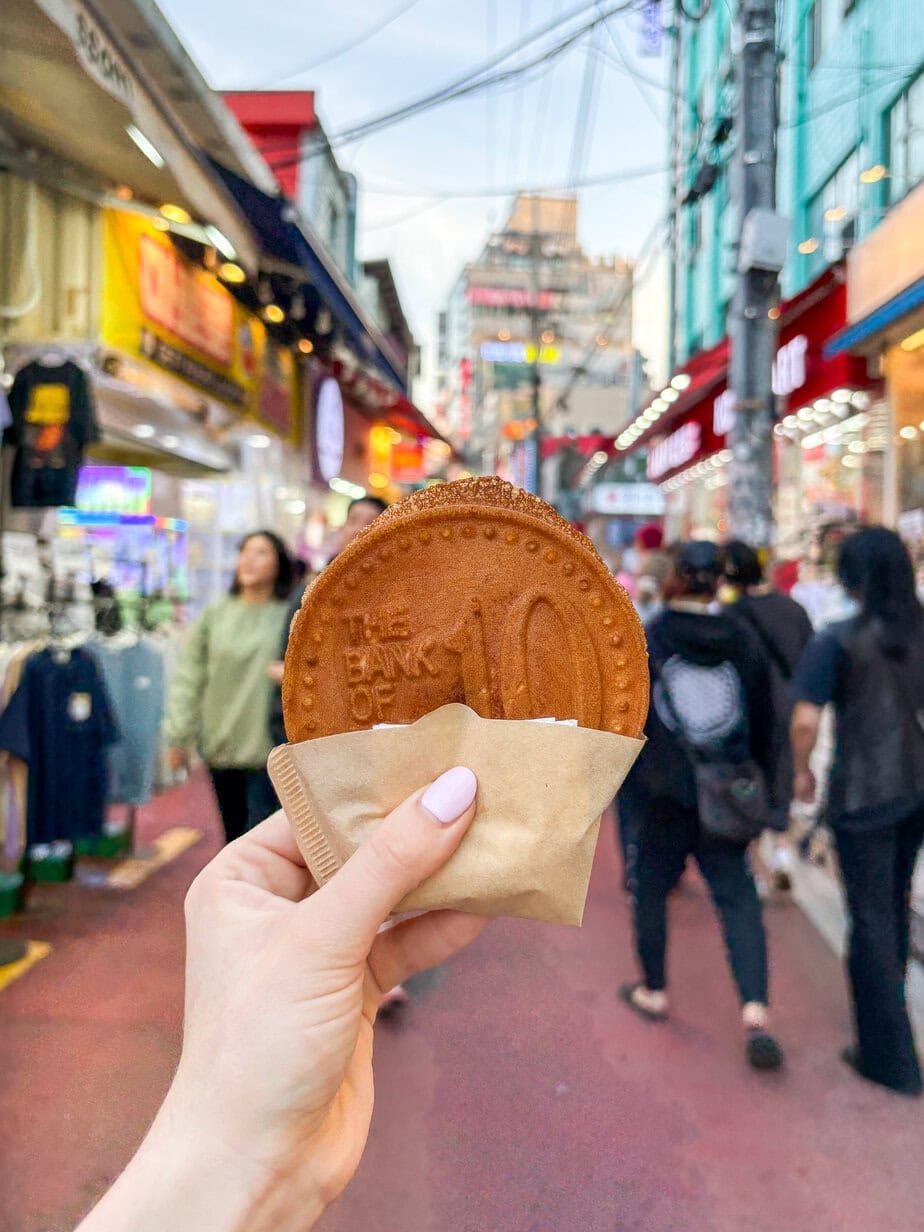
For this reason, you need to be REALLY cautious of any street food vendors or bakeries that label their products as “100% Korean rice” or “100% rice.” Always, always, always confirm that the product also contains 0% gluten!
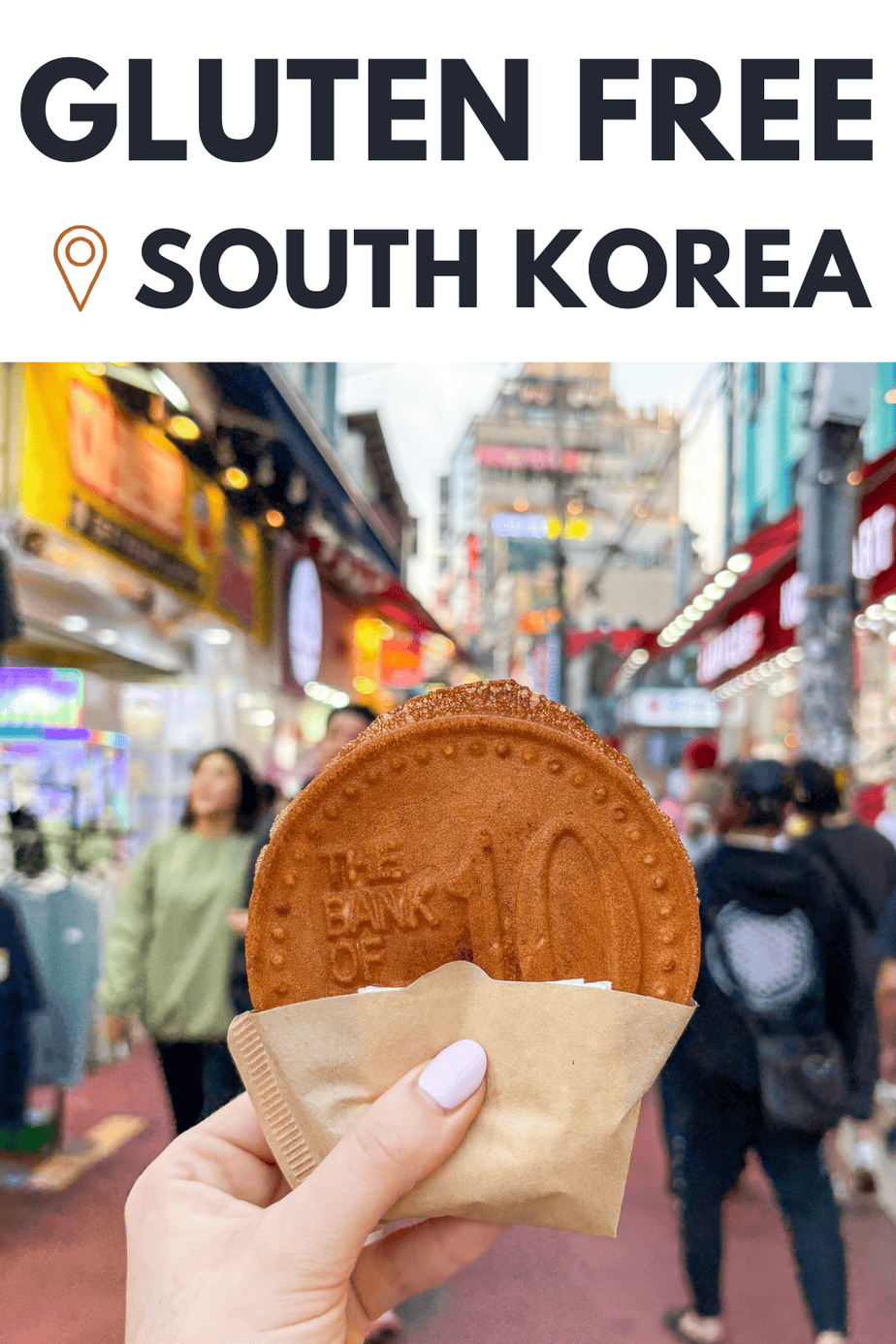
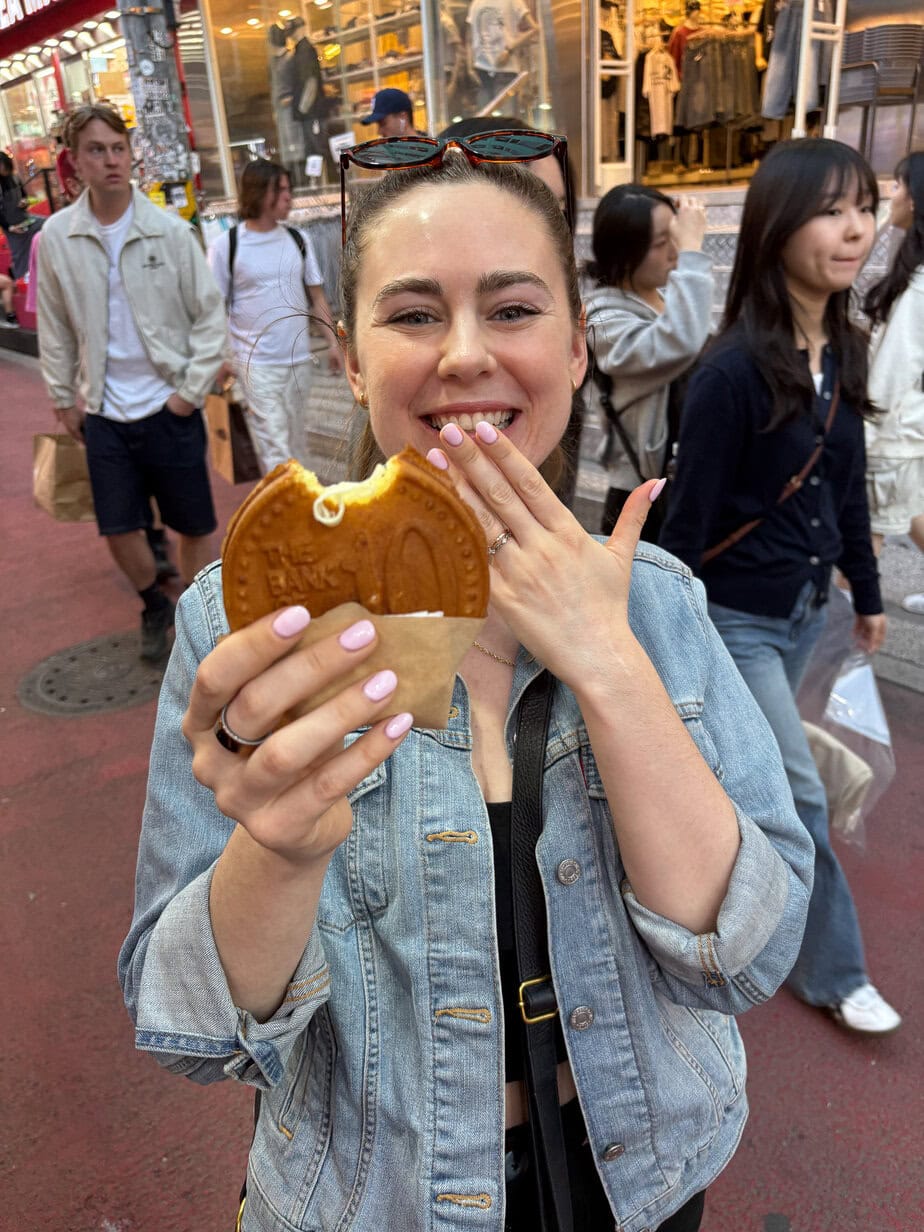
This is the case with Sunssalppang (Busan) and Ssalbebe (Seoul) which are “rice bakeries” that use strong rice. Some 10 won bread street food stalls also label themselves as “100% Korean rice” but aren’t actually gluten free—I’ve listed two safe spots in my Seoul and Busan guides.
In summary, some good rules of thumb:
- 100% Korean rice ≠ gluten free
- Never trust 100% rice labeling unless you also confirm it’s gluten free
What Korean Food is Gluten Free?
The hard truth is that most Korean cuisine is not gluten free. That’s why I recommend you target specific restaurants or experiences with gluten free reviews—like 100% gluten free 6 Day Chicken in Seoul or the cooking class we did in Busan.
However, a list of restaurants isn’t going to help you if you’re traveling outside a major city, or if your plans fall through.
In those cases, the following are your best bets for safe, gluten free dishes in South Korea.
(Possibly) Gluten Free Korean Dishes:
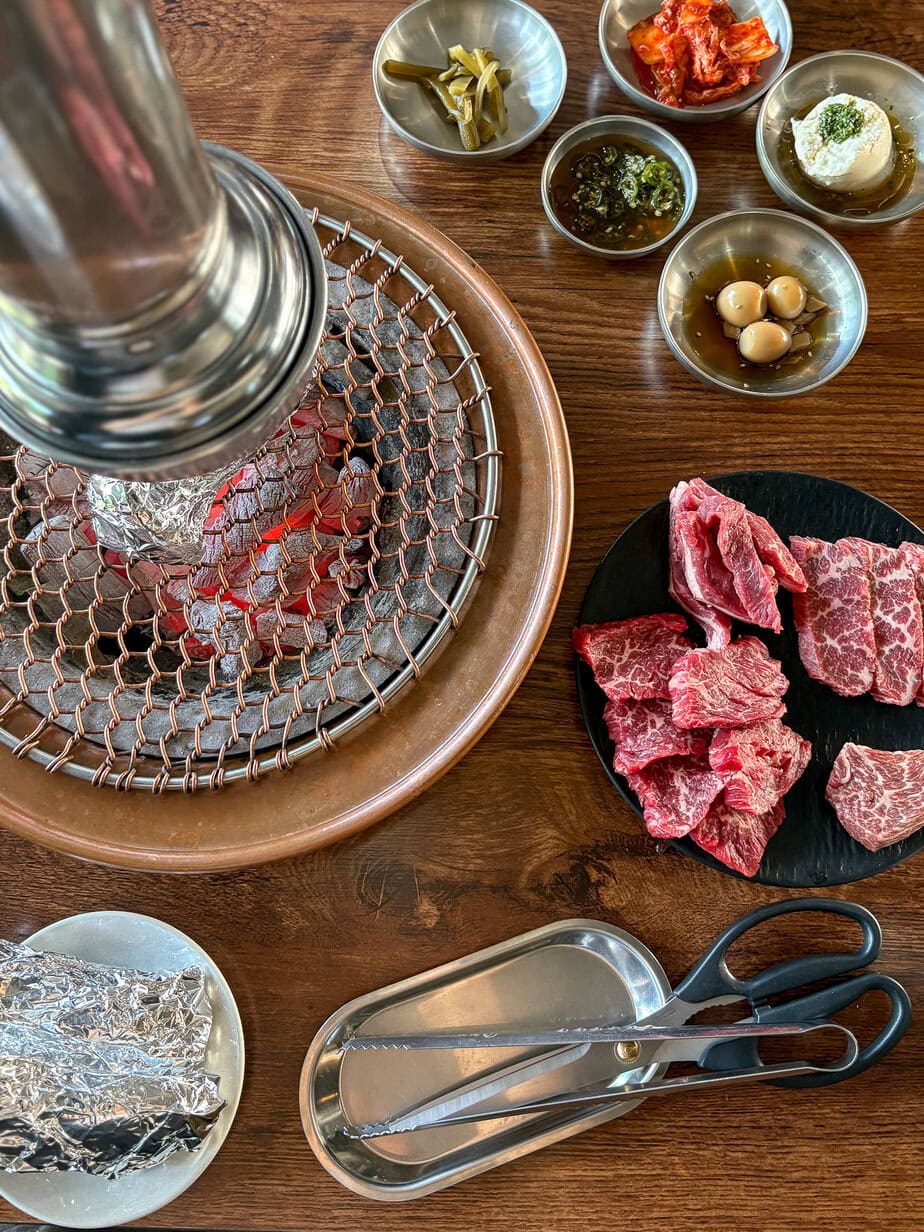
- KBBQ: Korean barbecue is the safest gluten free dish in South Korea, but not the most flavorful. Ensure that your grill is clean and not shared, and ask for plain, unmarinated meat. Bring your own gluten free sauces for added flavor.
- Samgyetang: This is a traditional ginseng chicken soup and it is usually gluten free.
- Steamed or sashimi seafood: I was able to eat safe seafood at Jagalchi Market in Busan by getting it steamed, to avoid cross contact and gluten-containing sauces.
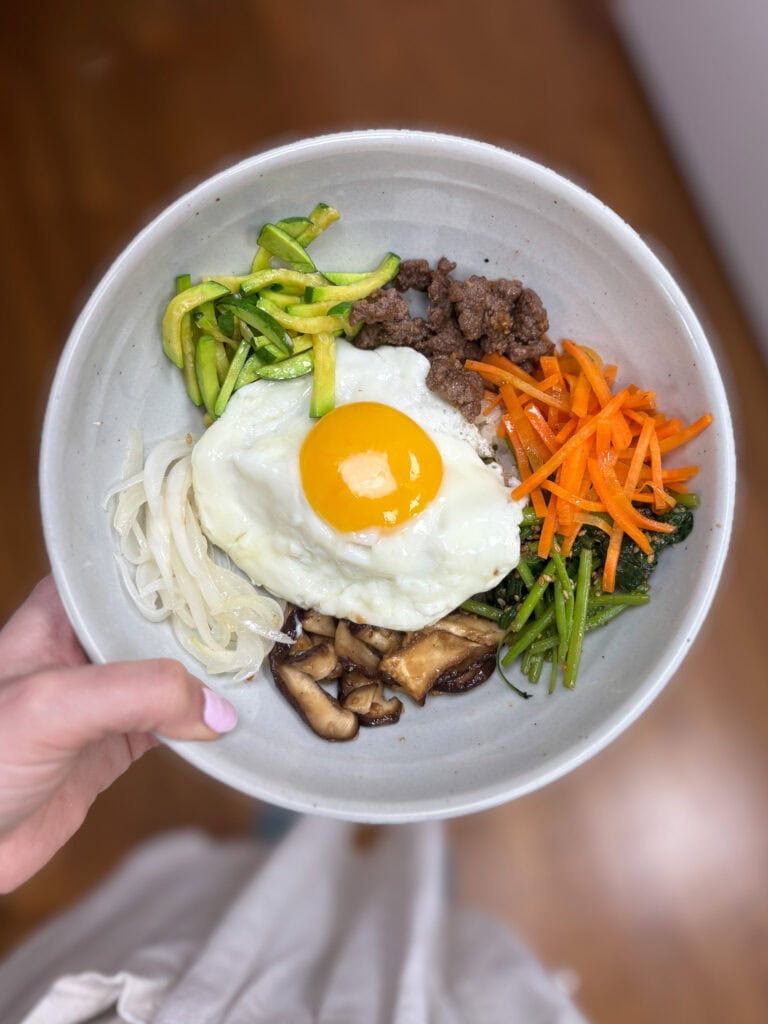
- Rice bowls: Rice-based dishes like bibimbap or fusion rice bowls can often be modified to be gluten free relatively easily, by skipping sauces, kimchi, and marinated meats.
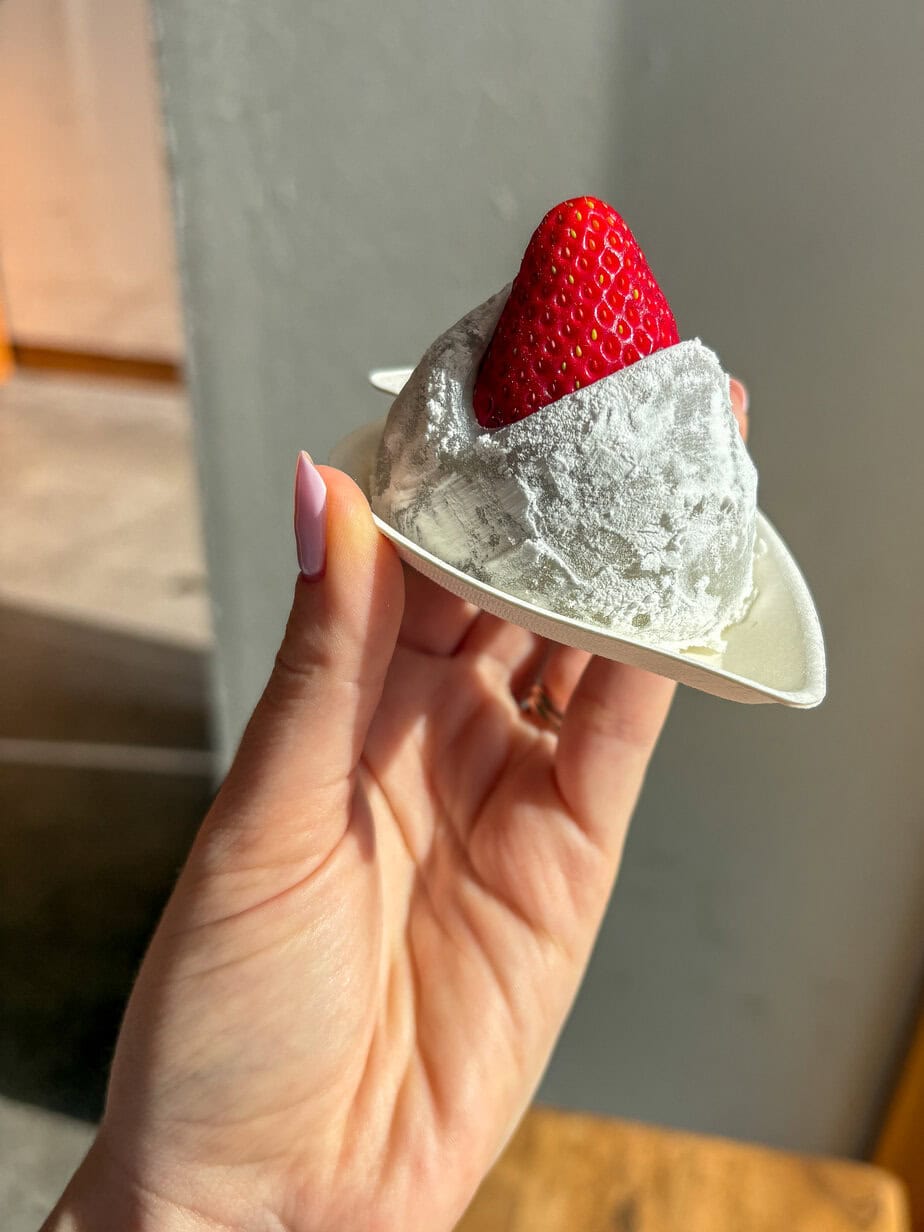
- Mochi: I was able to find naturally gluten free fruit mochi a few times using my translation card. Aim for places that only use fruit fillings, because there can easily be cross contact if any fillings (ahem, Dubai chocolate) contain gluten.
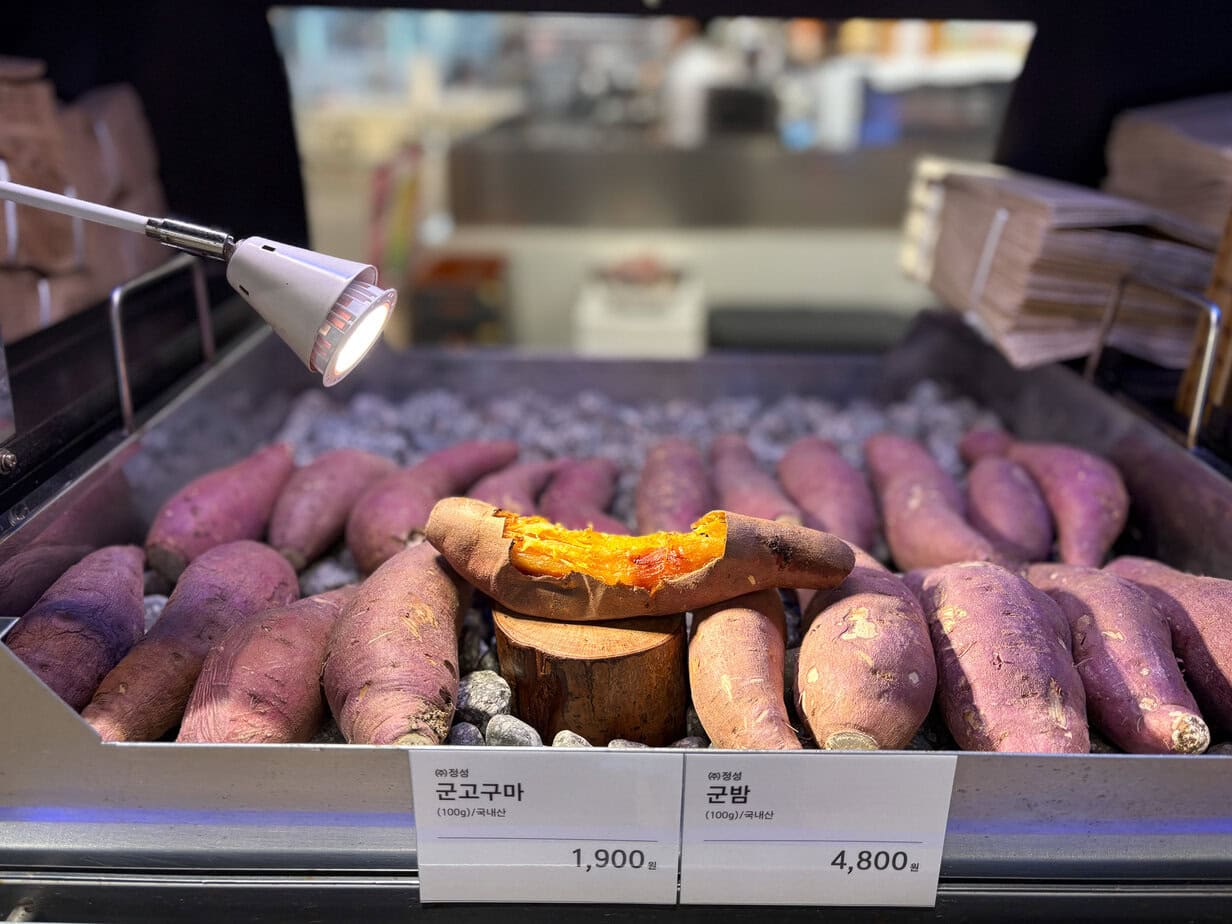
- Sweet potato: You can find delicious, naturally gluten free sweet potatoes many places in South Korea from food courts to street food to convenience stores.
- Convenience store food: I will go into more detail in the next section, but you can typically find something gluten free at a convenience store like GS25 or 7-11.
I also highly recommend traveling to South Korea with dehydrated meals (this is my favorite gluten free brand) and booking accommodation with a kitchen, so that you always have a safe plan B.
Gluten Free Convenience Store Options in South Korea
Unfortunately, convenience stores in South Korea are not a gluten free savior the way they are in Japan. However, you can still find a few gluten free options which are especially useful for breakfasts.
I wrote a whole gluten free convenience store guide for South Korea, so please check that out for all the details on label-reading, products, and shops!
The sparknotes version is that the following items may be gluten free:
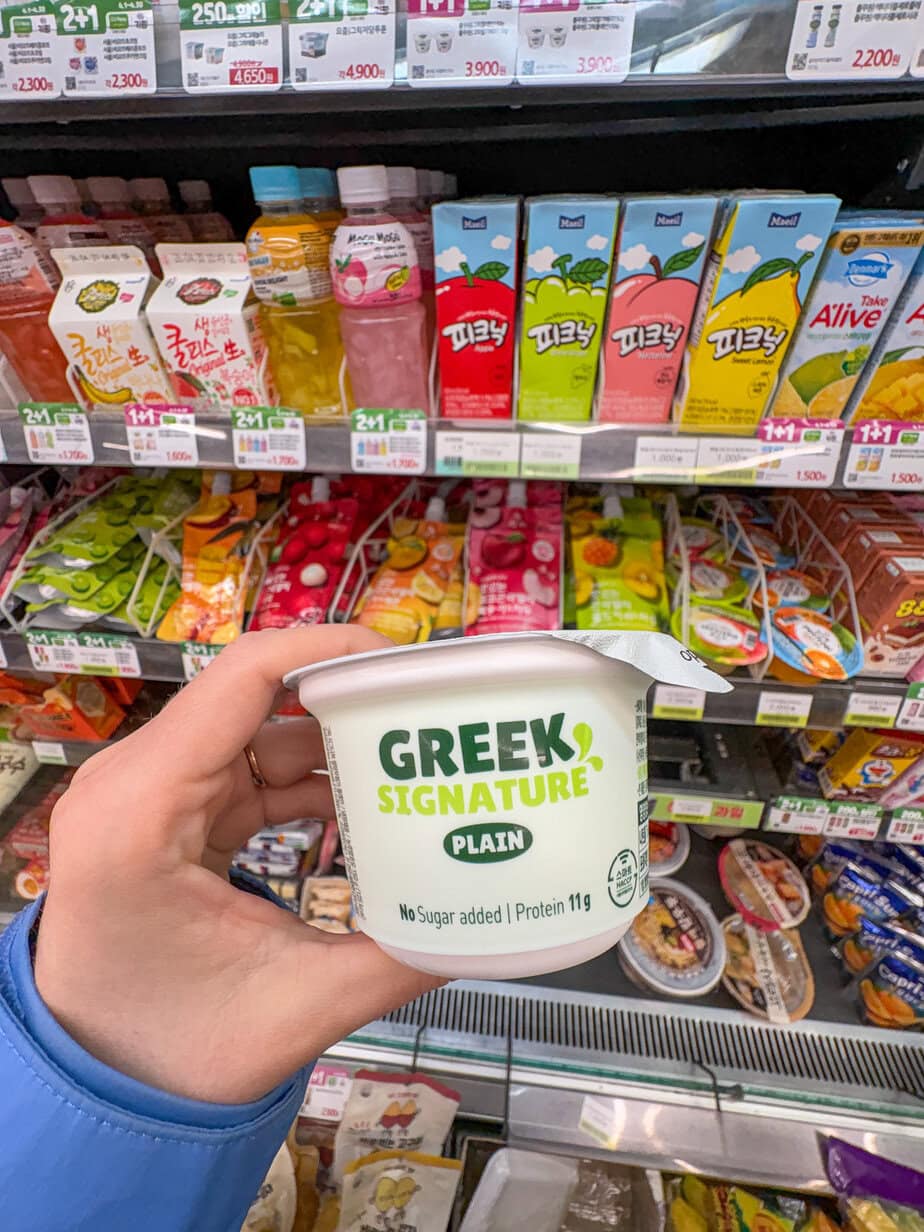
- Yogurt (Greek Signature Plain brand is most reliably safe; many yogurts list wheat as an allergen so always check)
- Bananas
- Sweet potato
- Boiled egg
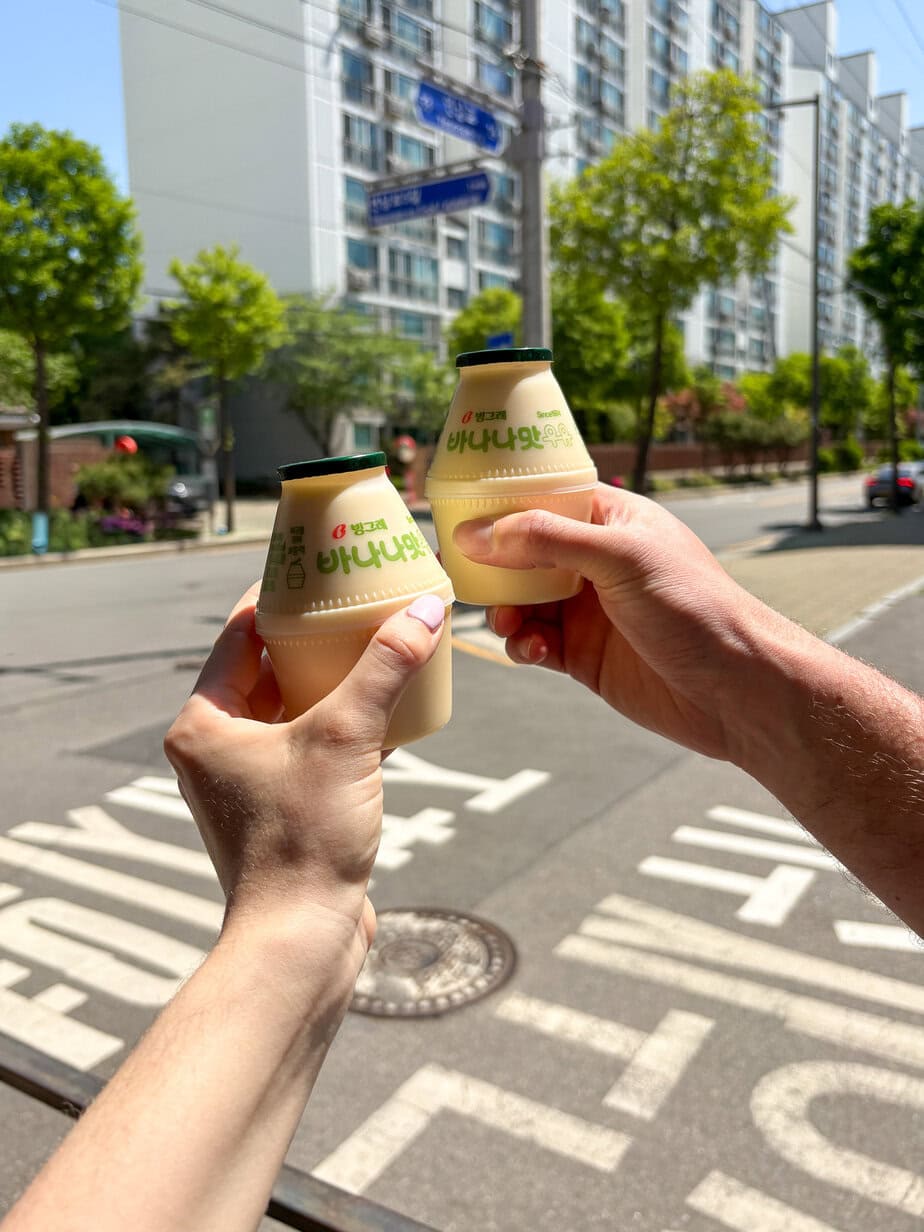
- Banana milk
- GS25 tuna and mayo onigiri (MAYBE! Be sure to check the label)
RELATED | Gluten Free Convenience Store Options in South Korea
Finding Gluten Free Street Food in South Korea
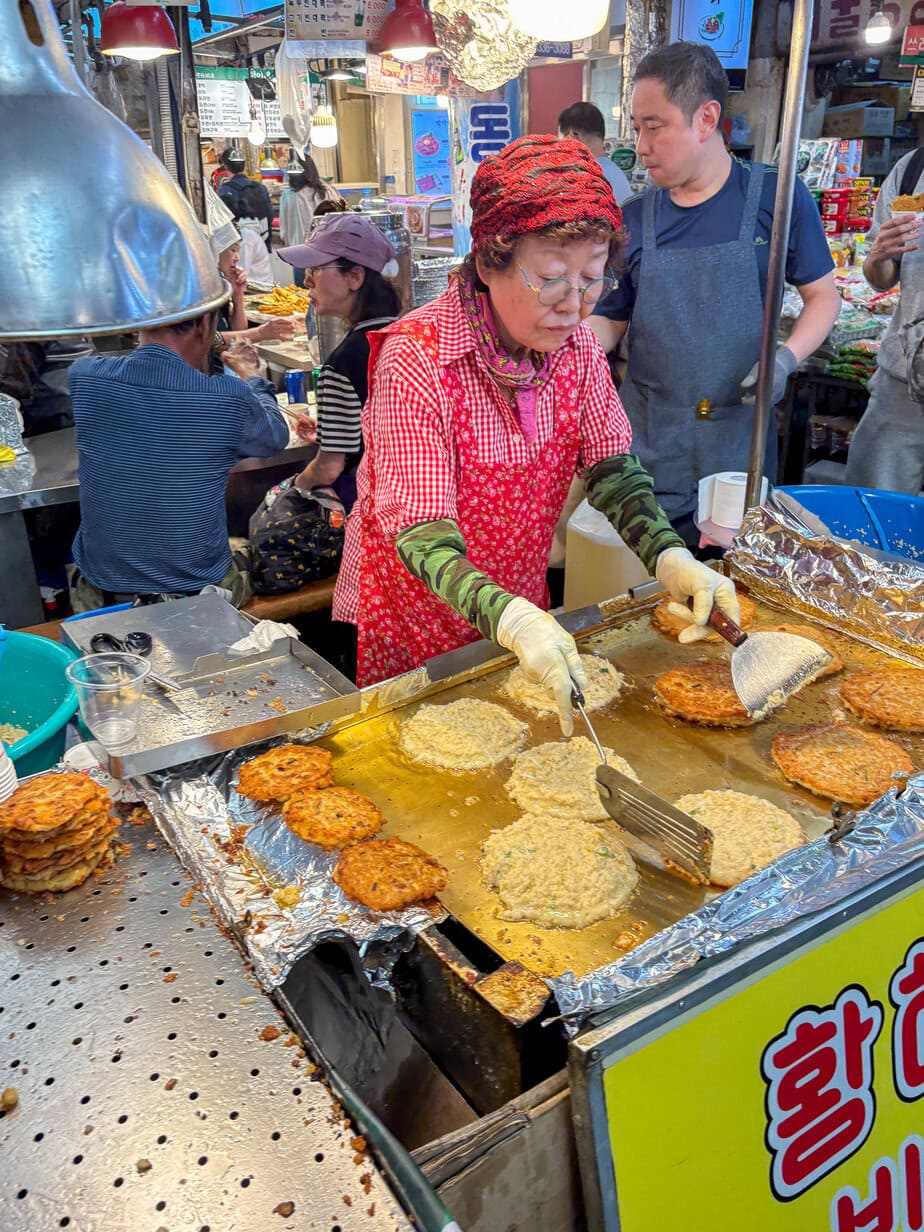
Finding gluten free street food is one of my greatest joys when I travel! I have a whole guide to gluten free street food in South Korea, so check that out for all the details.
I found some incredible gluten free street food in South Korea, including:
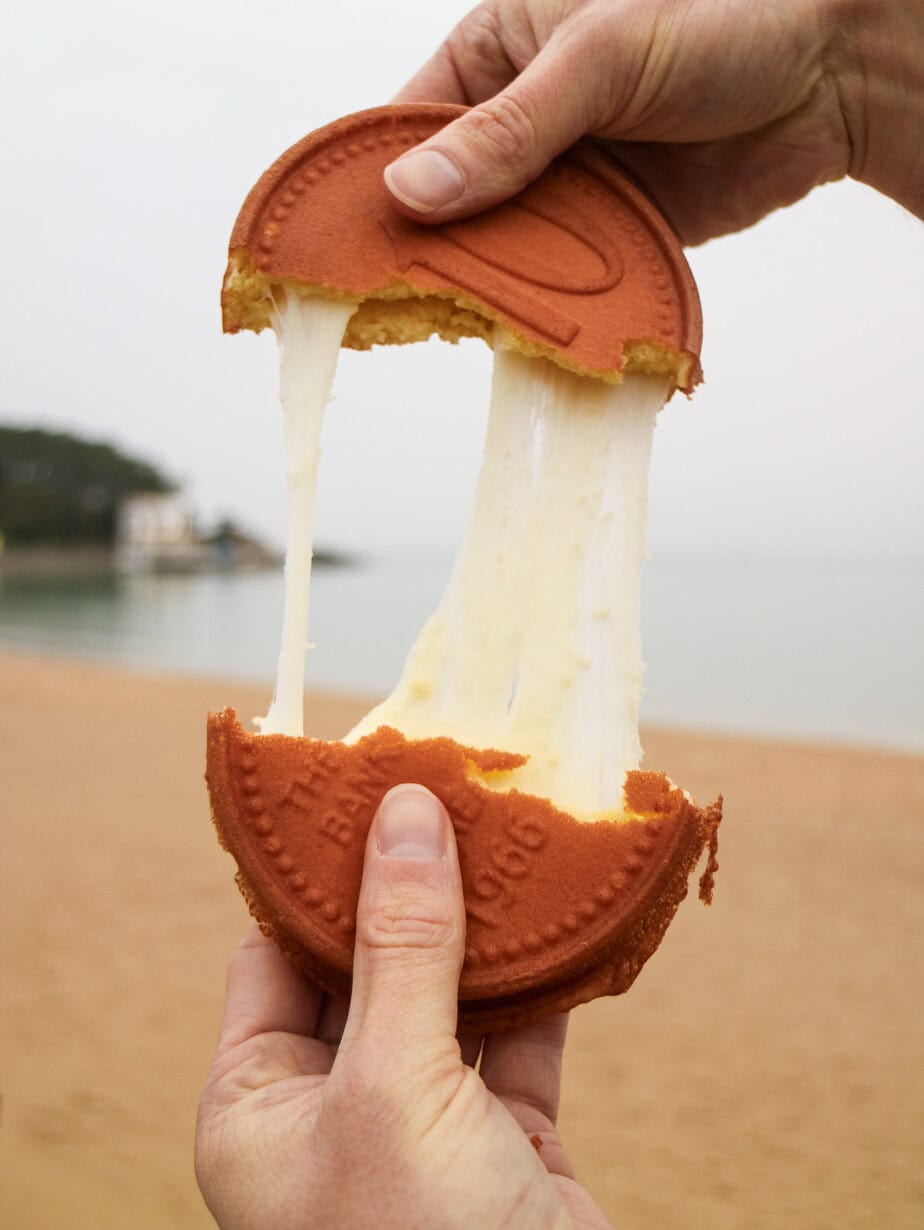
- Gluten free 10 won bread (!!!)
- Fruit mochi
- Steamed seafood
- Mung bean pancakes
- And more!
Your gluten free translation card will be your savior if you’re brave enough to try out the markets in South Korea.
RELATED | How to Find Gluten Free Street Food in South Korea
My Experience Traveling in South Korea as a Celiac: Some Words of Encouragement
I want to end on a positive note with some personal insights from my travels in South Korea with celiac disease.
For many years, I thought that South Korea was a country I’d never be able to visit as a celiac, and especially one who LOVES food!
My trip to South Korea proved that wrong. Yes, it took hours of research and planning, but I was able to have incredible celiac-safe experiences like:
- Eating 100% gluten free Korean fried chicken and getting to know the lovely owners.
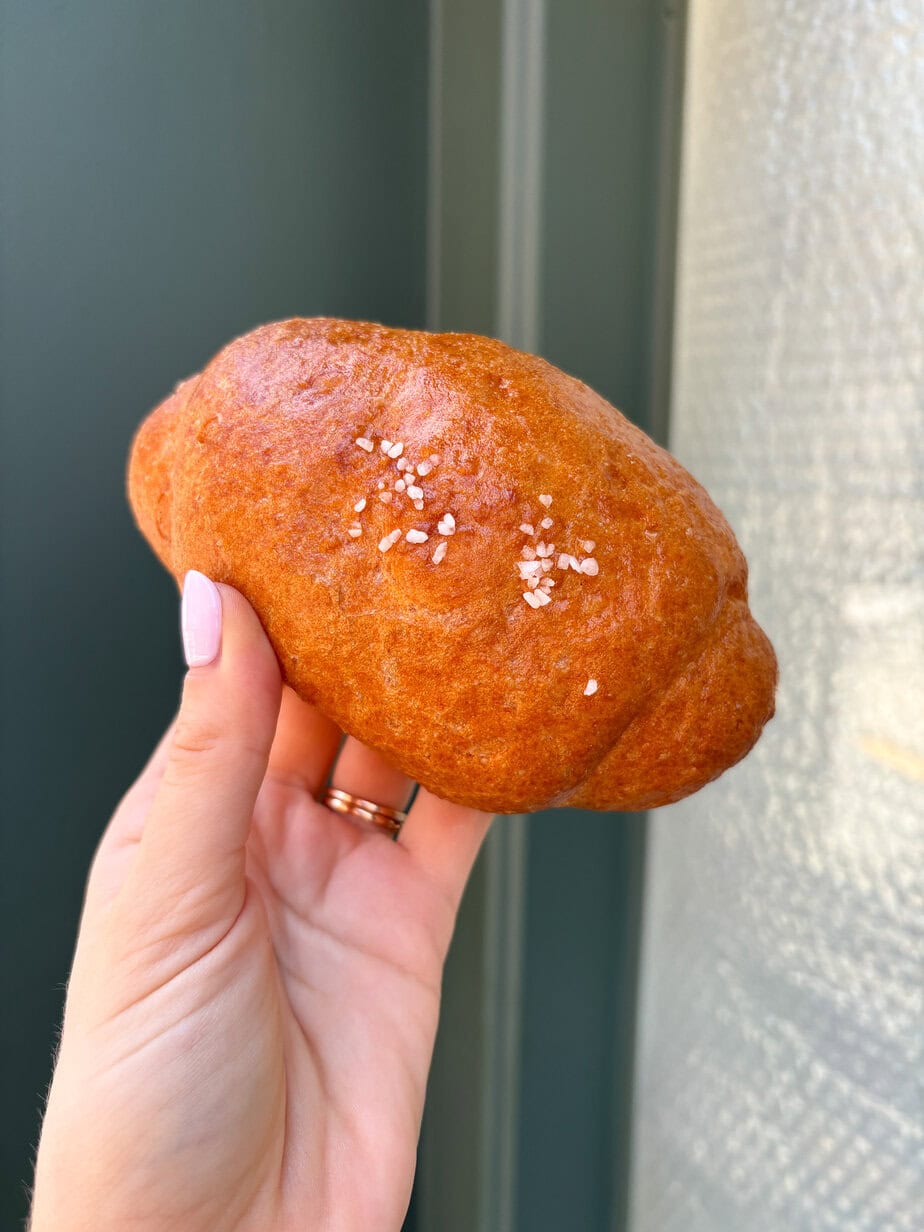
- Starting my day with delicious gluten free salt bread from a gluten free bakery.
- Eating gluten free street food at iconic markets like Jagalchi Market in Busan or Gwangjang Market in Seoul.
- Learning to cook gluten free jap chae, gimbap, kimchi pancakes, and more from locals.
- And tons of non-food experiences like relaxing at SpaLand, coastal cafe hopping, taking a tour to the DMZ, having a skin analysis and facial, staying in a traditional hanok, and so much more.
I really believe that if you’re ready to put in the work, you can have a safe AND delicious trip to South Korea if you’re gluten free. And hopefully you don’t have to work quite as hard as I did, thanks to this article and my other gluten free South Korea travel guides!
Check out all my gluten free South Korea posts…
South Korea Convenience Store Gluten Free Guide
Gluten Free Street Food in South Korea
Gluten Free South Korea: Final Thoughts
There you have it: my complete gluten free South Korea guide! I truly hope it’s helpful to you, and that your trip goes smoothly.
If you have questions about gluten free travel in South Korea, then just leave me a comment below or send me a DM on my Instagram! Happy travels!

Pin it for later…