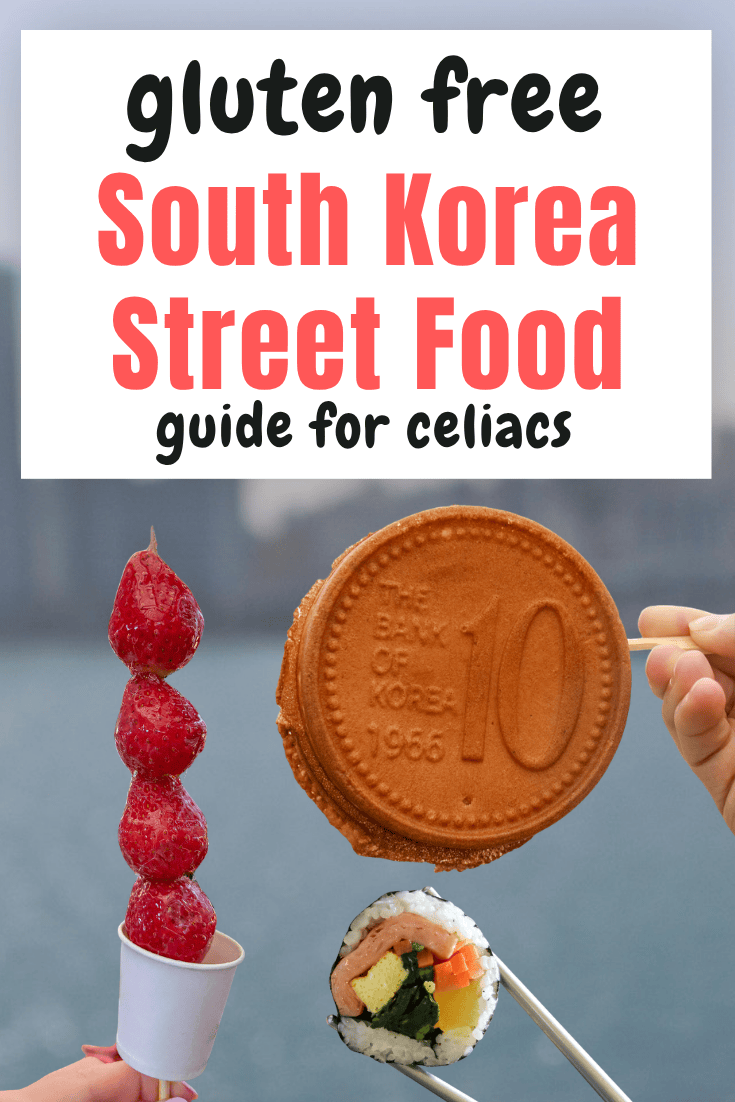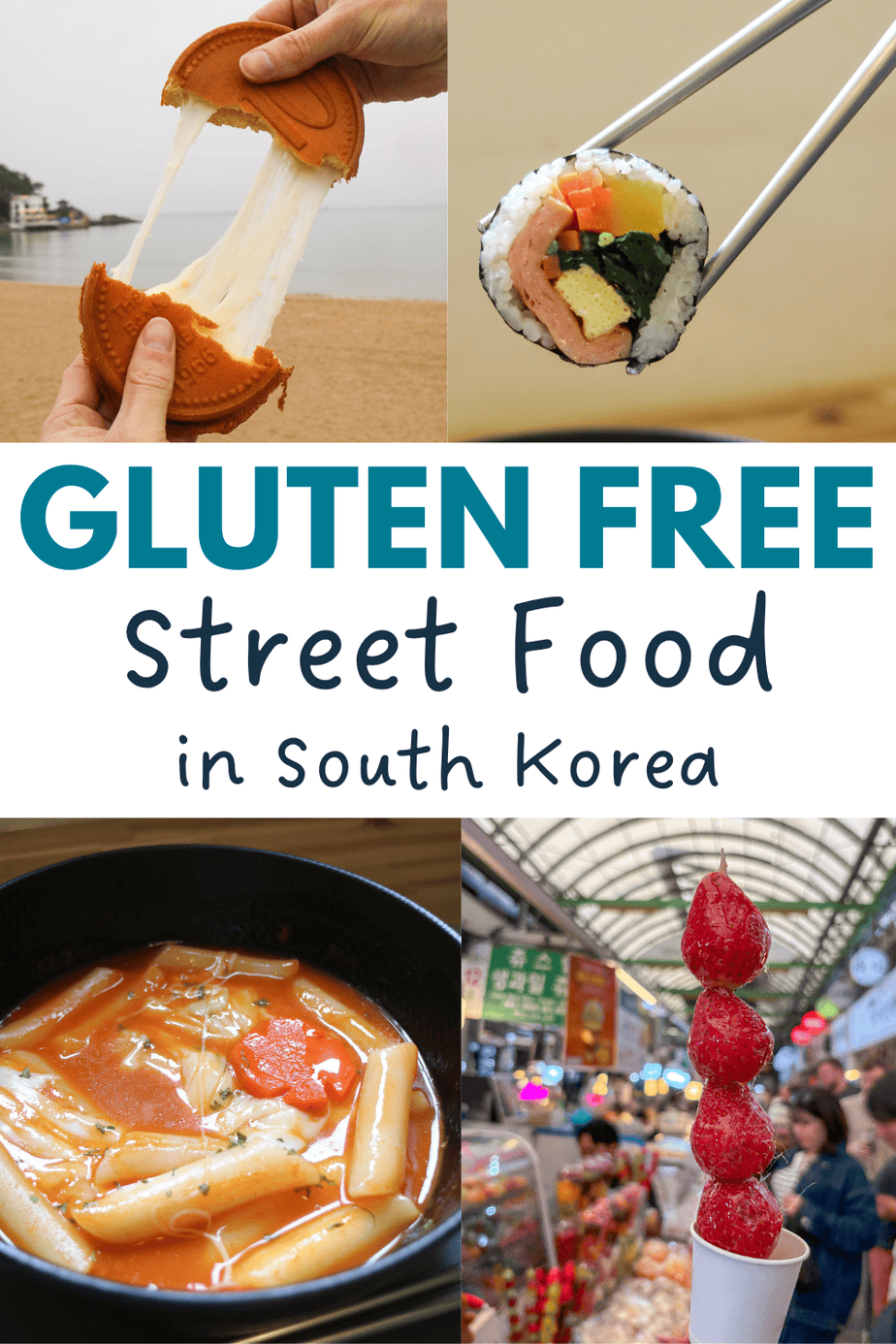
Gluten Free Street Food in South Korea
Finding gluten free street food in South Korea is hard, but not impossible. I have celiac disease, and was able to enjoy gluten free street food in both Seoul and Busan without getting sick. This article covers everything you need to know!
How to Find Gluten Free Street Food in South Korea
The simplest way to find gluten free street food in South Korea is:
- Use a gluten free Korean translation card—more info on my recommended card below.
- Know which foods are most likely to be gluten free (and which contain gluten!).
- Watch out for cross contact. Pay attention to what else the stall serves so you can identify cross contact risks like shared fryers, grills, utensils, or pans.
- Always question “100% Korean rice” signs. In South Korea, some rice flour contains added gluten (see more info in my gluten free South Korea guide).
- Be OK with the vendor saying no! Your safety comes first.
This article dives into all those tips, plus lists a few must-visit street food stalls (think: gluten free 10 won cake!) and tips for iconic markets like Jagalchi and Gwangjang. Let’s get to it!
Gluten Free Korean Translation Card: A Must-Have for Street Food
When it comes to navigating the street food scene in South Korea as a celiac, your best friend is going to be a translation card (unless you speak Korean, that is!).
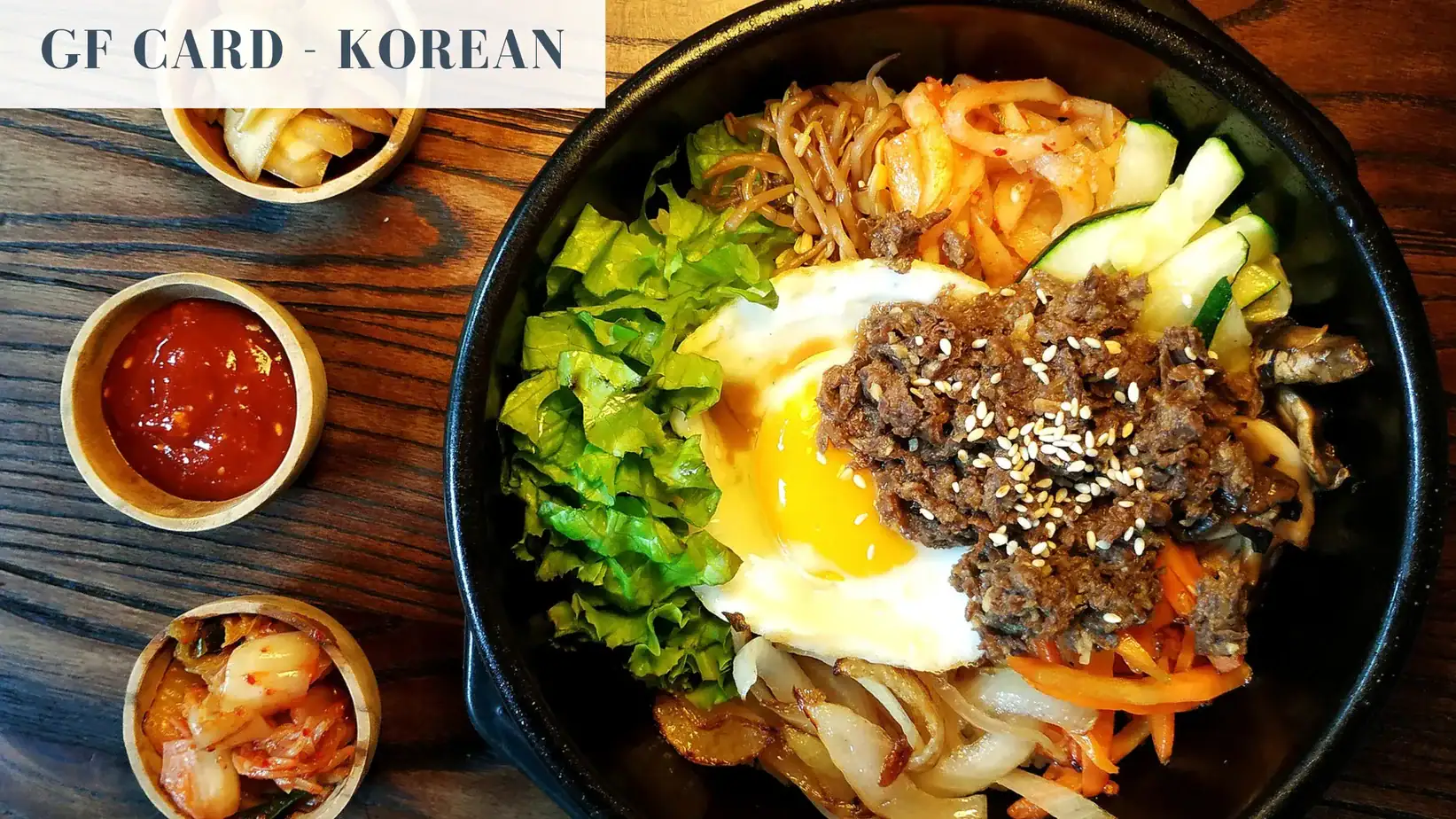
Personally, I used this gluten free Korean translation card, and I highly recommend it.
If you’re a sensitive celiac like me, it’s an essential. It goes in depth on where gluten hides in Korean cuisine, and discusses cross contact to a level of detail that other cards just don’t.
During my time in South Korea, I showed this card to many street food vendors. I was worried that it might be too long, but they all took the time to read it and help me.
Buy your gluten free translation card here.
Korean Street Food Most Likely to Be Gluten Free
The foods below may be gluten free, and it’s worth showing your translation card to the vendors.
Use your gluten detective skills, though, and don’t just accept whole food groups without question. Look for red flags like shared grills or fryers, and target stalls that only serve one item (less chance for cross contact).
Also, be prepared for the vendor to read your card and tell you the food isn’t safe. In short, try to keep your expectations low!
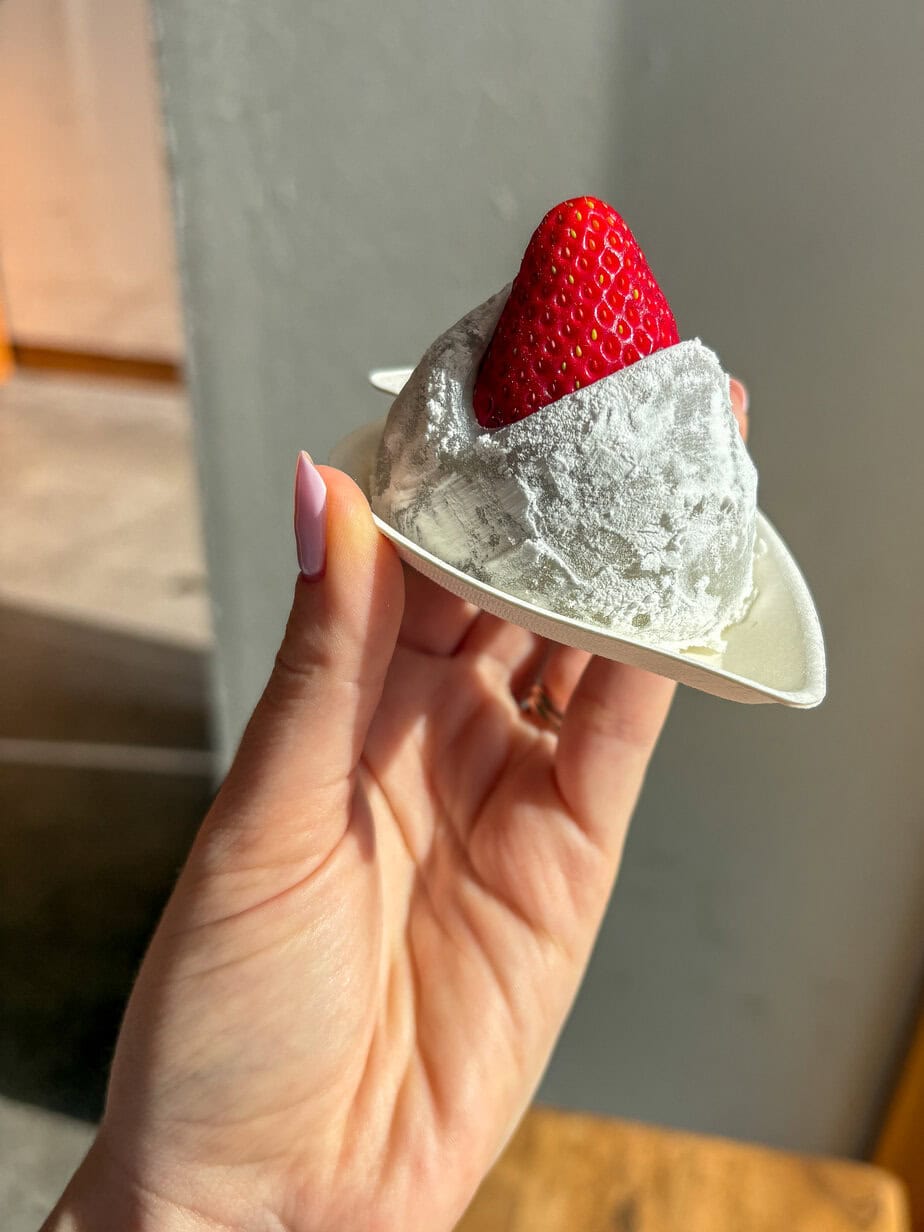
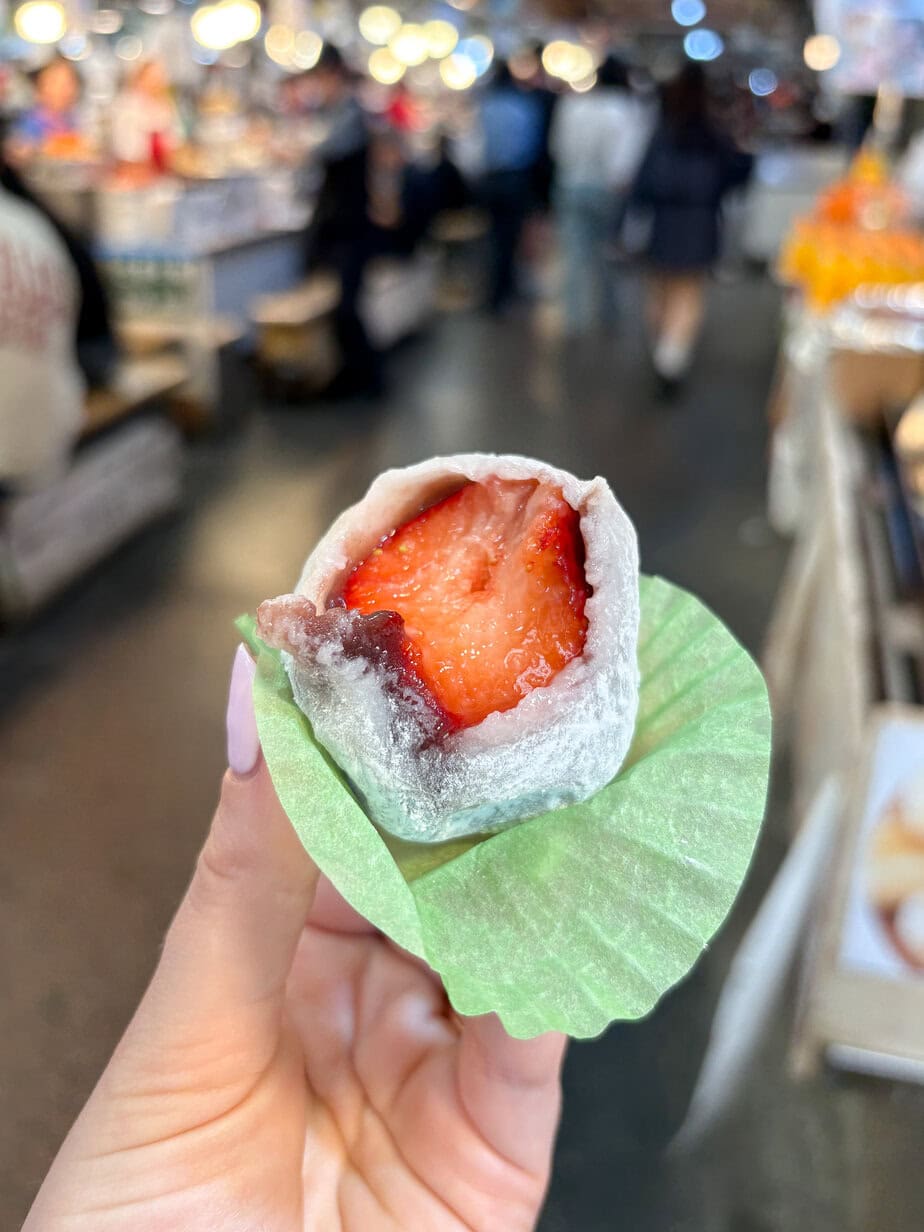
Mochi
Delicious, squishy, chewy mochi is made from rice flour and, made the traditional way, should be naturally gluten free!
Watch out for any gluten-containing fillings, though, like Dubai chocolate. I personally only ate mochi from spots that only used gluten free fillings (think: fruit and red bean paste) to avoid cross contact.
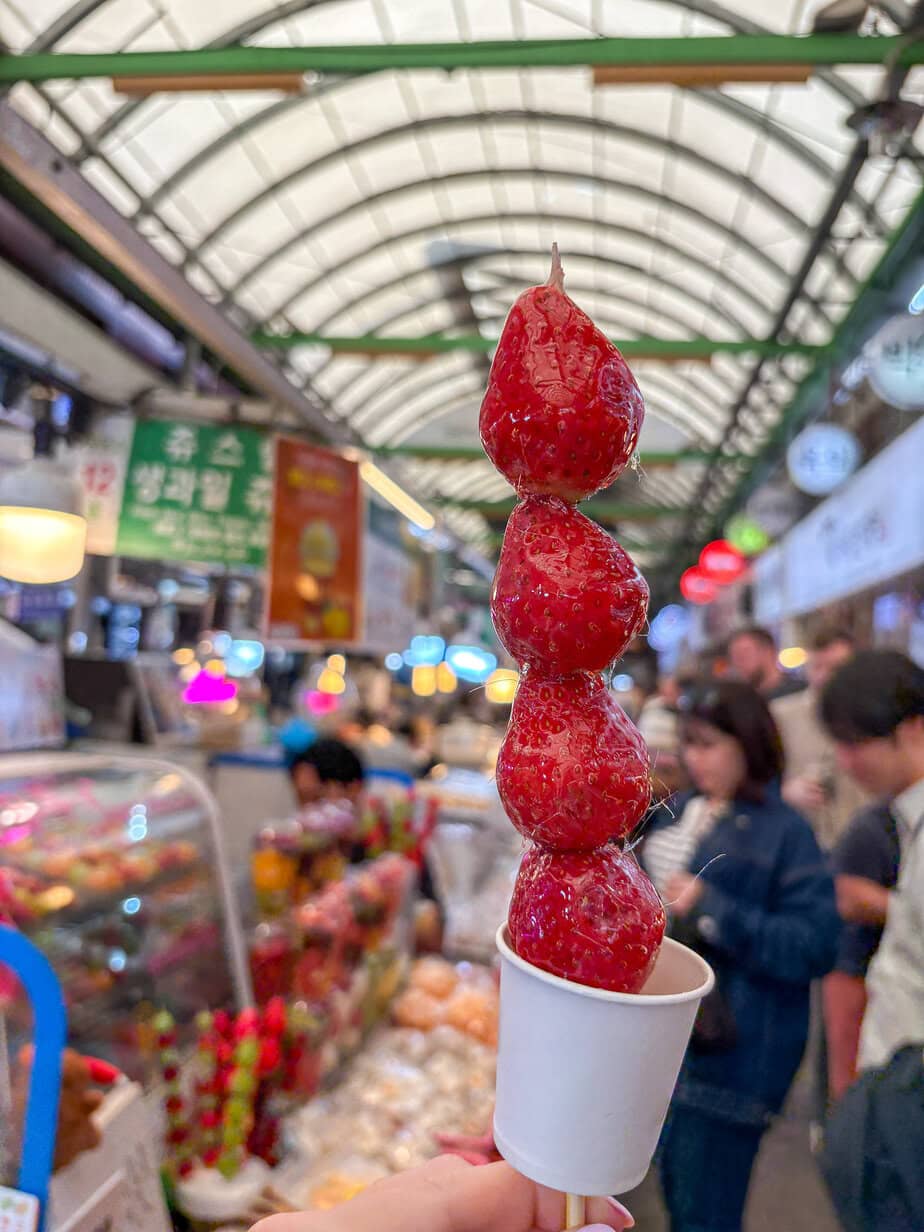
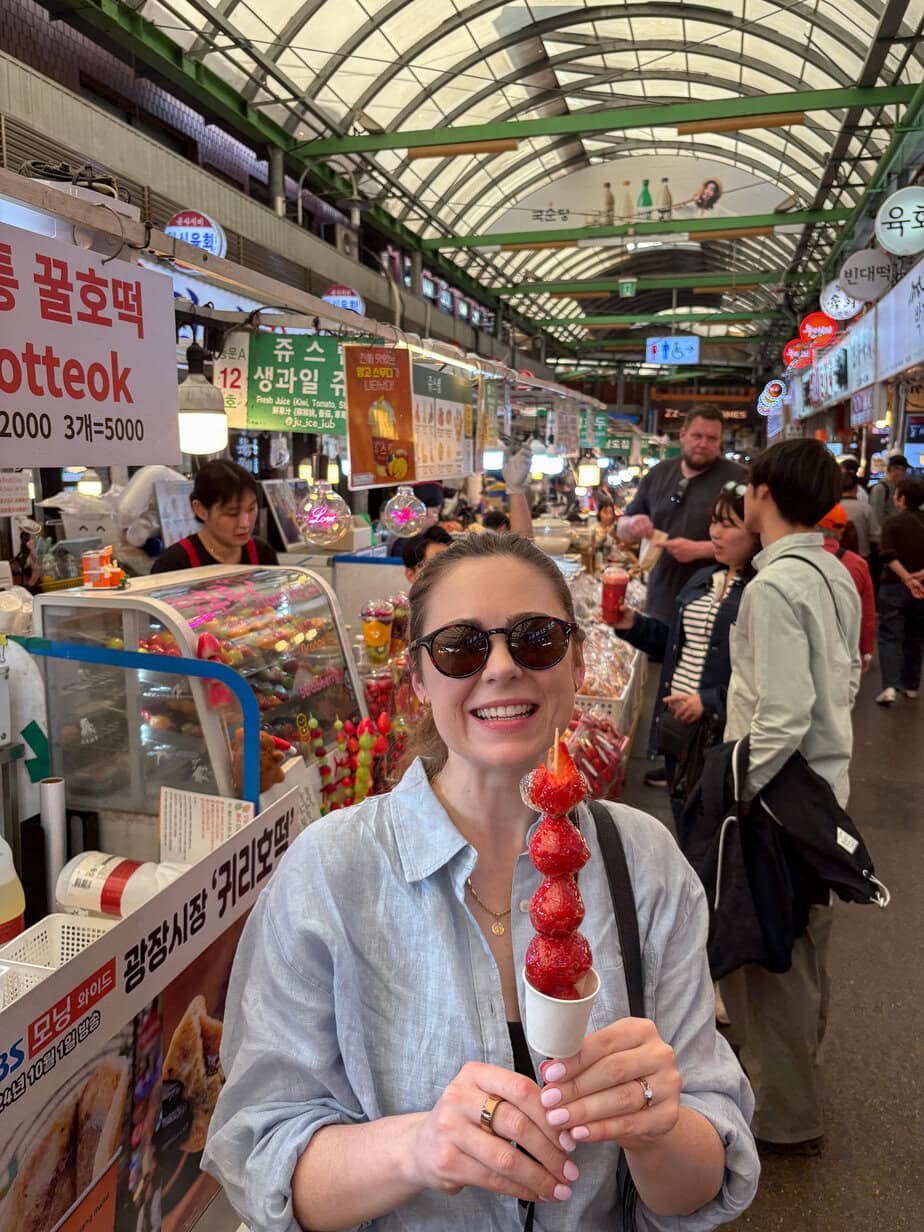
Candied Fruit Skewers
Candied strawberry, grape, and other fruit skewers are really popular at street food markets in South Korea. These were always gluten free when I asked.
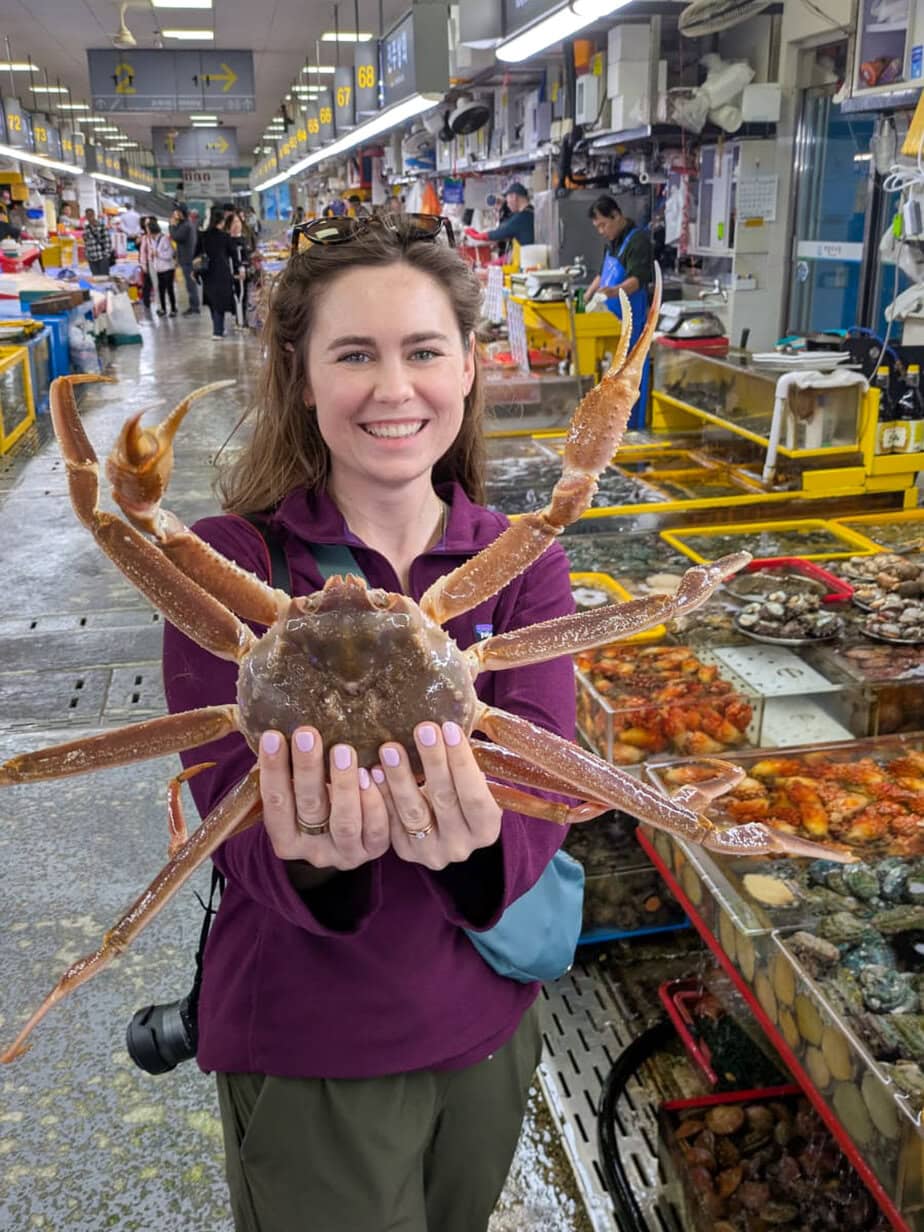
Steamed Seafood
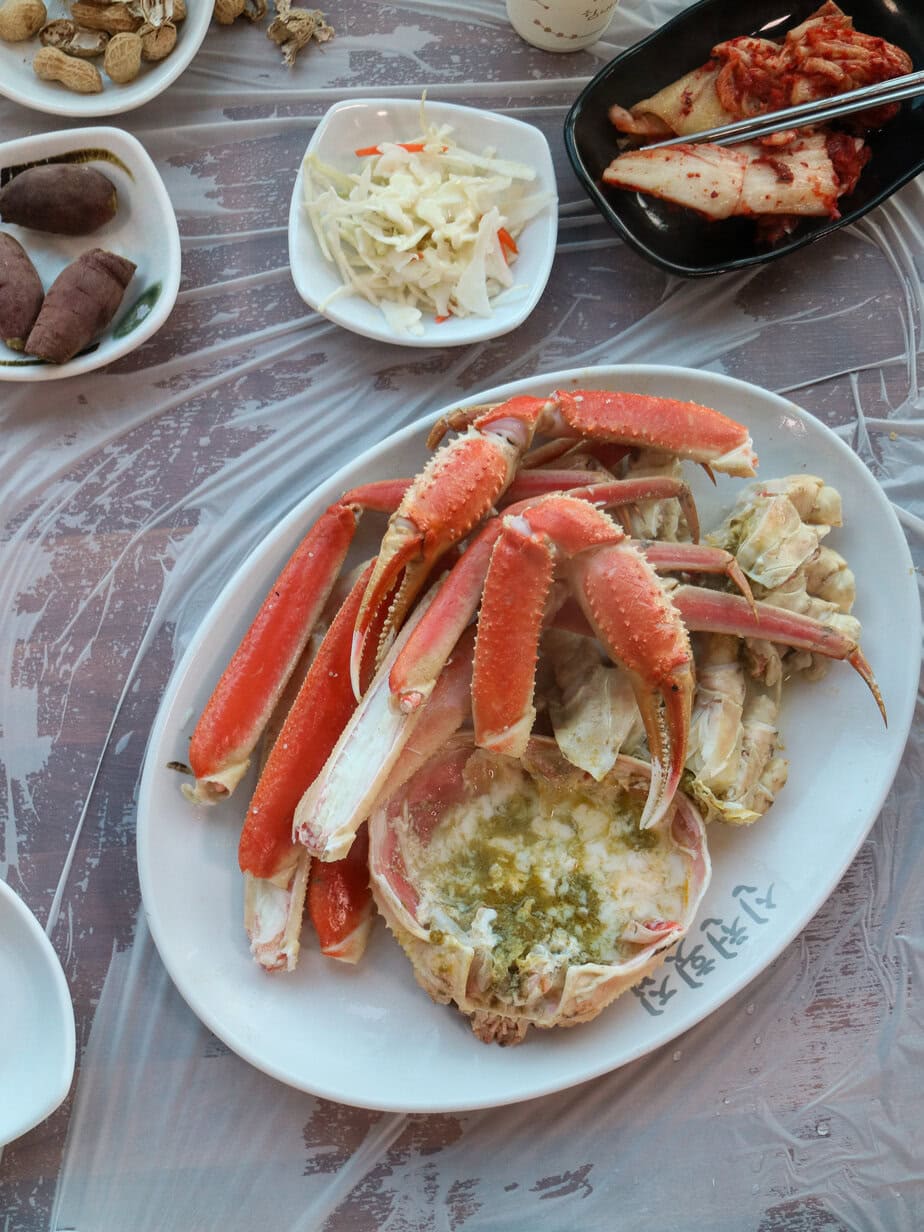
Steaming is the safest way to avoid cross contact if you’re eating seafood at markets in South Korea.
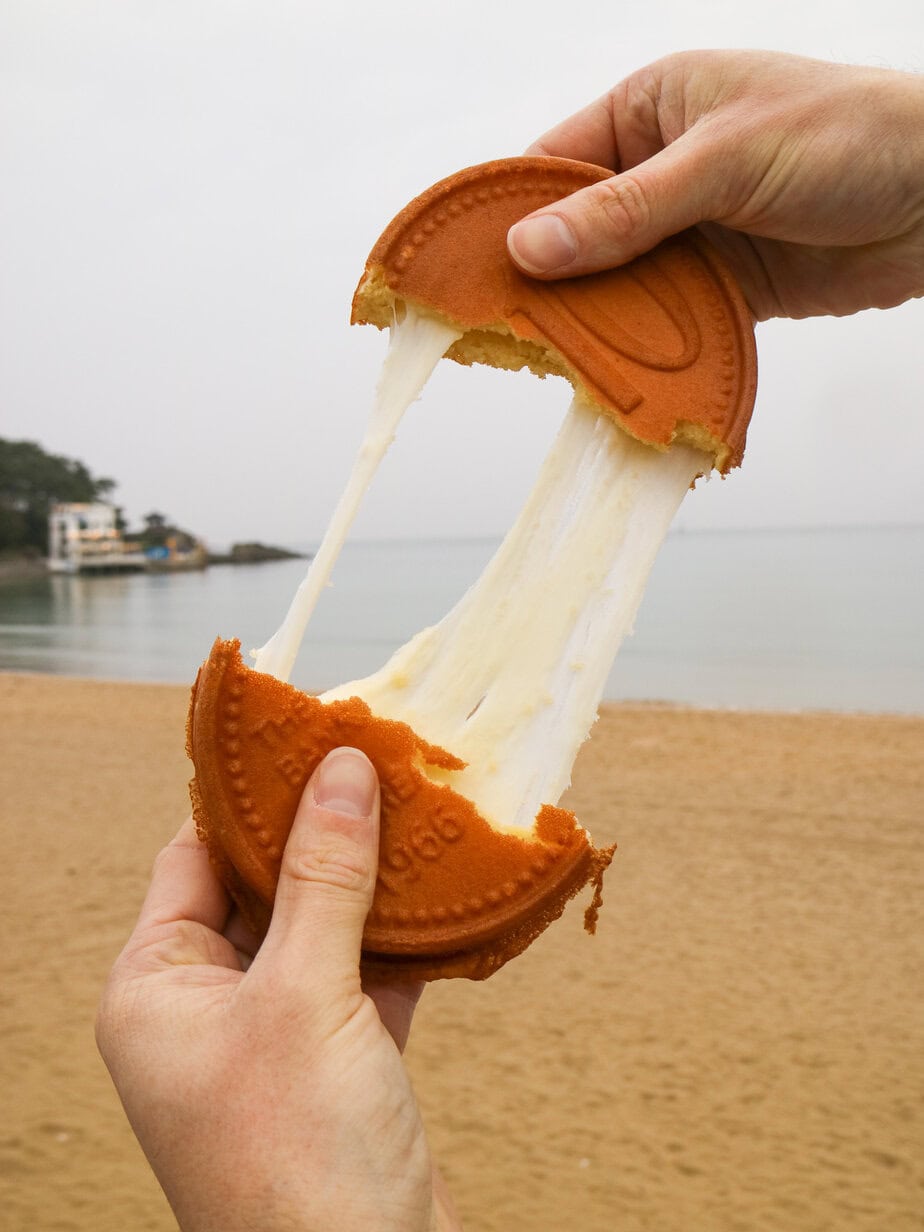
10 Won Bread (Rare but Possible!)
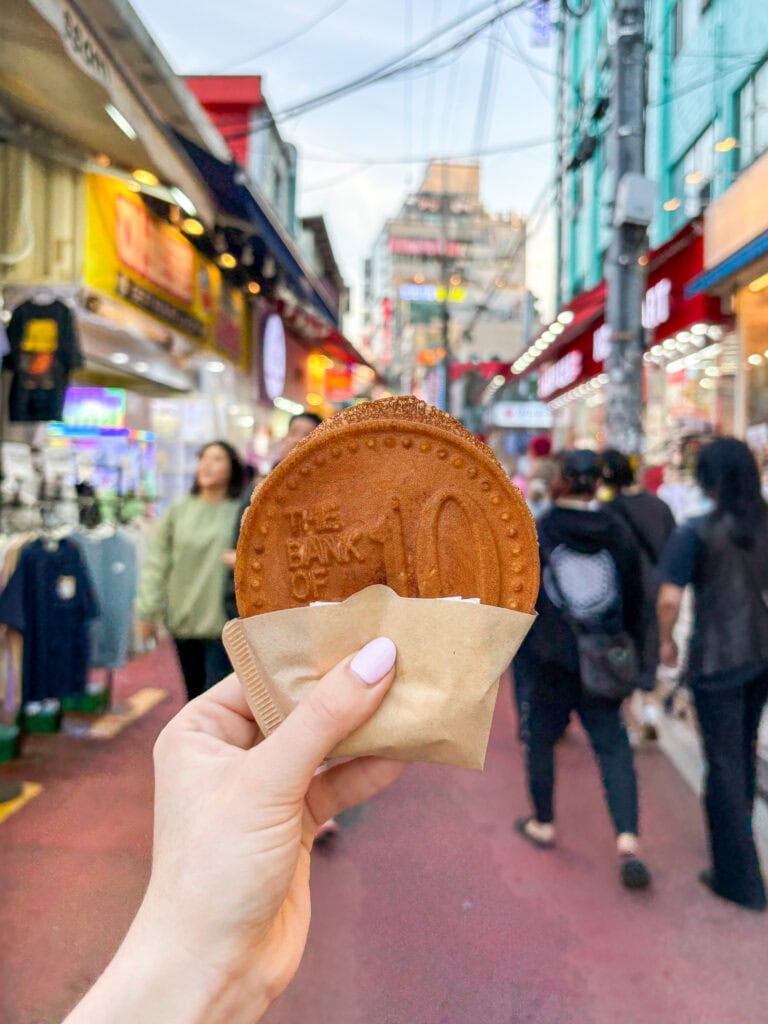
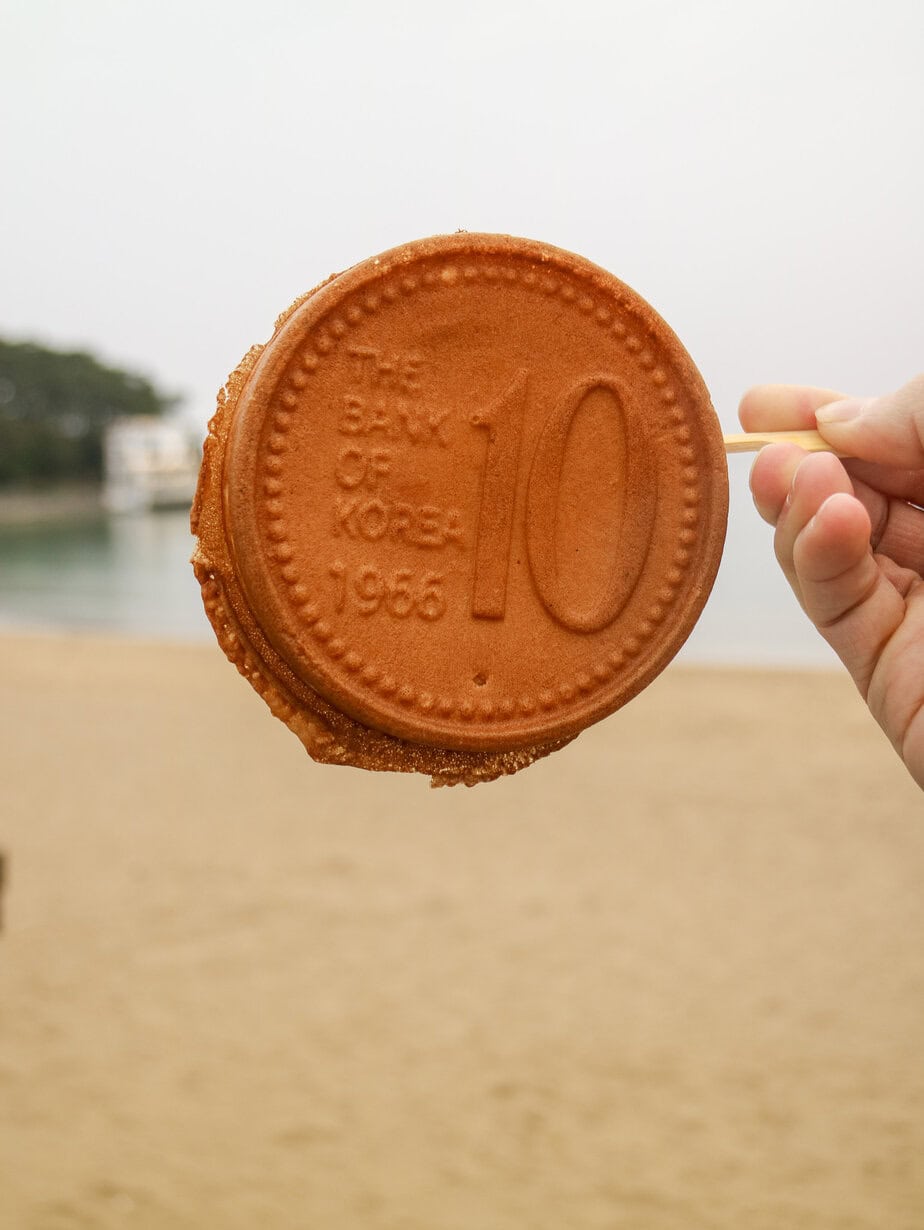
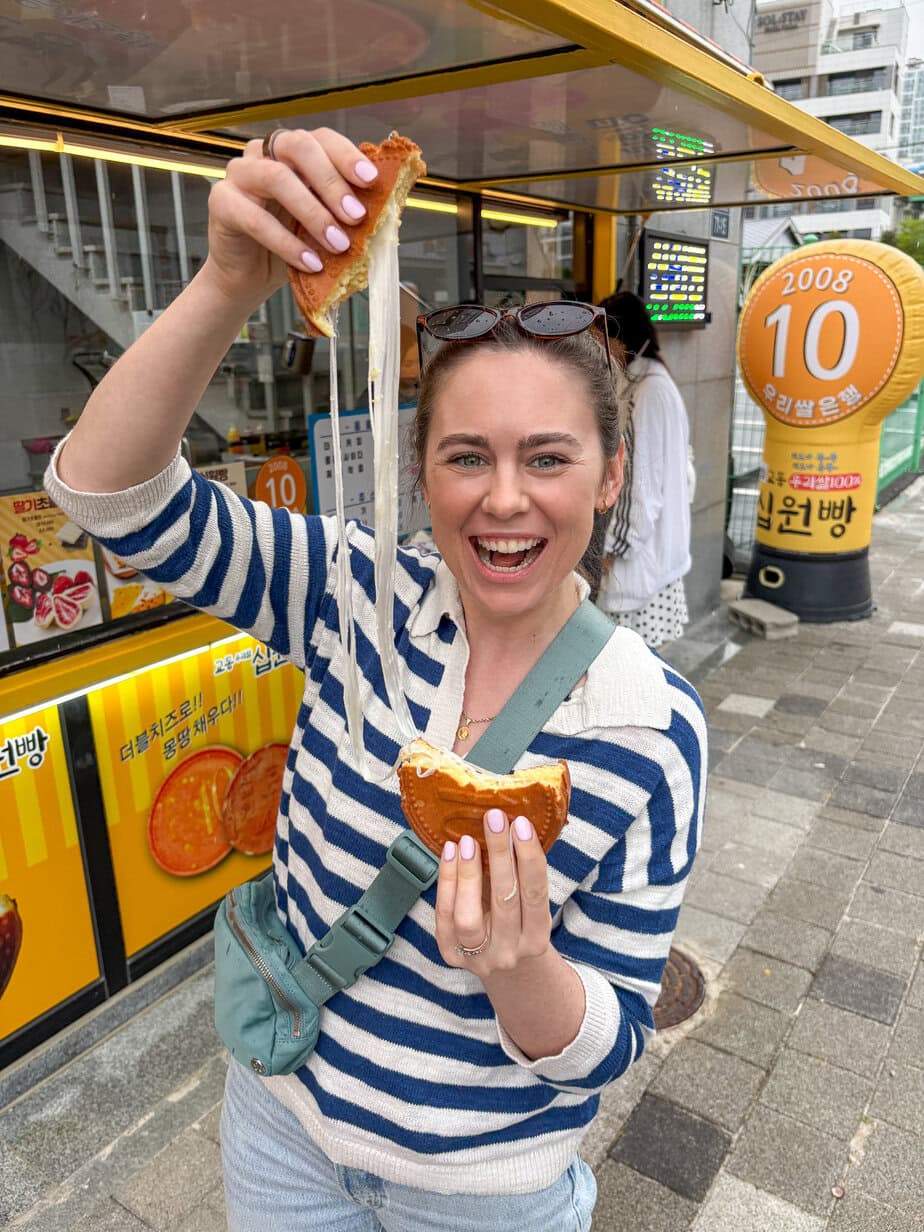
I couldn’t believe it when I found gluten free 10 won bread in both Seoul and Busan! (Exact stall locations in those posts!).
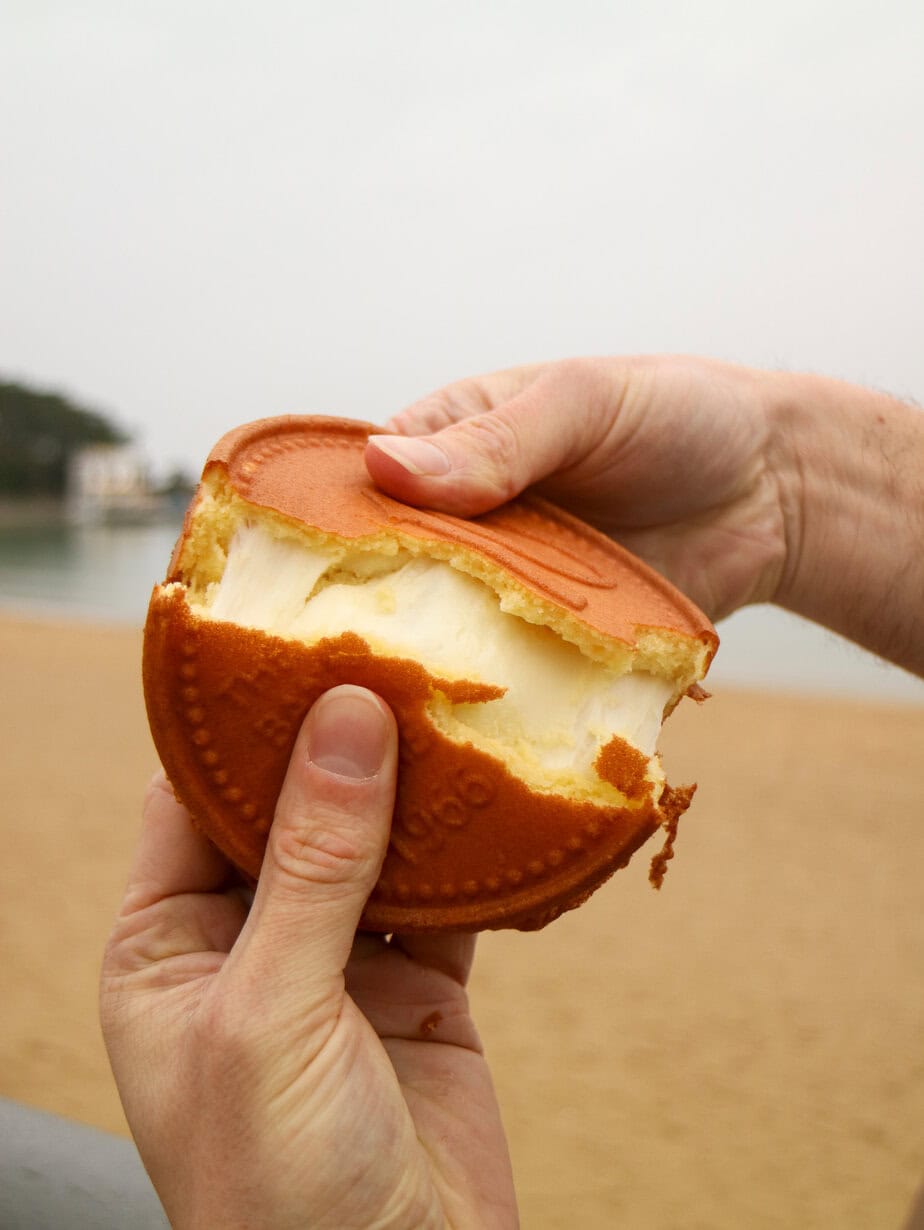
10 won bread is an adorable coin-shaped bready cake, filled with cheese, and served on a skewer. The vast majority of the time, 10 won bread contains gluten since it’s made with wheat flour.
There are a few special stalls, however, that serve 10 won bread made from rice flour. (Just triple check that it’s pure rice flour and not “strong rice,” which is mixed with gluten—more info on that in my gluten free South Korea guide).
Mung Bean Pancakes
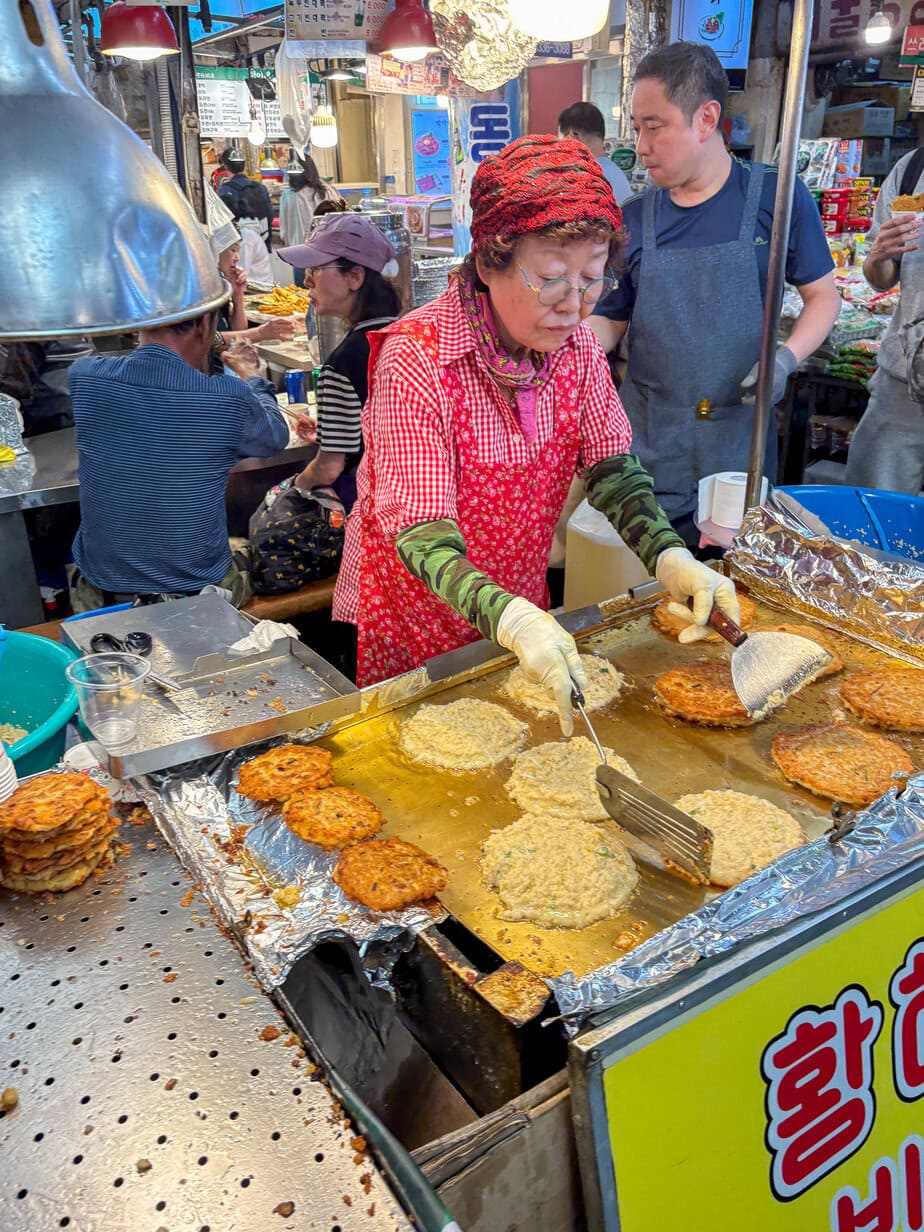
Mung bean pancakes are a Korean specialty, especially at Gwangjang Market in Seoul, and they should be naturally gluten free.
My advice is to go to a stall that serves mung bean pancakes, and nothing else. This avoids cross contact.
Obviously, double check with your translation card and ensure that only mung bean flour is used, and no added wheat flour!
Bingsu
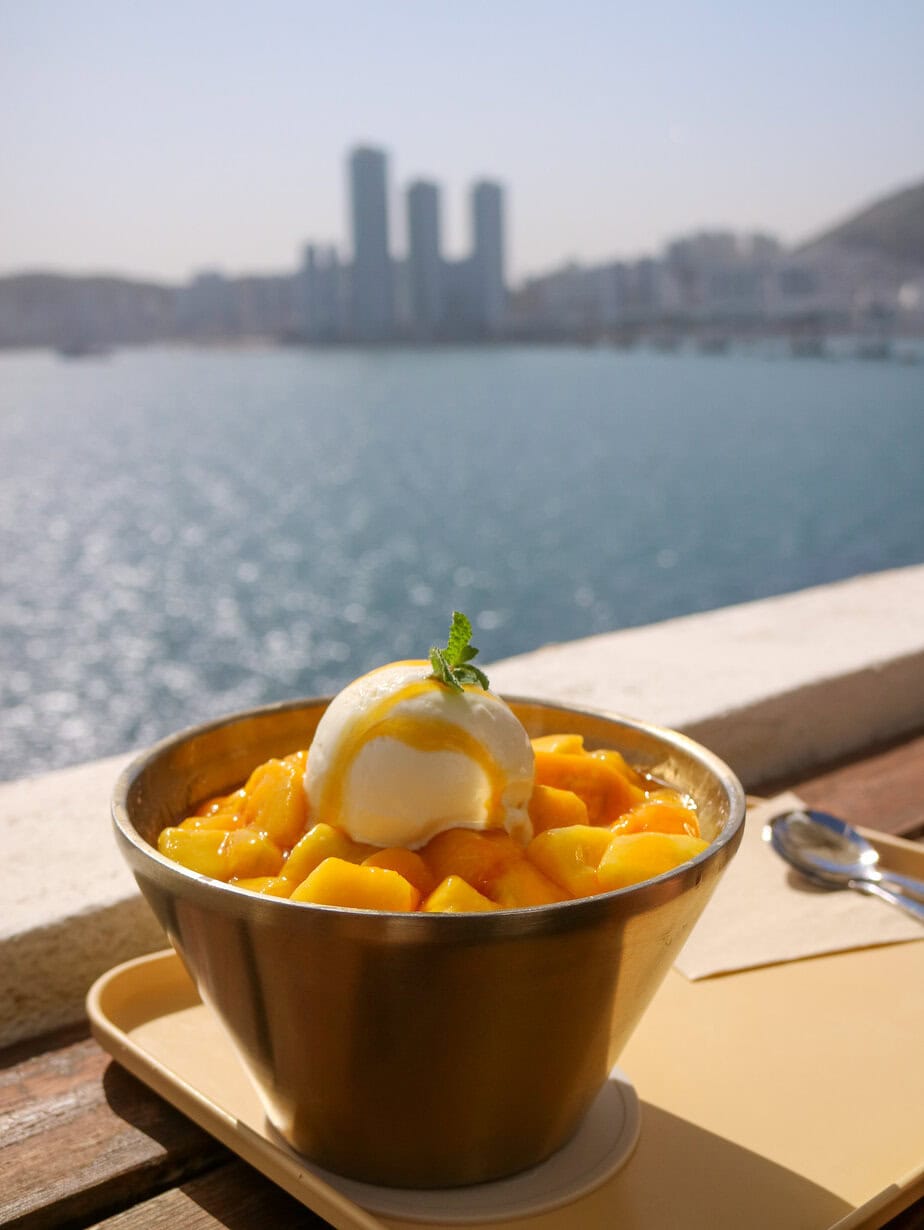
Bingsu is a traditional Korean dessert, made from milk and shaved ice, plus toppings like chopped fruit or sweet red beans. You can find it at cafes and street food stalls alike.
Matcha or Coffee Drinks
Finally, Korea goes crazy with its fancy matcha and coffee drinks! These are often gluten free (barring any gluten-containing toppings or syrups).
Yes, it’s not a typical street food, but wandering a market with a nice drink can make you feel more part of the experience!
Korean Street Food That is NOT Gluten Free
The following Korean street food is extremely unlikely to be gluten free.
However, never say never (case in point: the gluten free 10 won bread I found!). If you happen to find gluten free versions of the following street foods, please leave me a comment below so I can update this post and help fellow travelers!
Most Meats and Seafood
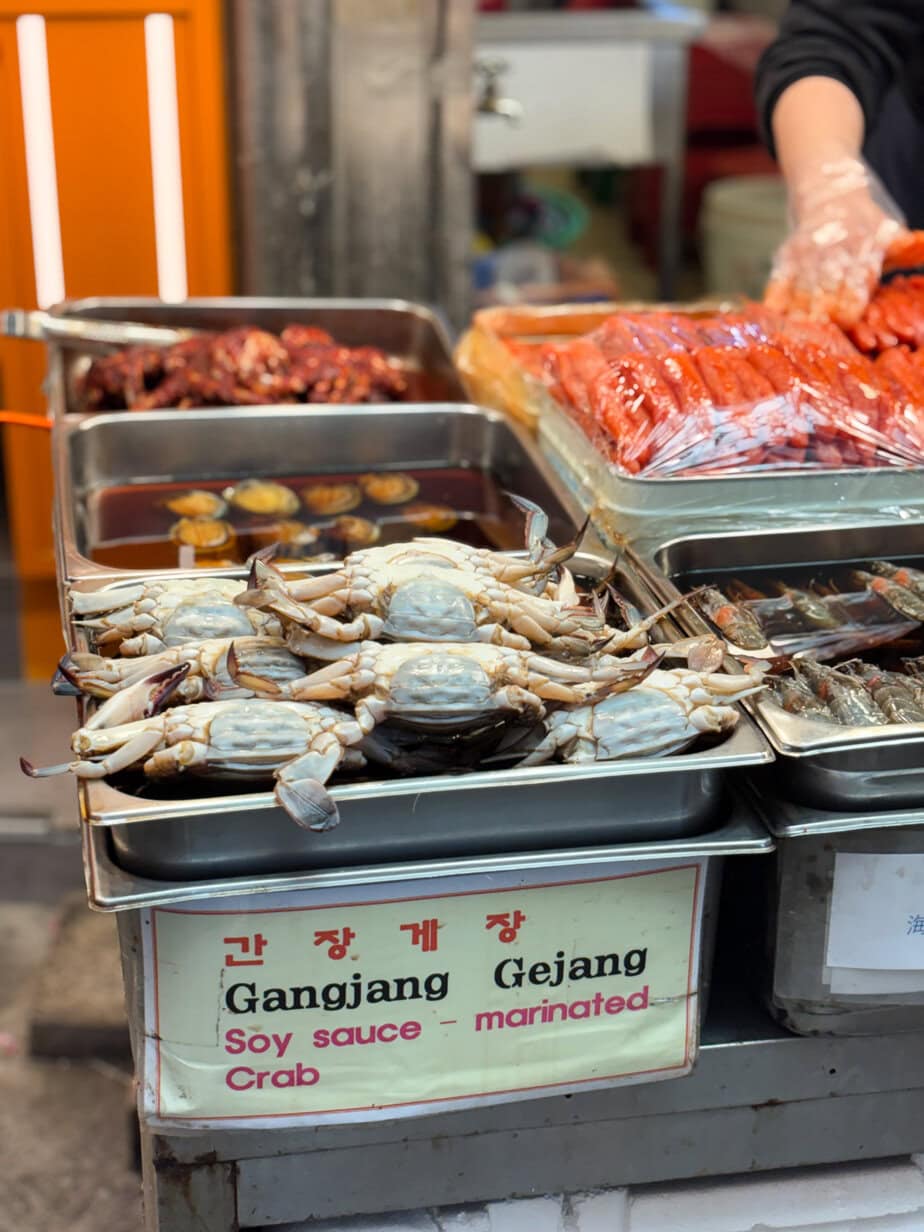
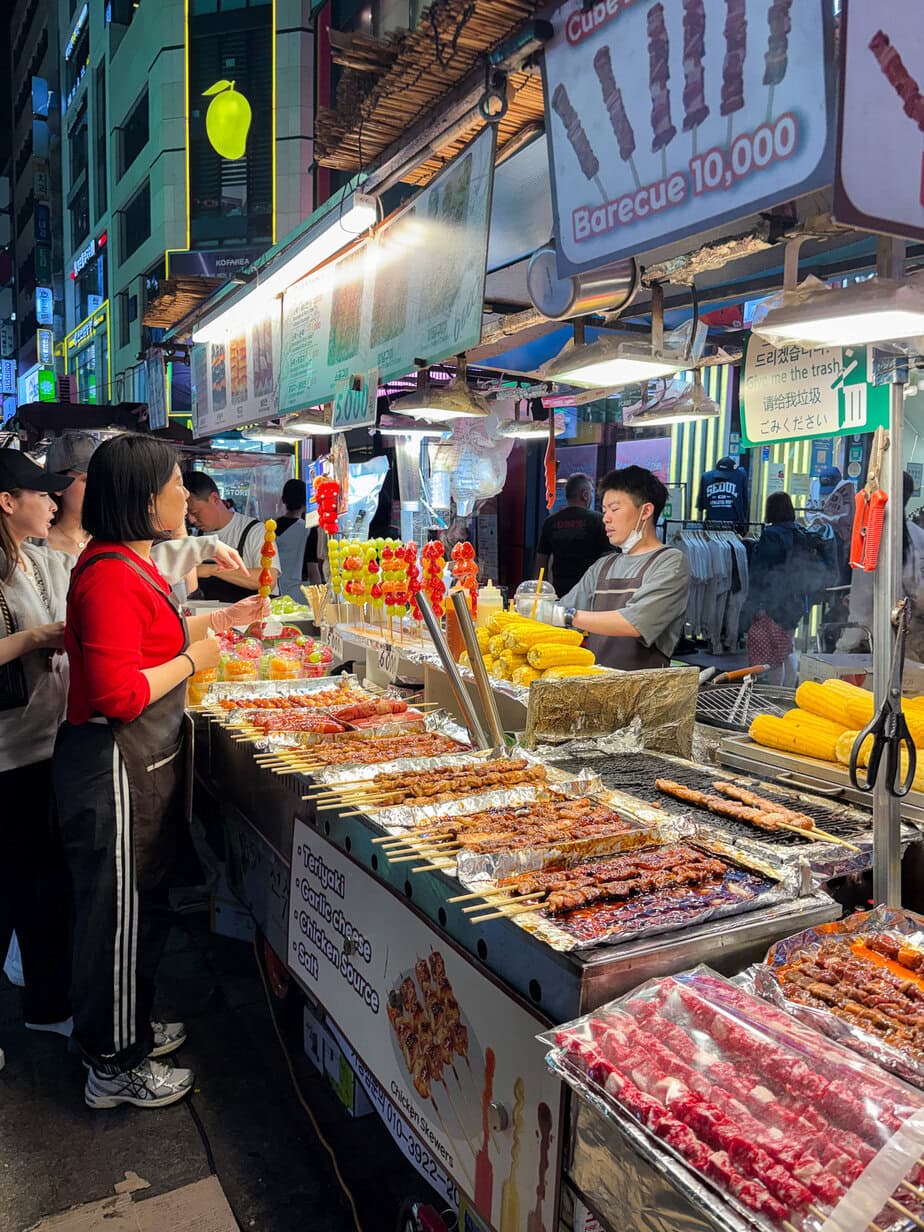
Most seafood and meat at food markets in South Korea is not gluten free, due to soy sauce or cross contact with shared grills and pans.
Korean Fried Chicken
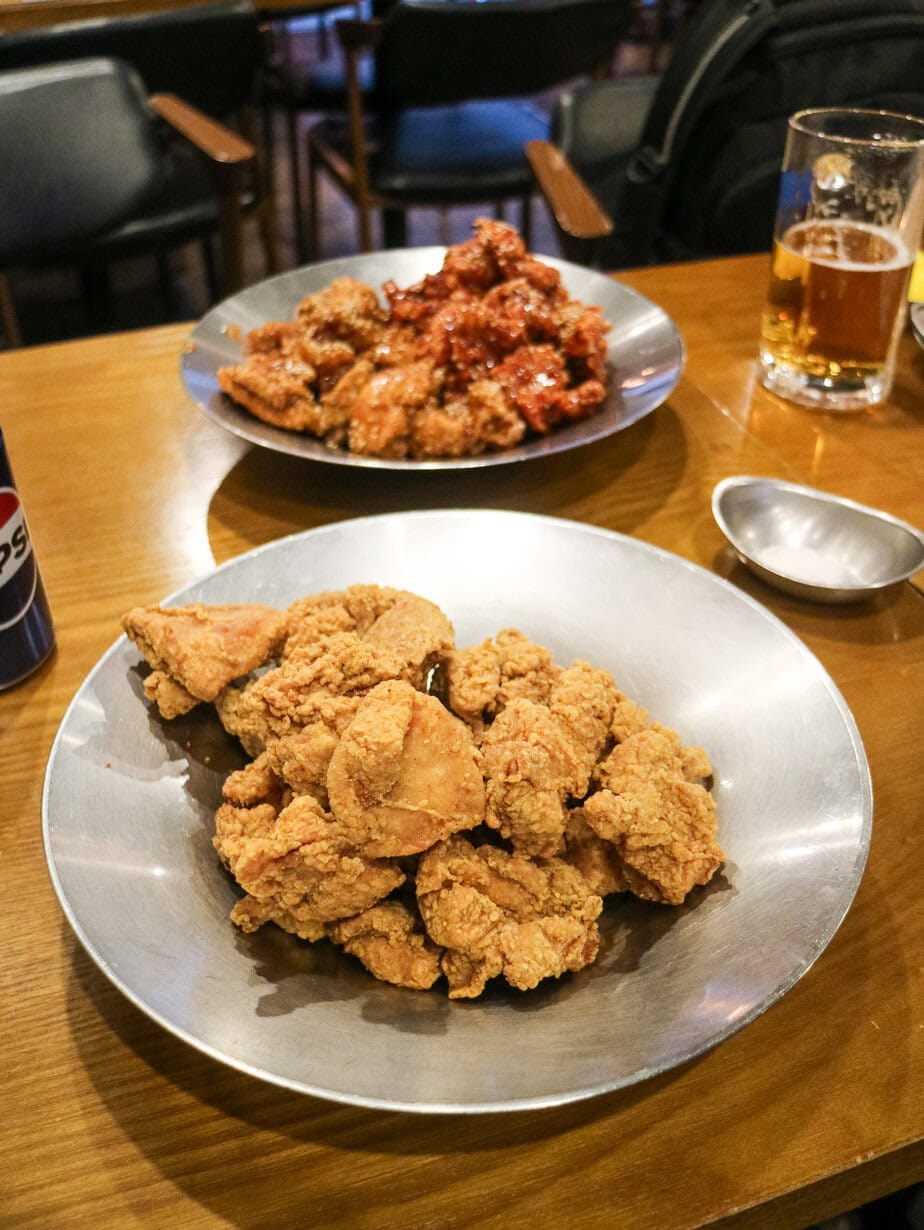
Korean fried chicken is rarely gluten free, because of a wheat batter coating.
However, there are a couple spots where you can find gluten free Korean fried chicken (restaurants, not street food)! My favorite is 100% gluten free 6 Day Chicken, but check out my Seoul guide for all my suggestions.
Tteokbokki
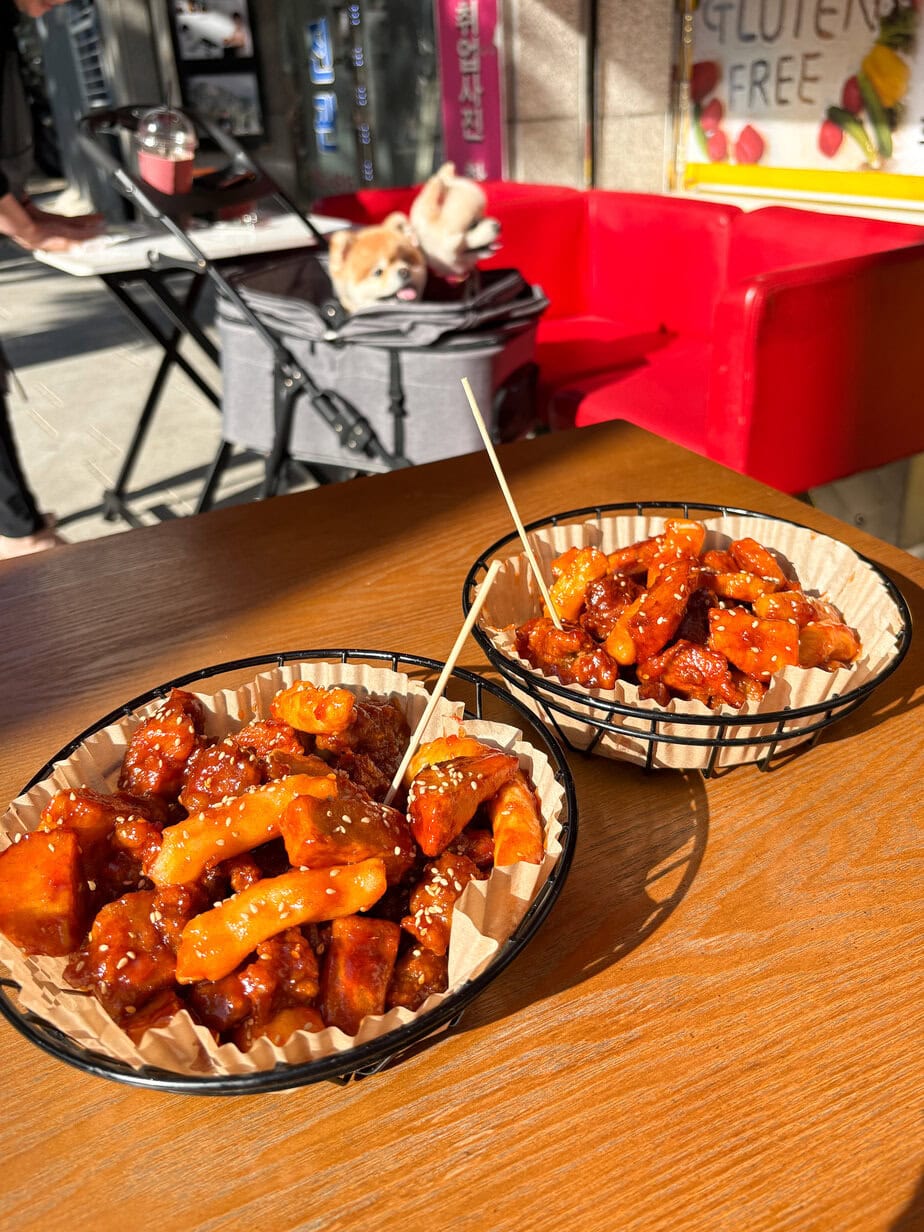
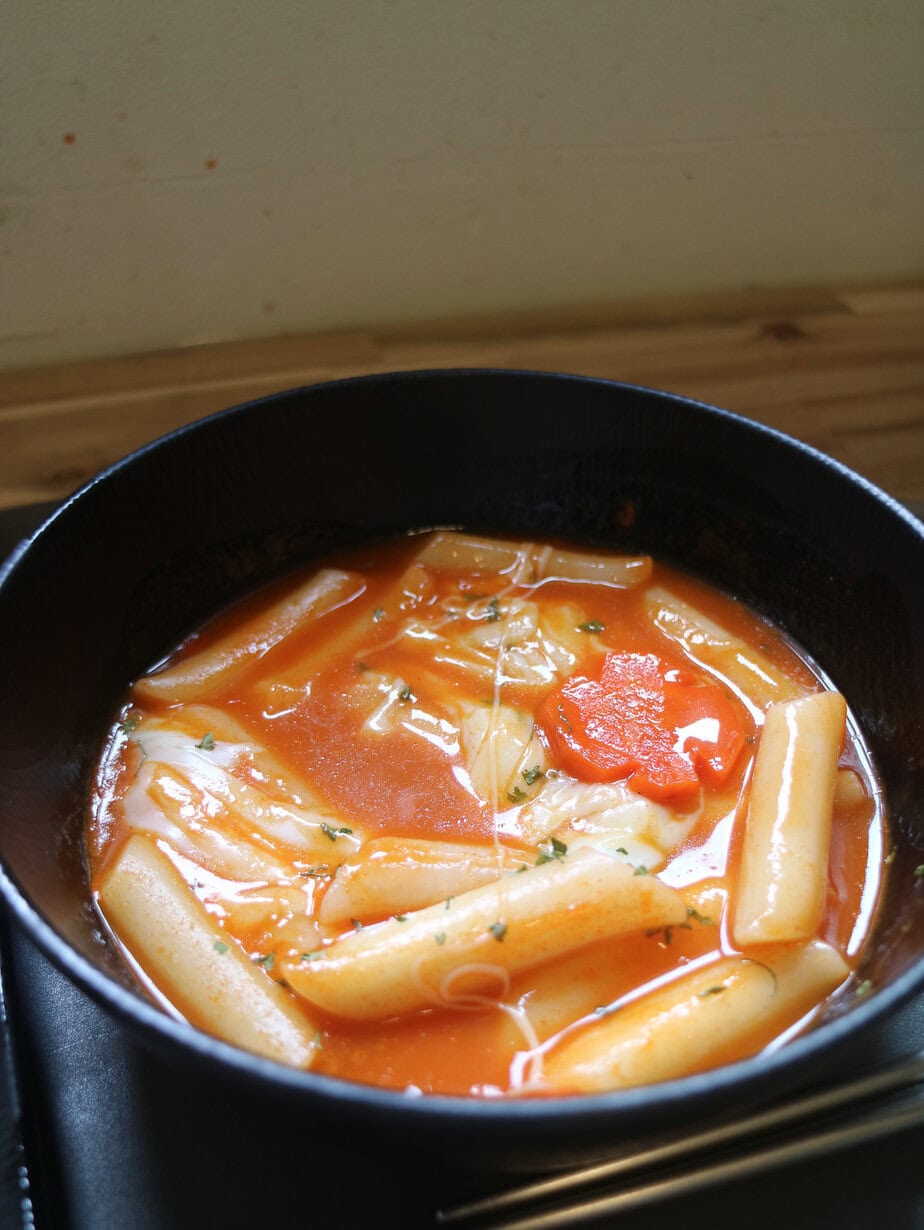
These chewy rice cakes may be gluten free themselves, but they’re always slathered in gluten-containing sauces like gojuchang and soy sauce.
I never found gluten free tteokbokki as street food, however the lovely Sky Gimbap restaurant in Seoul does sell gluten free tteokbokki!
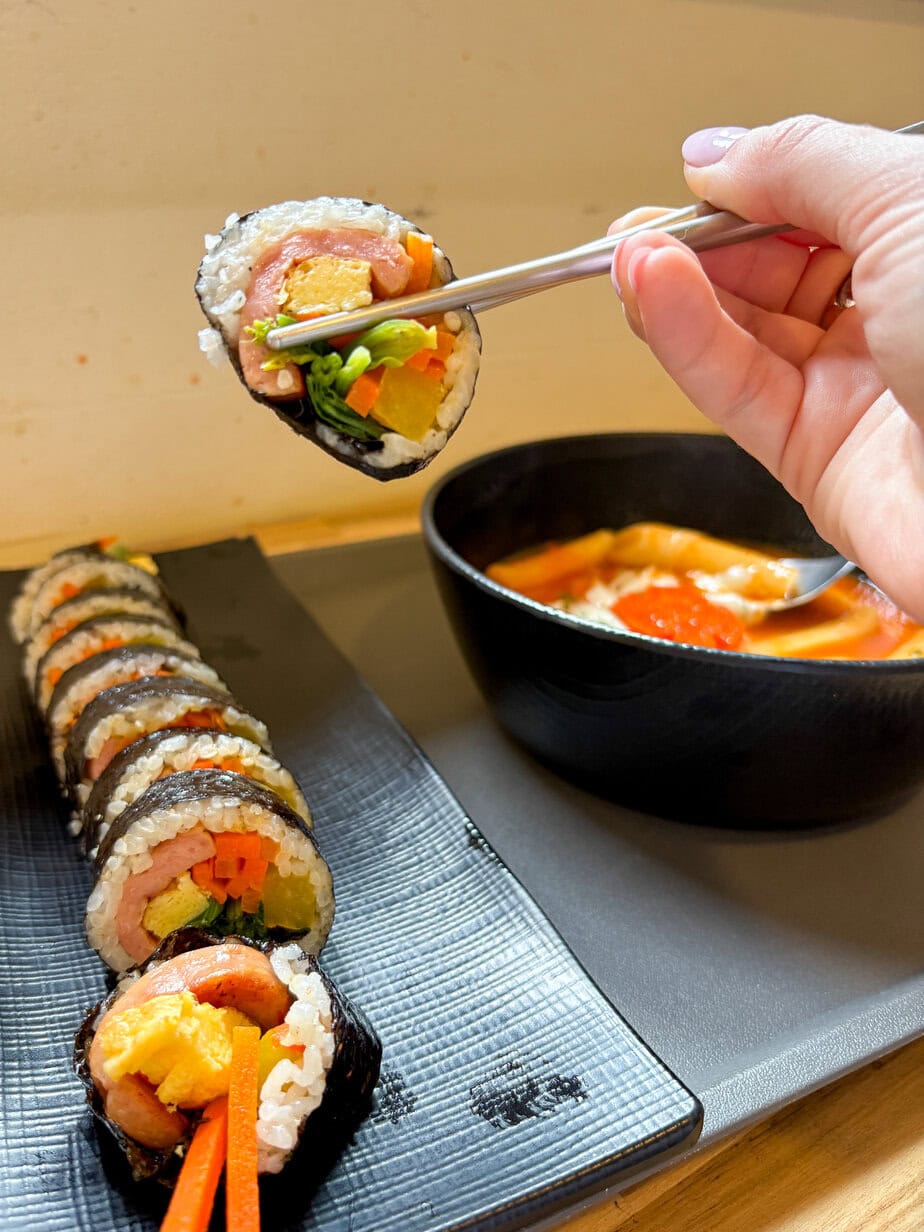
Gimbap
Think of gimbap like Korean sushi, although instead of being filled with raw fish you’ll find soy sauce-marinated beef, spam, pickled radish, or imitation crab.
Sadly, in most cases, at least one filling contains gluten. When served as street food, gimbap is usually made ahead of time and not prepped individually, so you also can’t request a special order.
I was able to find gluten free gimbap at Sky Gimbap in Seoul, so definitely check out that restaurant if you want to try it!
Japchae
Japchae is made from naturally gluten free sweet potato noodles, but these are dredged in gluten-containing soy sauce.
I never found a street food stall serving gluten free japchae. In fact, the only time I was able to eat gluten free jap chae in South Korea was during my cooking class in Seoul!
Hotteok
A griddled sweet cake made from wheat flour. This was Dan’s favorite street food in South Korea, but sadly I never found a gluten free version.
And More
The list of gluten-containing street food in Korea goes on! The above is just a selection of the most common dishes.
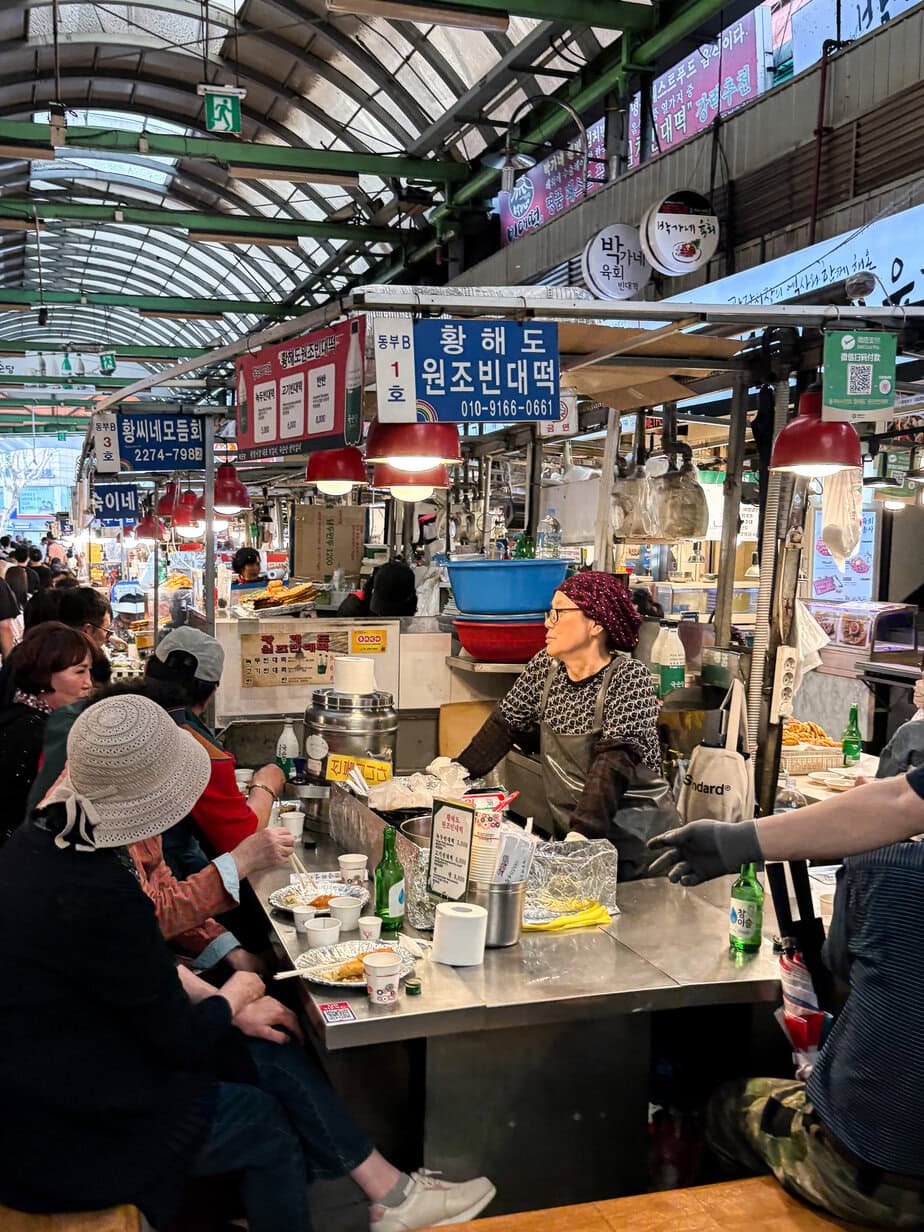
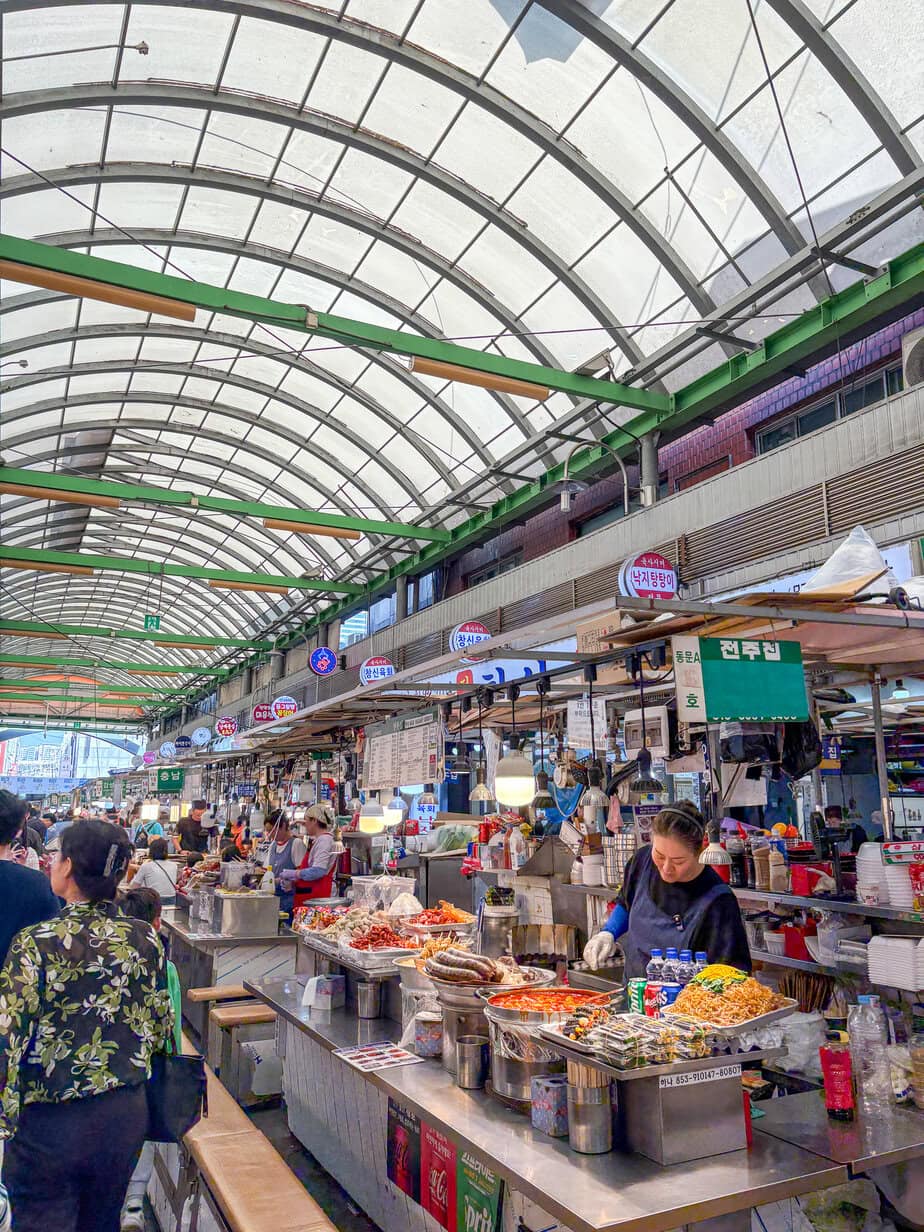
Gluten Free Gwangjang Market
Exploring the bustling Gwangjang Market in Seoul is a must-do, even as a celiac. I was so excited to experience this market, but I was worried I wouldn’t find a single gluten free thing to eat.
I ended up having a really fun time exploring the market (with my translation card in hand!). No, I couldn’t eat the hand-cut noodles of Netflix fame, but I did find some gluten free food:
- Mochi
- Mung bean pancakes
- Candied strawberry skewers
- Fresh fruit
- Sugarcane juice
I definitely recommend visiting Gwangjang Market, even as a celiac.
Gluten Free Jagalchi Market
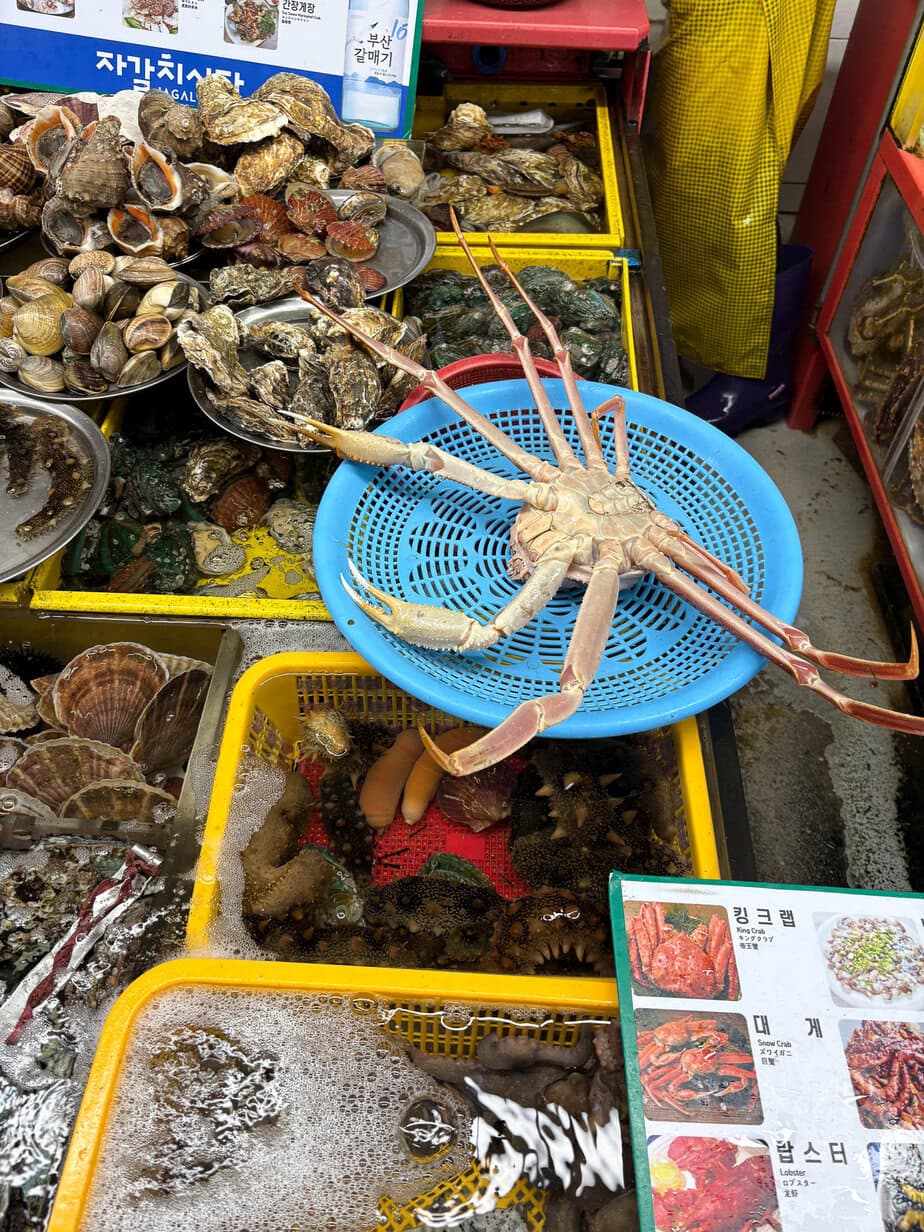
Jagalchi Market, in Busan, is another must-visit market in South Korea where your gluten free diet doesn’t have to hold you back.
This market is special because the ground floor is filled with traders selling live seafood, freshly caught that morning. Upstairs is filled with restaurants where you can immediately cook and eat your purchases!
I go into detail on how to order a celiac-safe meal at Jagalchi Market in my gluten free Busan guide. I recommend you read it for all the details, but the short version is:
- Steamed, sashimi, and raw are the safest cooking options to avoid cross contact.
- Speak to the restaurant about being gluten free first, before purchasing seafood. Restaurants only work with certain traders, and vice versa.
- I highly recommend using restaurant #36 upstairs. They were incredible for me.
- Bring your own gluten free sauces.
Final Thoughts on Gluten Free Street Food in South Korea
I don’t know about you, but I love trying street food when I travel. It’s definitely a challenge to find gluten free street food in South Korea, but as you can see from this article it’s not impossible!
If you need more help navigating South Korea on a gluten free diet, then I recommend:
- Start with my gluten free South Korea guide.
- Find restaurants and access my detailed map in my gluten free Seoul and gluten free Busan guides.
- Learn how to find gluten free products at convenience stores in South Korea.
Good luck on your travels, and please let me know in the comments below, or via my Instagram, if you have any updates or suggestions!

Pin it for later…