Gluten Free Convenience Stores in South Korea: 7-11, GS25, CU
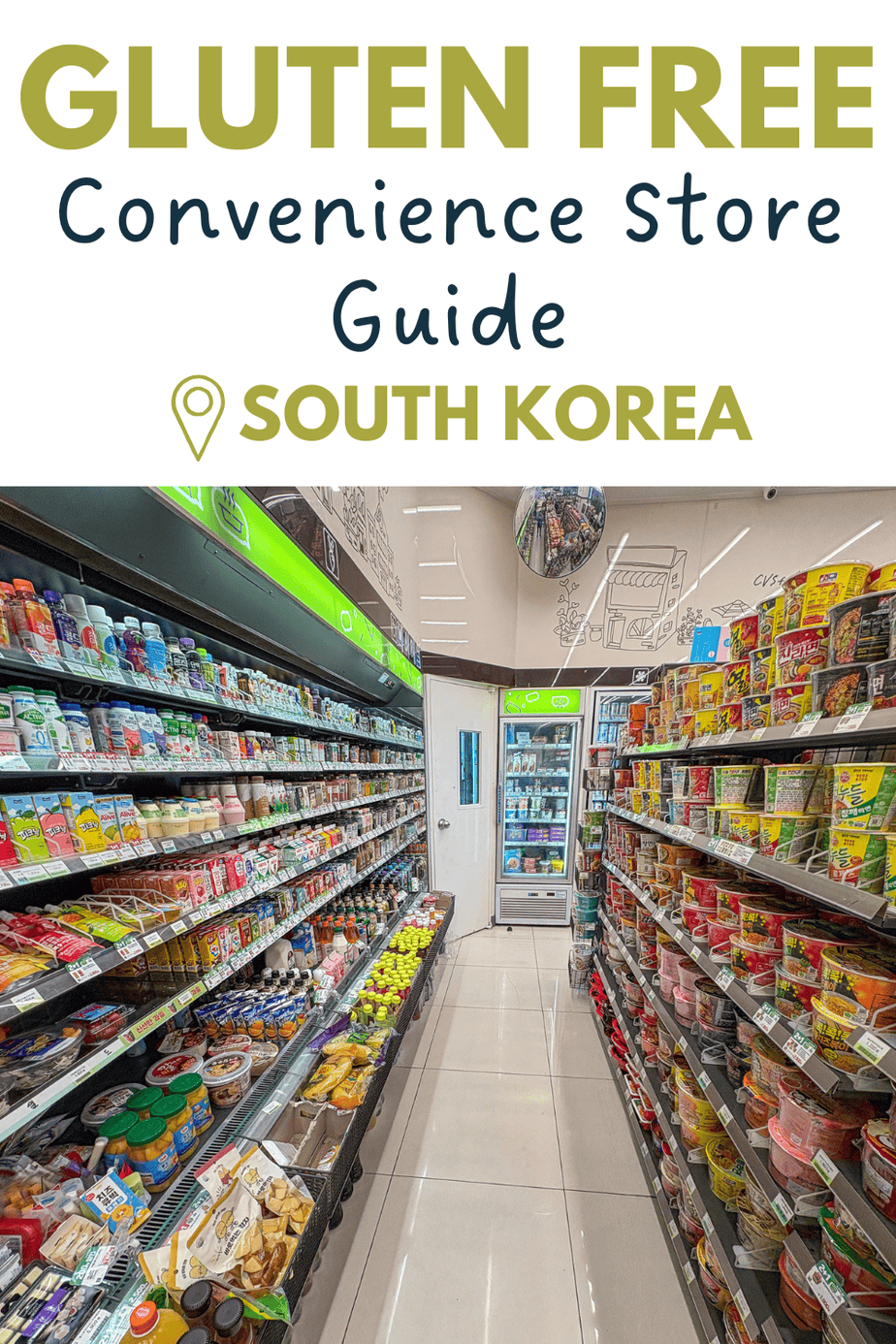
If you are gluten free and planning a trip to South Korea, then you’re probably wondering if you can find gluten free options at convenience stores.
Let’s set some expectations: convenience stores in South Korea are NOT the same gluten free heaven that they are in Japan.
However, there are still several gluten free options to be found at convenience stores in South Korea. These can tide you over when you’re hangry, or serve as a breakfast option (since most restaurants in South Korea open at 11am or later!).
In this article, I’ll teach you how to read labels for gluten in South Korea, as well as a list of likely-gluten free products at convenience stores.
Convenience Stores in South Korea
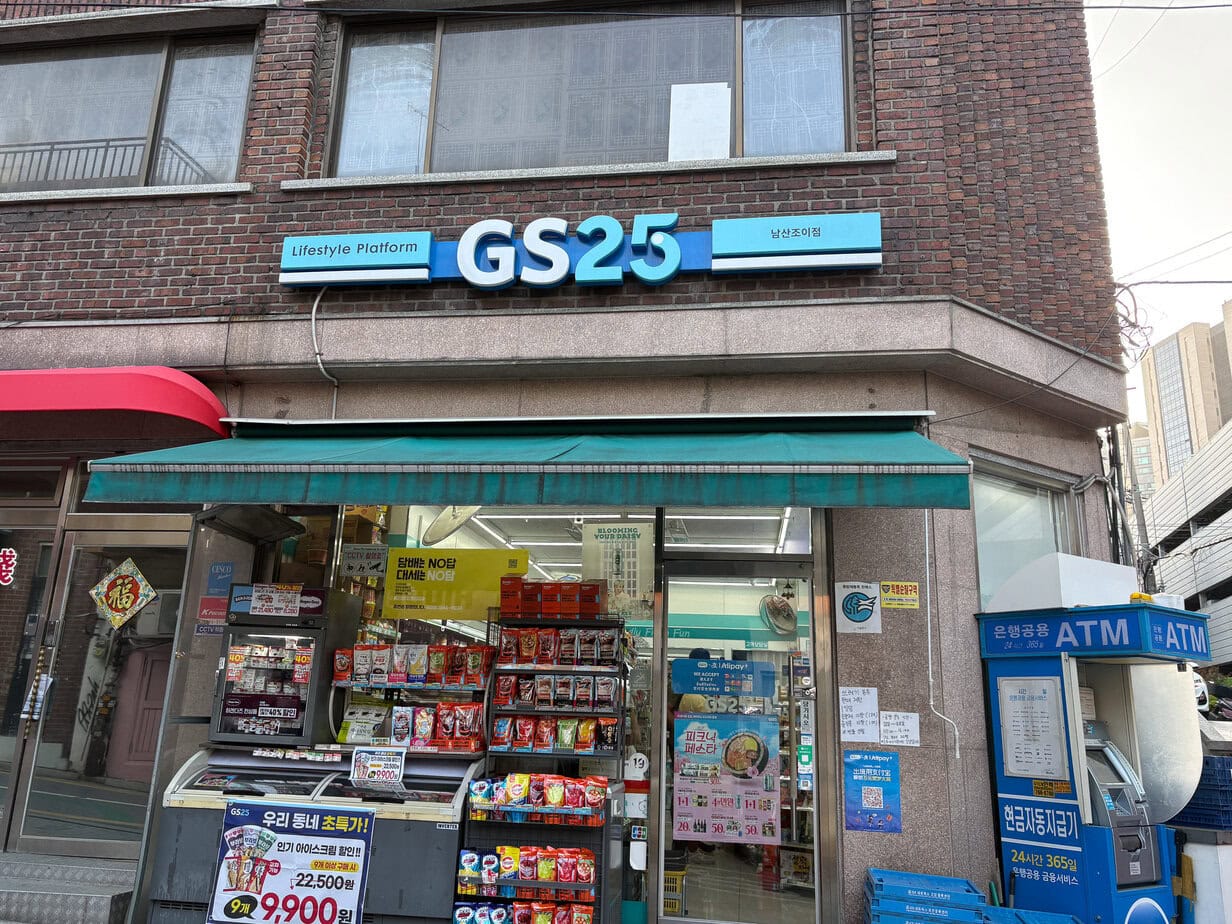
First things first, what are the most common convenience stores in South Korea?
Convenience stores in South Korea include:
- GS25
- 7-11
- CU
They are all pretty comparable when it comes to gluten free options. Saying that, GS25 comes out slightly on top since it’s the only store with (possibly) gluten free onigiri—more on that below.
Gluten Free and Allergen Labeling in South Korea
Allergen labeling in South Korea has improved in recent years—it is now mandatory and legally regulated (source). Unfortunately, it’s still lacking when it comes to gluten.
In South Korea, it is NOT mandatory to label cereals containing gluten as an allergen (source).
Of the 25 allergens that are mandatory to list, the only gluten-containing one is wheat. Barley, rye, and oats are not considered allergens.
Top Tip: Know the Korean Symbol for Wheat
Allergen warnings on ingredient labels in South Korea are normally bolded.
I recommend memorizing the hangul (symbol) for wheat / 밀 to make identifying it easier.
To make matters more complicated, the symbol for egg / 알 (another recognized allergen) is very similar to the symbol for wheat.
Spend a few moments memorizing those symbols and understand their differences, and you’ll have an easier time in South Korea, I promise!
How to Read Labels in South Korea as a Celiac
The language barrier is obviously a huge challenge in South Korea if you’re gluten free. At restaurants and markets, I relied upon this gluten free translation card, which was a lifesaver since it’s the only one I’m aware of that’s personalized to Korean cuisine.
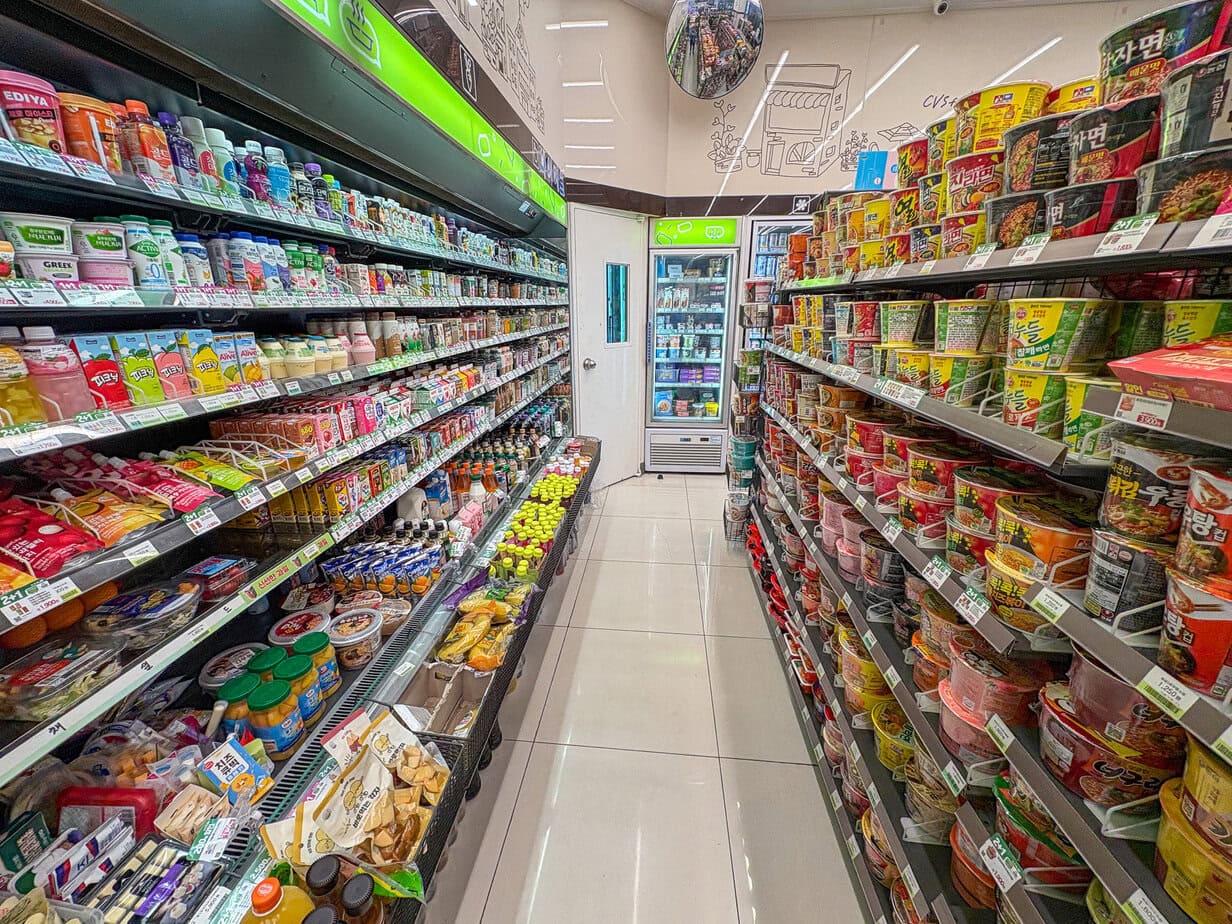
However, a translation card isn’t much help at convenience stores, where you need to read ingredient labels.
These apps will help you read labels in South Korea:
- Google Translate—image-to-text feature
- Papago Naver
To use them, you take a photo of an ingredient label. The app’s technology then translates the text in the image.
A word of warning: these apps are not foolproof! I’ve had the strangest translations come up. I recommend taking multiple photos at different angles to be sure you’re getting the most accurate translation, and always trust your own eyes when you scan the label for wheat.
Is Onigiri Gluten Free at Korean Convenience Stores?
Onigiri (seaweed-wrapped rice balls that I lived off in Tokyo, Kyoto, Osaka, and elsewhere in Japan) are sadly not gluten free in South Korea.
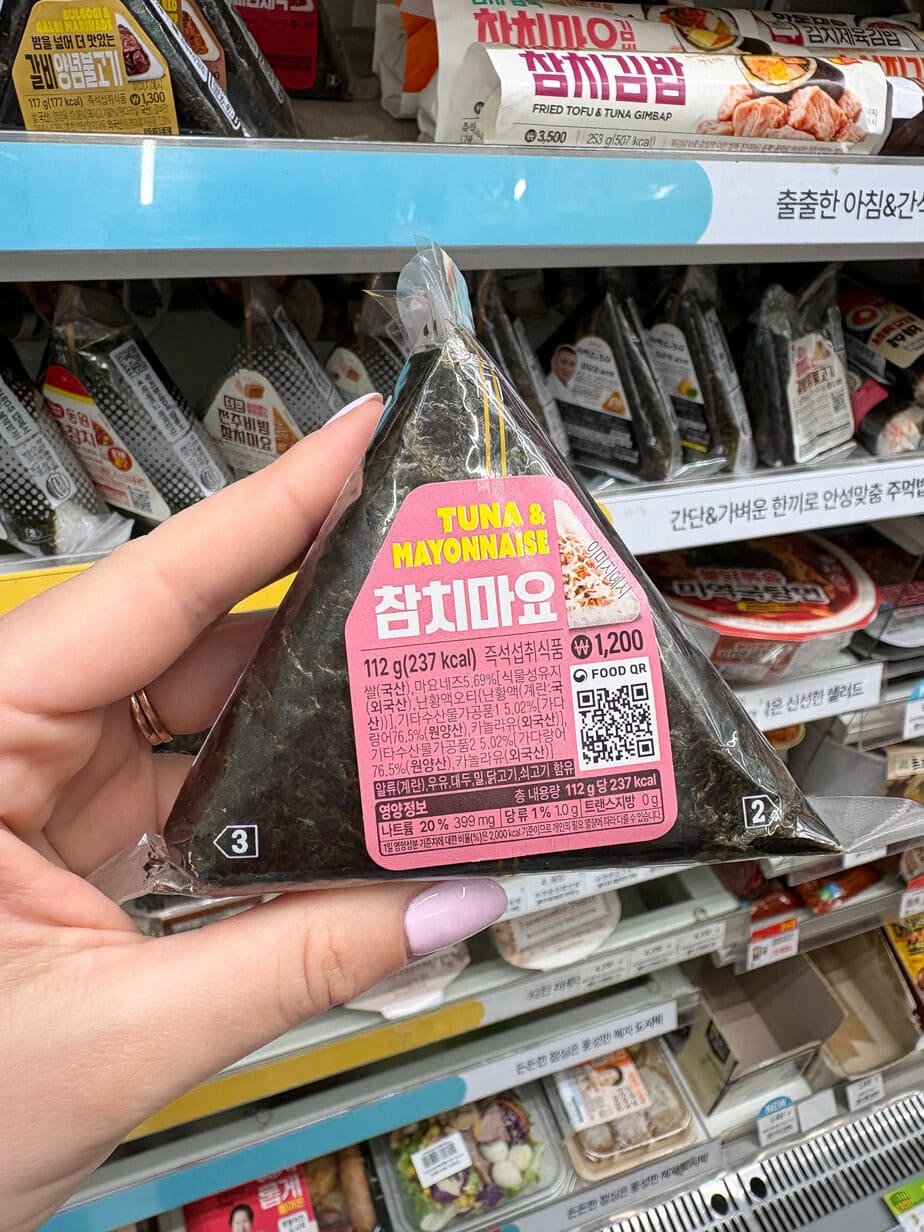
To my knowledge, there’s only one flavor that is maybe gluten free. It’s the pink-labeled tuna and mayo onigiri at GS25.
When I visited South Korea, the allergen warning listed wheat, so personally I never ate it.
However, immediately after my trip I saw a Facebook post from someone who found one that did not list wheat, and this was confirmed by a native Korean speaker! So, double check because ingredients can change.
Gluten Free Products at Convenience Stores in South Korea
Even though onigiri in South Korea is generally not gluten free, there are some other options.
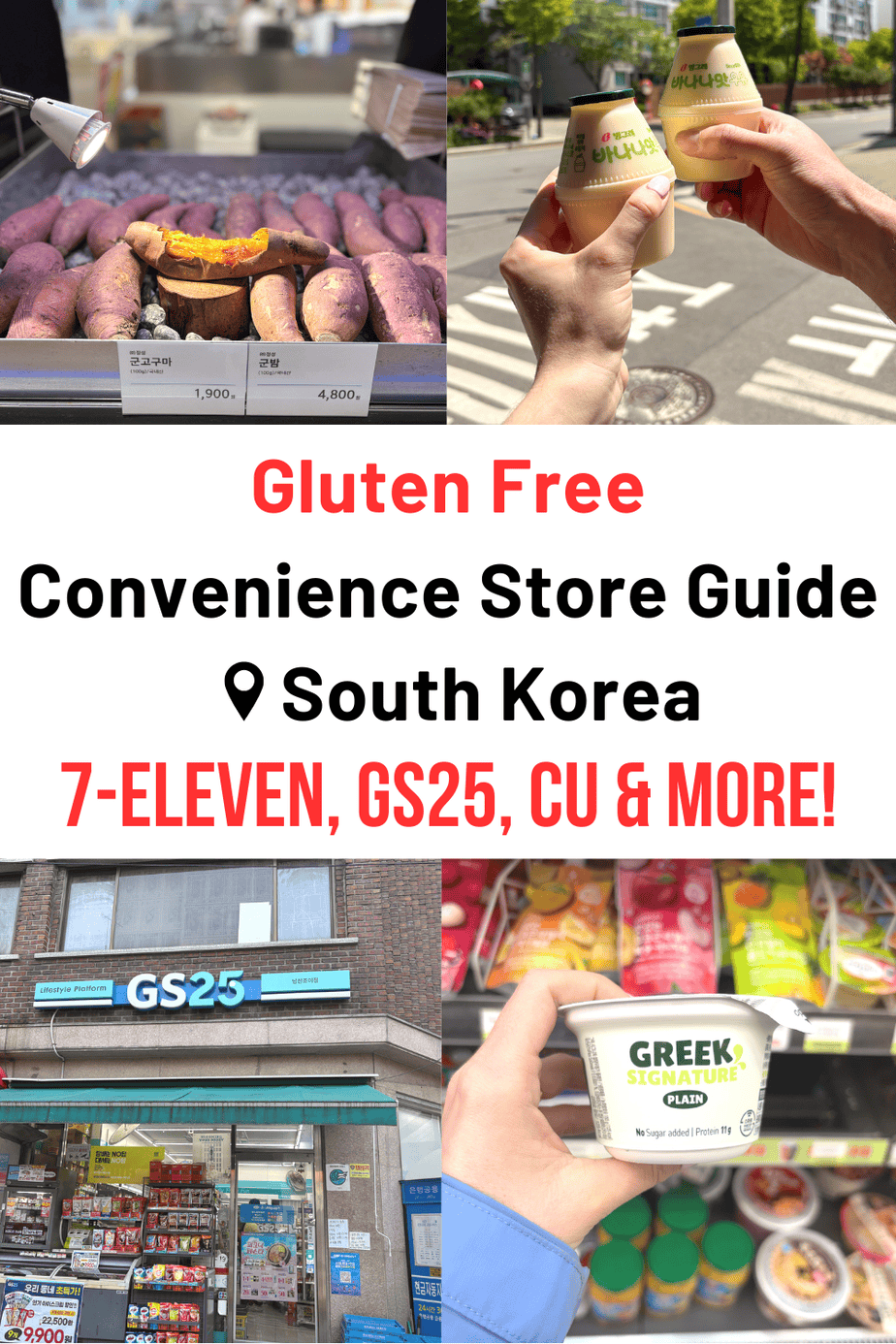
Gluten free convenience store options include:
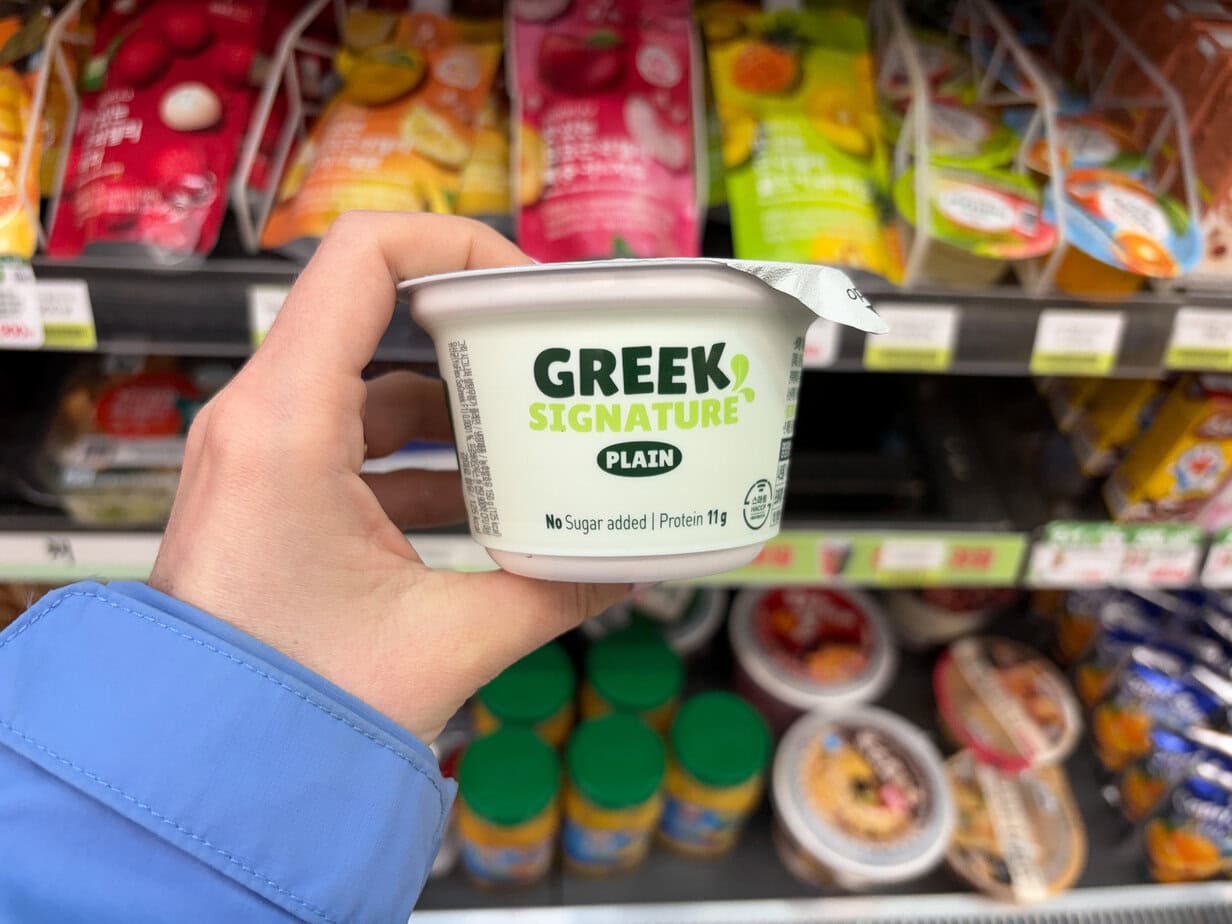
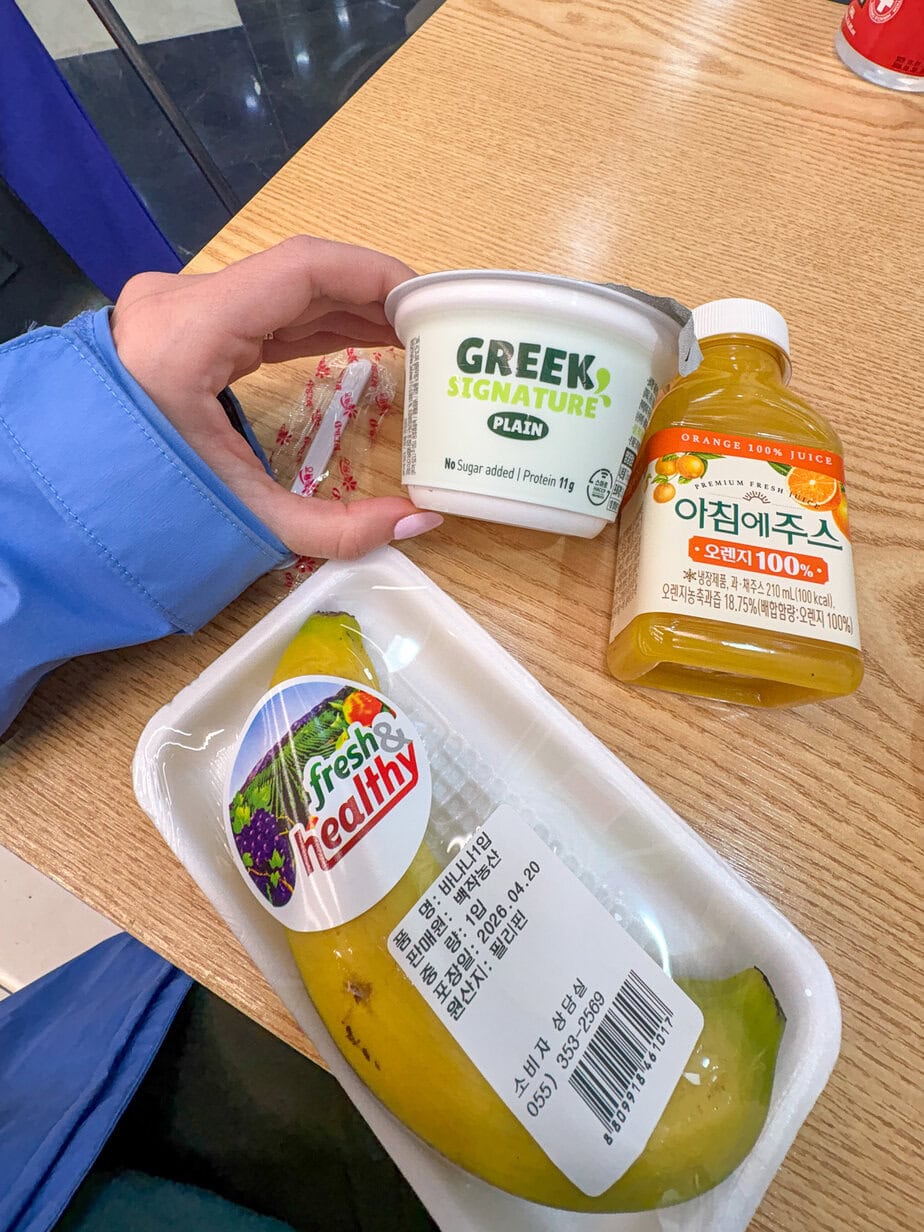
- Yogurt, sometimes. Often this also had a wheat warning, but in my experience the Greek Signature Plain pot was safe.
- Bananas, and other fresh fruit.
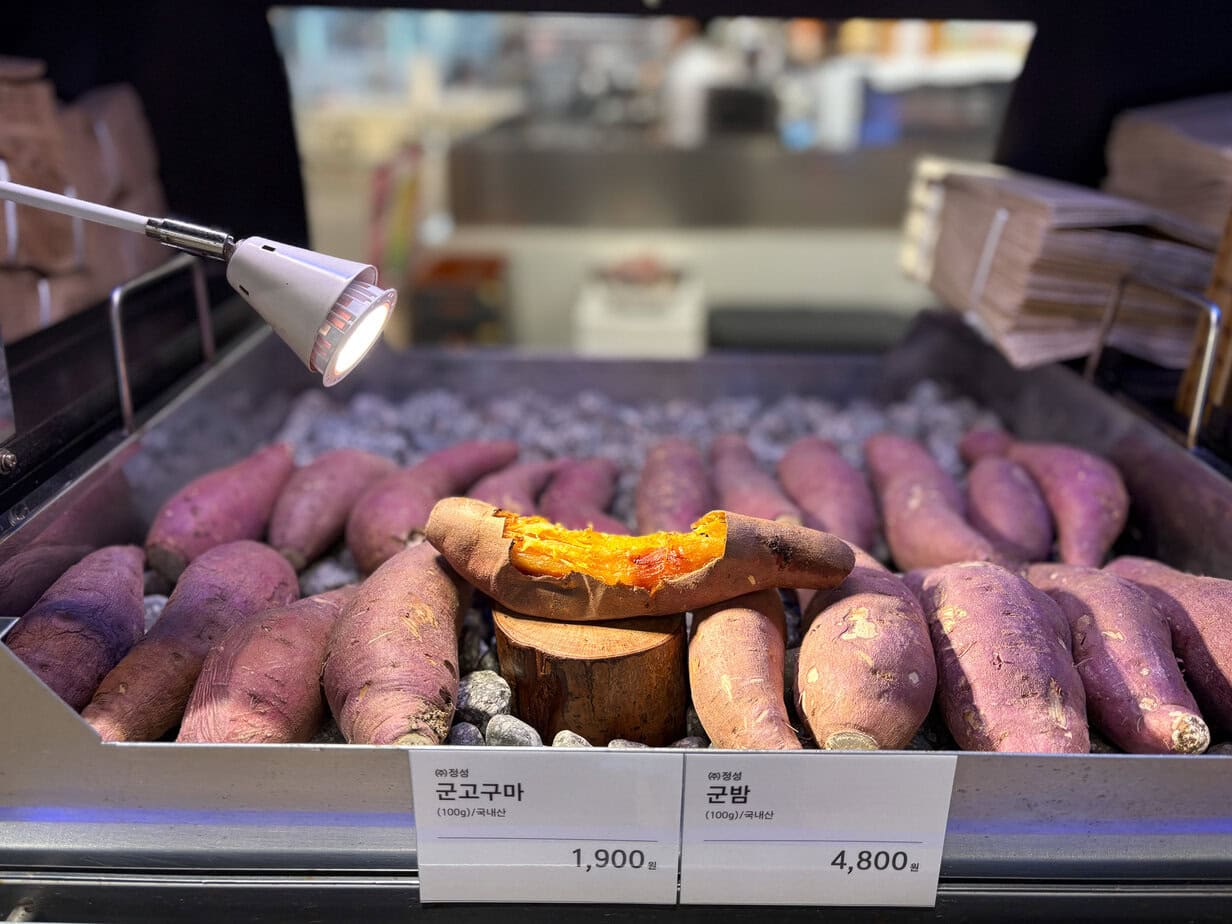
- Sweet potato.
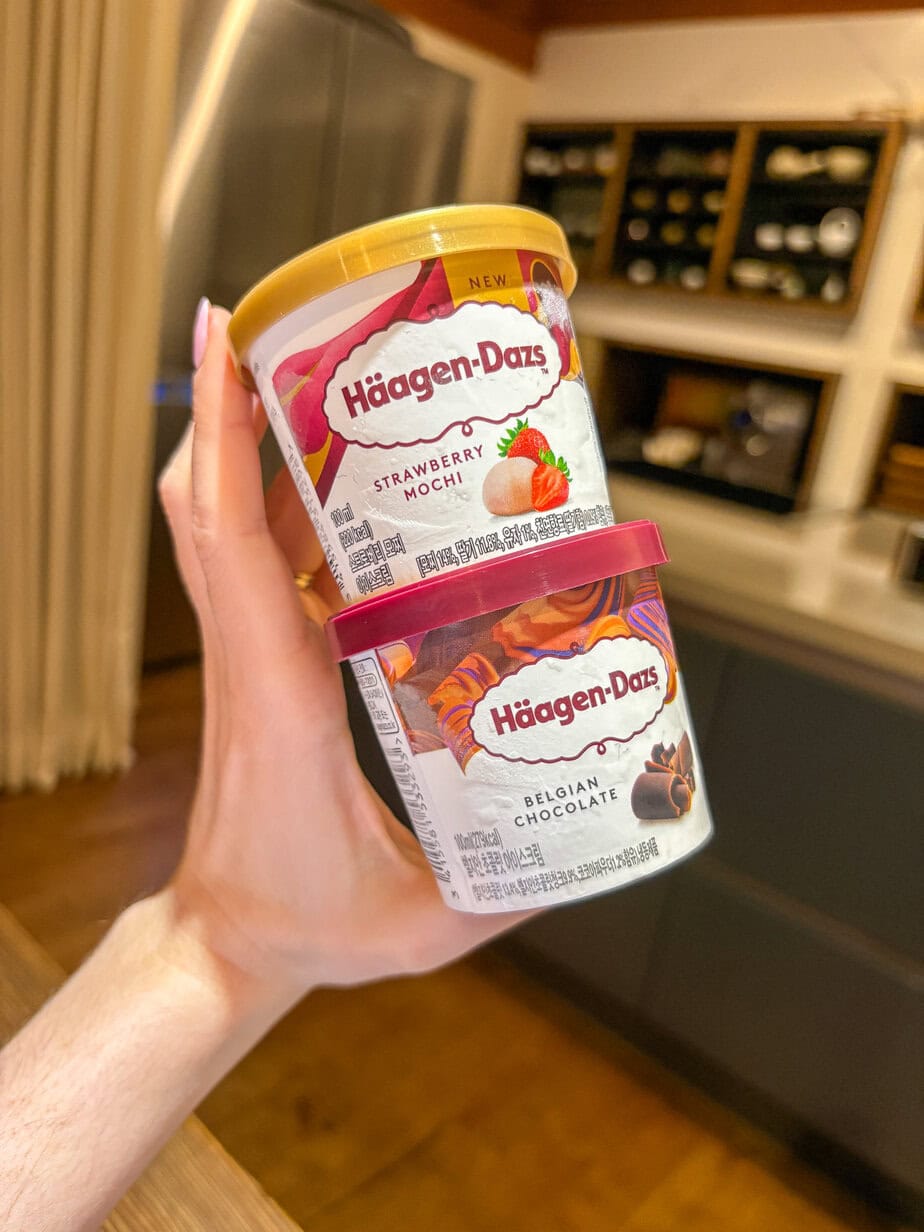
- Haagen Dazs ice cream, but not all flavors.
- Boiled egg, but always check the ingredient list because some are marinated in soy sauce.
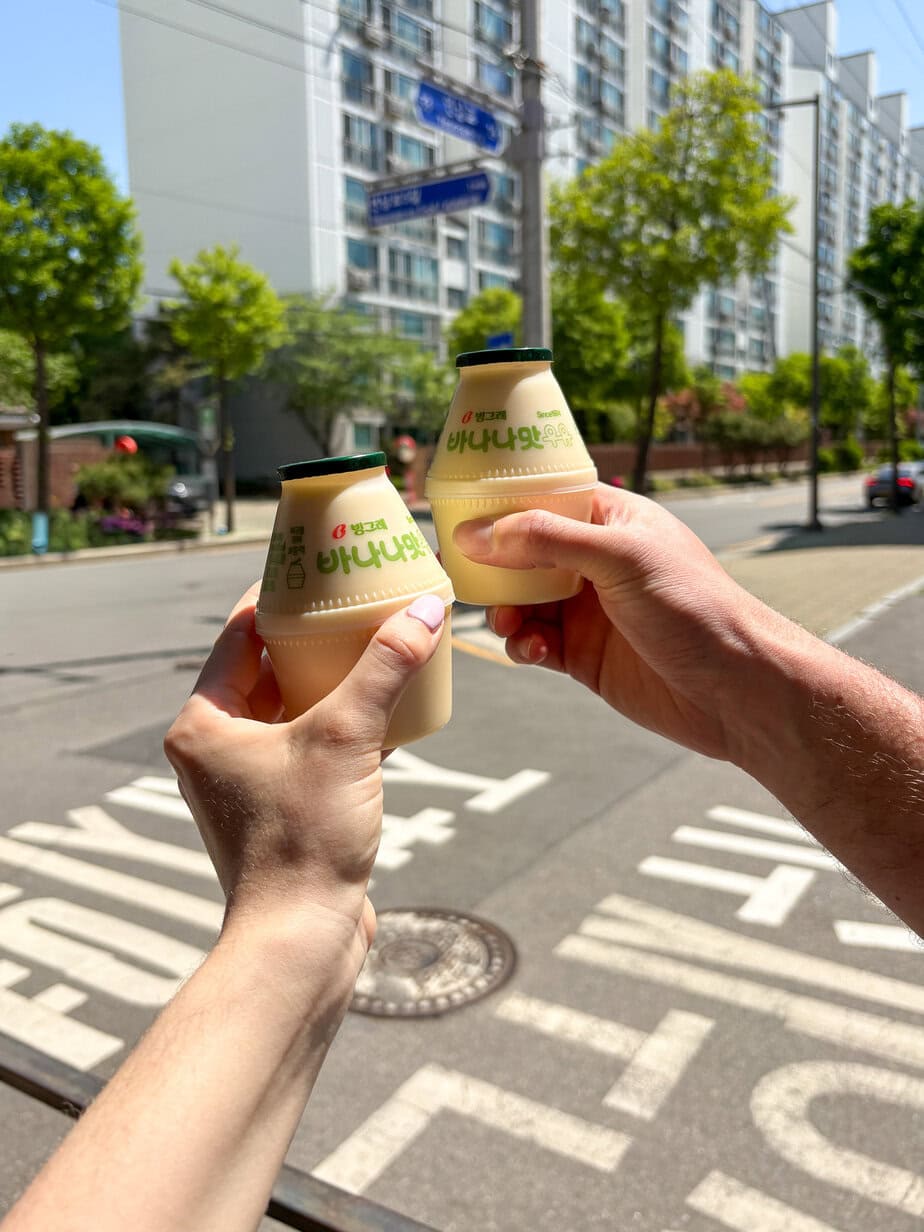
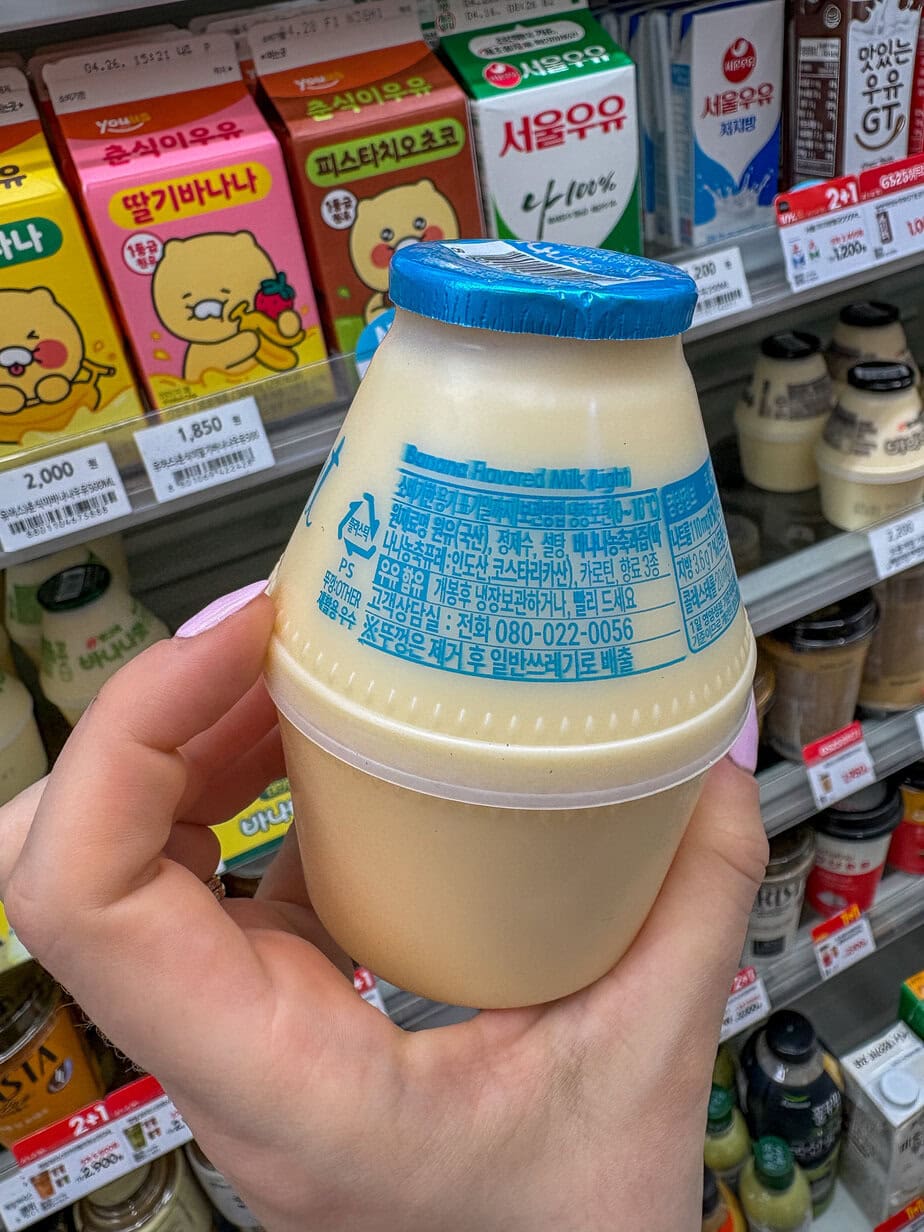
- Banana milk, like everything in South Korea it’s not certified GF, but it also doesn’t list any gluten-containing ingredients. Myself and many other sensitive celiacs have drunk it without reaction!
The above is not an exhaustive list, but hopefully it gives you a starting point.
Remember that in South Korea the ingredients can change suddenly and frequently, so your best source of information is the label in front of you. Scan for the wheat symbol, and use your translation apps.
Is the Viral Banana Milk Iced Coffee Gluten Free in South Korea?
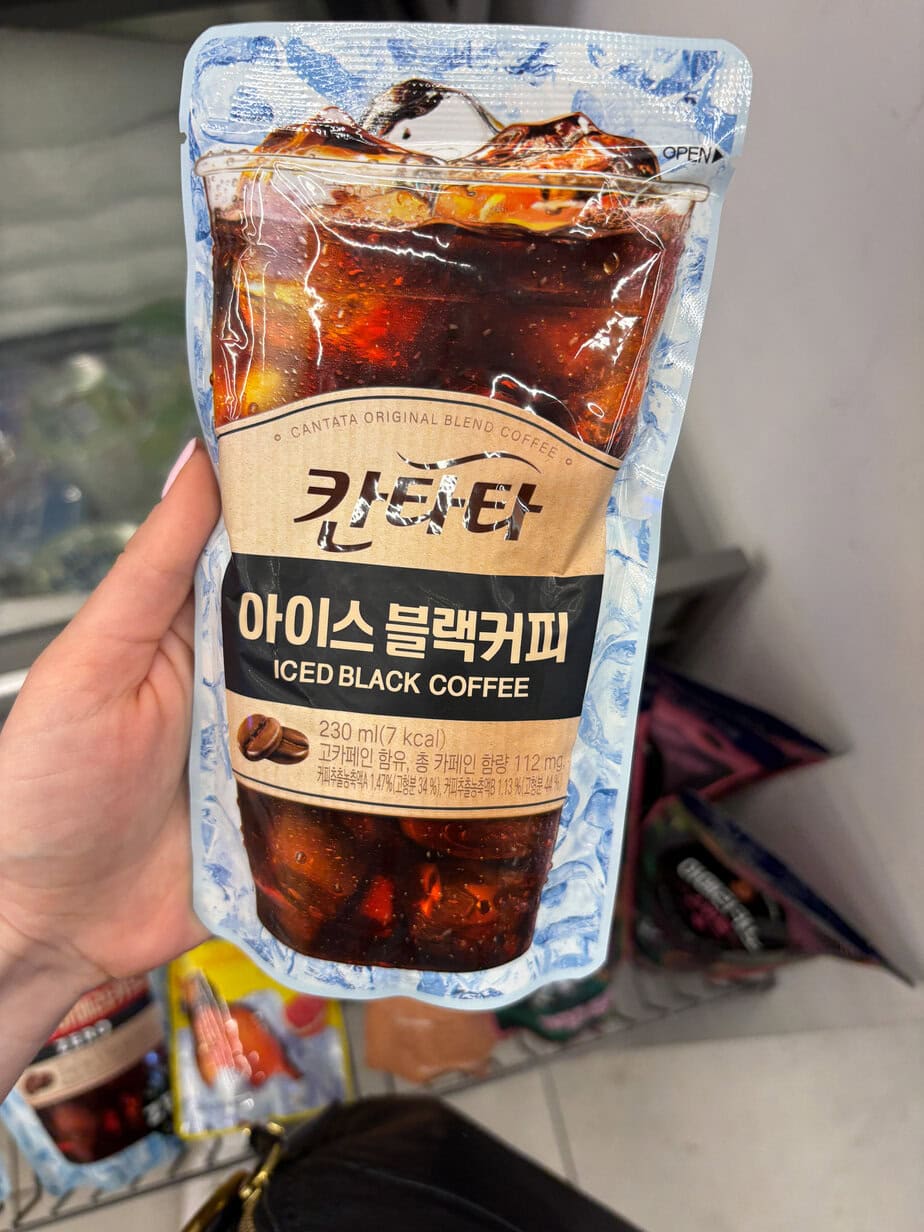
Regarding the viral banana milk iced coffees that people love to make at convenience stores in South Korea, sadly this is not gluten free.
This is because the bagged coffees usually list wheat as an allergen. (I know… what the heck?).
There’s a solution for this, though! Personally, I DIY’d my own by getting an iced Americano from a coffee shop and then heading to a convenience store to buy banana milk! I made a TikTok about this if you want some inspo.
Final Thoughts
This article is not designed to be a complete list of gluten free products at convenience stores in South Korea. Rather, it should serve as a resource to teach you how to find gluten free products for yourself.
If you want more resources for planning a gluten free trip to South Korea, then I recommend:
- Start with my gluten free South Korea guide.
- For gluten free restaurants, check out my gluten free Seoul and gluten free Busan guides.
- If you’d prefer something quicker than a restaurant but not a convenience store, check out my gluten free Korean street food guide.
Most importantly, happy travels and good luck! Please leave me a comment below (or send me a message on Instagram) if you notice any changes or updates to gluten free options at convenience stores in South Korea.
You might like these other gluten free travel guides…
Japan Gluten Free Convenience Store Guide

Pin it for later…